
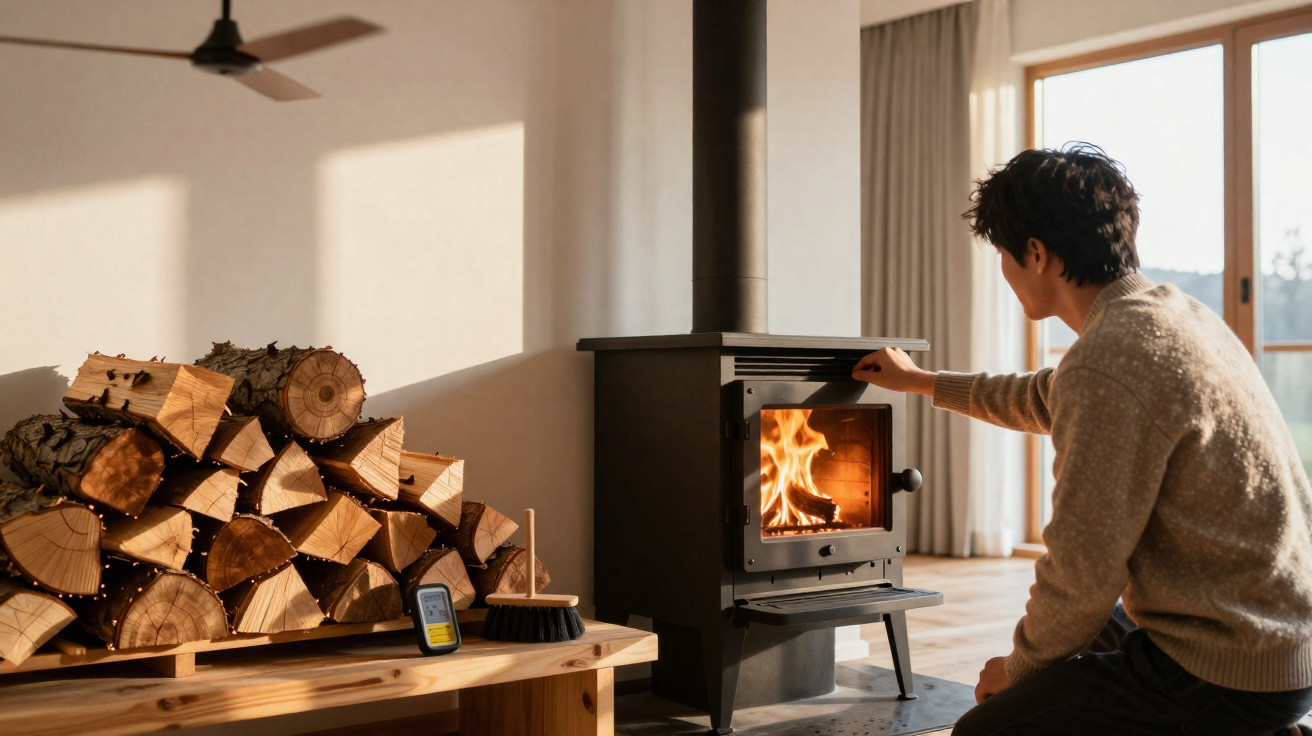
Wood is often seen as a cosy, relatively climate-friendly and frequently cheaper option than gas or oil. The catch: you only get the most heat from every log with the right approach. Follow a few basics and you can cut consumption, protect your budget and still enjoy a comfortably warm living room.
Why wood heating can quickly become expensive
The cost of firewood has risen sharply in recent years. At the same time, many people are still heating with outdated stoves, damp logs or poorly adjusted air controls. The result is predictable: the stove races away, the smoke turns dark, and the wood store empties far faster than it needs to.
"With the right combination of good firewood, a clean stove and smart heating, it’s often possible to save 20 to 30 percent of wood."
The seven ideas below are for anyone heating with a wood-burning stove, a tiled stove or an open fireplace-whether in a detached house, a holiday home or a city flat.
1. Choose and store the right firewood
The quality of your logs determines how efficiently the whole set-up performs. Not everything that burns will heat well.
Hardwood beats softwood
- Hardwood such as beech, oak or ash burns more slowly and delivers a lot of heat per cubic metre.
- Softwood such as spruce or pine burns down more quickly and is better suited to getting the fire going.
If you rely mainly on softwood for heating, you’ll need to reload much more often and typically use more overall.
Dryness is the most important factor
Aim for a residual moisture content below 20 percent. Wet wood wastes a large share of its energy because the water has to evaporate first.
- Store logs split and with plenty of airflow-don’t keep them as whole rounds.
- Allow at least two years to season; with oak, usually longer.
- Stack under a roof or a well-ventilated shelter, rather than wrapping in plastic sheeting.
- Never store wood directly on the ground; use pallets or battens.
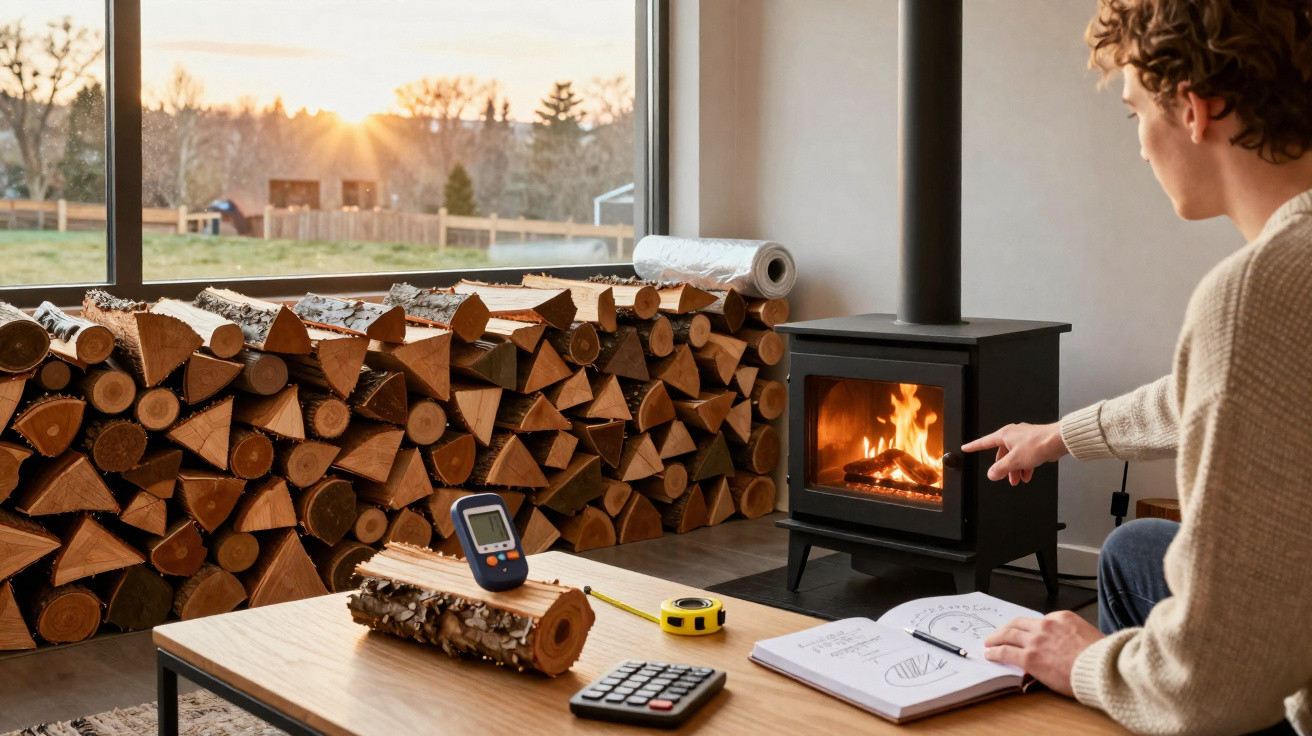
A basic moisture meter for firewood is inexpensive and can save you from costly buying mistakes.
2. Clean the stove and chimney regularly
A stove that is sooted up or clogged with ash will perform poorly. Air can’t flow properly, the flame becomes sluggish and your wood use climbs.
"The cleaner the firebox and flue path, the more effectively your wood can actually release its energy."
Maintenance points worth keeping an eye on
- Chimney sweep: At least once a year; with heavy use, it’s better to book two visits.
- Firebox: Remove ash regularly, though a thin layer on the grate can help retain embers.
- Glass and air channels: Sooted viewing panes and blocked airways starve the stove of oxygen.
Regular care extends the stove’s service life and lowers the risk of chimney fires caused by glazed creosote deposits.
3. Set the air supply correctly
Too little air creates smoky plumes; too much air sends heat straight up the chimney. Getting it right is about finding the balance.
- For lighting, open the air vents wide.
- Once you have a strong fire, reduce the air supply gradually.
- With clean combustion, the flame looks lively, yellow to slightly blue, and the smoke from the chimney is almost transparent.
Dark, acrid smoke is a warning sign: the wood is burning incompletely, pollutants rise-and so does consumption.
4. Seal the home and slow heat loss
Even the best stove won’t help much if warmth escapes through leaky windows and doors. A handful of small steps can noticeably reduce how much wood you need.
"Every unsealed window is like having a window permanently on the latch-warm air out, cold air in."
Simple immediate actions
- Apply sealing strips to older windows and doors.
- Use door curtains or draught excluders near external doors.
- Hang heavy curtains in front of poorly insulated windows.
- Put rugs on cold floors, especially above uninsulated cellars.
If you’re able to renovate, it’s worth considering new windows or roof/wall insulation over the long term. Your firewood requirement then drops noticeably-and temperatures stay far more even from room to room.
5. Distribute warmth sensibly around the house
Many people recognise the situation: it’s roasting next to the stove, yet the rest of the room-or the next room-is chilly. That imbalance wastes energy.
Technical aids for spreading warm air
- Stove fans powered by the stove’s heat push warm air further into the room.
- Warm-air distribution systems with ducting can, with suitable stoves, help supply several rooms.
Even a small fan on the stove can greatly improve perceived comfort without burning more wood, because warmth reaches the corners where you actually spend time.
6. Light the fire properly: top-down instead of bottom-up
Many people still build a fire the old way: newspaper at the bottom, kindling on top, then larger logs. That approach produces a lot of smoke and soot.
"When you light from the top, the smoke burns before it travels into the chimney-this protects the environment and your wood supply."
How top-down lighting works
- Place large logs at the bottom.
- Stack medium-sized logs above.
- Put fine kindling and a firelighter right on top.
- Light only at the top and fully open the air supply.
The flame gradually works its way down, the wood gases off more evenly, and combustion is cleaner and more efficient. Many modern stoves are designed with this method in mind.
7. Invest in a more efficient stove
Older stoves, in particular, only use part of the energy stored in the wood. A modern wood-burning stove or insert can be twice as efficient.
| Stove type | Typical efficiency |
|---|---|
| Old wood-burning stove (before 1990) | approx. 50 % |
| Modern wood-burning stove | 70–80 % |
| Stove with secondary combustion / modern insert | up to 80 % and more |
If you heat a lot with wood, the cost of a more efficient stove often pays for itself within a few years purely through reduced wood use. At the same time, particulate pollution and emissions fall significantly.
More comfort through planning your daily heating routine
Wood heating works best when it fits your day-to-day schedule. Many households find it easier if they plan set heating times, for example in the morning and evening. During the day, a good masonry heater or a well-insulated home will often keep the temperature stable enough.
If you work away from home, a storage heater or a stove with fireclay bricks can help: these hold heat and release it gradually, rather than blasting it into the room over a short period.
Don’t forget health and safety
Efficient wood heating isn’t only about cost. Clean combustion and good draught also protect the health of everyone in the home.
- A carbon monoxide alarm in the room with the stove is essential.
- Ensure there’s enough fresh-air supply, particularly in well-sealed homes.
- Never burn treated wood, painted furniture parts or chipboard.
Your neighbours will appreciate it too if your chimney isn’t pumping out thick, dark smoke. A calm, bright flame and almost invisible smoke are signs that the stove is correctly set and the wood is being used to best effect.
How to combine measures effectively
You’ll see the biggest impact when several factors work together: dry hardwood, a clean and modern stove, correctly adjusted air supply and a reasonably insulated house. If you tweak each lever a little, you can usually reduce firewood use noticeably without giving up that familiar stove warmth.
If you’re new to wood heating or want to bring an old stove back into service, it’s wise to get brief advice from a specialist installer or your chimney sweep. Once properly set up, the stove runs more efficiently-and each stack of logs will last much longer through the winter.




Comments
No comments yet. Be the first to comment!
Leave a Comment