
In many homes, the evening routine looks the same: put the kettle on, cook the pasta, carry the pan to the sink, set the colander in place - and send a rush of scalding liquid straight down the drain. It feels clean, quick and efficient. The snag is that this seemingly harmless habit can damage pipework, encourage blockages and, at the same time, waste one of the most useful ingredients in the kitchen.
Hot pasta water and delicate pipework
Pasta cooking water is often only a fraction below boiling point. Tip it straight into the sink and you subject your plumbing to a serious heat load. This is especially risky in newer kitchens that use plastic pipes.
A lot of waste pipes are made from PVC. This material can start to deform at around 60–70 °C. In other words, the gap between “far too hot” and “just about acceptable” is small. When the same pipes are repeatedly hit with that kind of heat, a few things can happen:
- the material softens and can begin to sag slightly
- bends and joints are put under extra strain
- over time, tiny cracks may develop
What makes it tricky is that you usually won’t notice anything at first. Only when a damp patch appears under the sink - or, worse, water starts finding its way through a wall - does it become clear that months or years of overly hot water have been quietly causing stress.
Older systems with copper or steel pipes are not immune either. In those setups, the seals often suffer most from the constant cycle of cold standing water followed by sudden heat surges. Silicone or rubber rings gradually lose elasticity, turn brittle and may start to leak.
“Anyone who regularly pours boiling pasta water into the drain puts their pipes under stress every single time - the damage often only shows up when it becomes really expensive.”
Why cloudy cooking water gradually clogs the drain
The second problem isn’t the temperature - it’s what’s dissolved in the water: starch. That’s what makes pasta water look milky and slightly thick.
As pasta cooks, starch swells and leaches into the water. That same quality is exactly what drains don’t like:
- a thin, sticky film forms along the inside of the pipes
- food scraps and crumbs cling more easily
- soap and washing-up liquid residues build up on top
From the outside, everything can seem fine at first: the water still goes down, perhaps with a bit of gurgling, and there’s no obvious blockage. Inside the pipework, however, a coating slowly accumulates and thickens over time.
Fat and starch - the perfect blockage combination
It becomes genuinely troublesome once fats enter the mix. Many people assume boiling water dissolves grease and flushes it away. For a short distance, that’s true: the fat melts, moves further down the pipe - and then solidifies again at a cooler point.
If that re-hardening fat meets the starchy film mentioned above, it sticks more readily. Gradually, proper plugs can develop. This is typical in bends or awkward stretches well beyond the siphon/U-bend. You won’t see any of it until:
- water drains noticeably more slowly
- the sink gurgles during washing up
- unpleasant smells rise from the drain
“Pouring even more boiling water into a blocked drain only shifts the problem - it doesn’t solve it.”
The secret ingredient for great pasta sauces
While pasta water can cause headaches in your pipework, in the pan it acts like a small piece of kitchen magic: its starch is excellent for thickening and refining sauces.
Many professional chefs rely on it for exactly that reason. Unlike cream, flour or ready-made thickeners, this liquid adds almost no flavour of its own, yet it noticeably changes the texture:
- sauces turn creamier without feeling heavy
- the sauce clings to the pasta more effectively
- flavours distribute more evenly throughout the dish
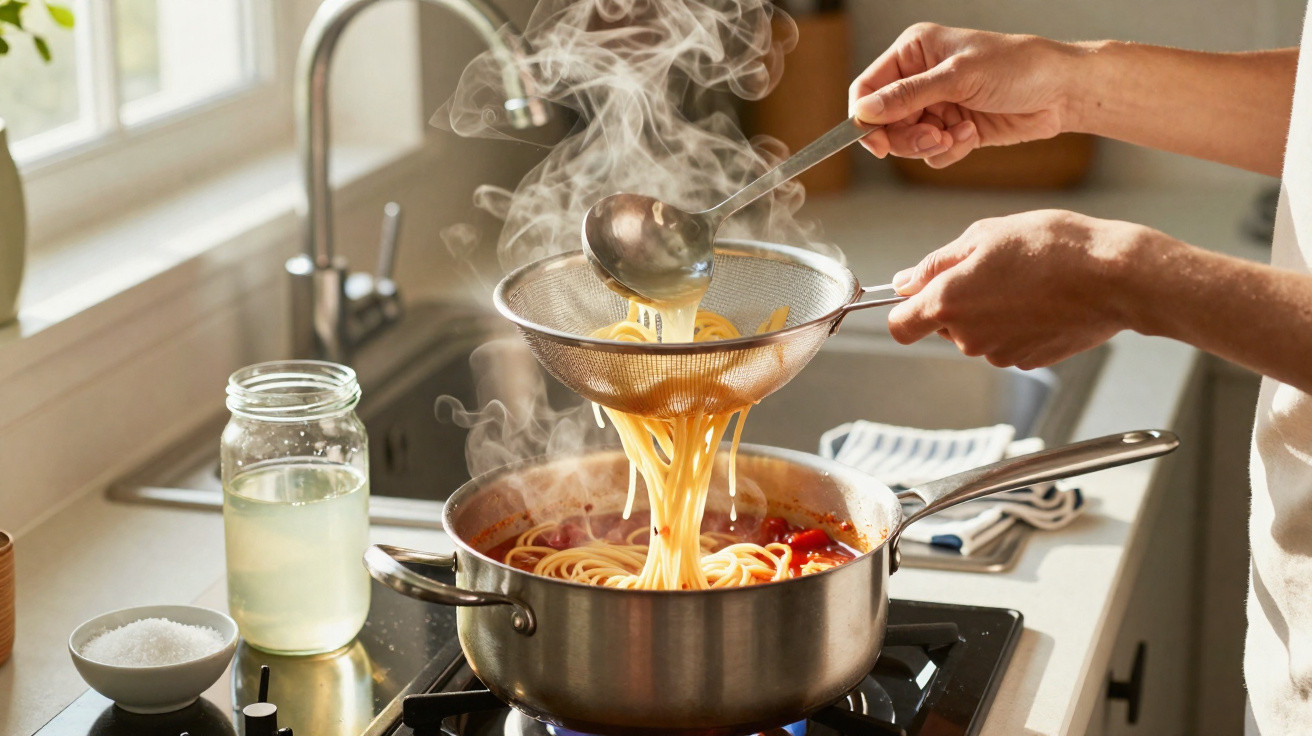
The technique is straightforward: before draining, use a ladle to reserve one or two scoops of pasta water. When combining pasta and sauce, add the water a sip at a time, stir vigorously and watch the consistency. This makes it easy to fine-tune the dish precisely.
“The water that causes problems in the drain creates exactly the creaminess we all recognise from restaurant pasta.”
When saving pasta water is especially worthwhile
This tip pays off most with simple dishes:
- tomato sauce: becomes less watery, smoother, and binds better to the pasta
- pesto: coats more evenly instead of sitting as a “dollop” on the plate
- oil-and-garlic pasta: feels less dry and more lightly silky
If you like cooking with less fat, you gain another advantage. A splash of pasta water can replace some of the oil without losing that satisfying mouthfeel.
How to dispose of pasta water without damaging your kitchen
Nobody needs to turn pasta night into a science project. A couple of small tweaks to your routine are enough to protect your pipes and reduce strain on the sink area.
Option 1: Divert it into a pan or bowl
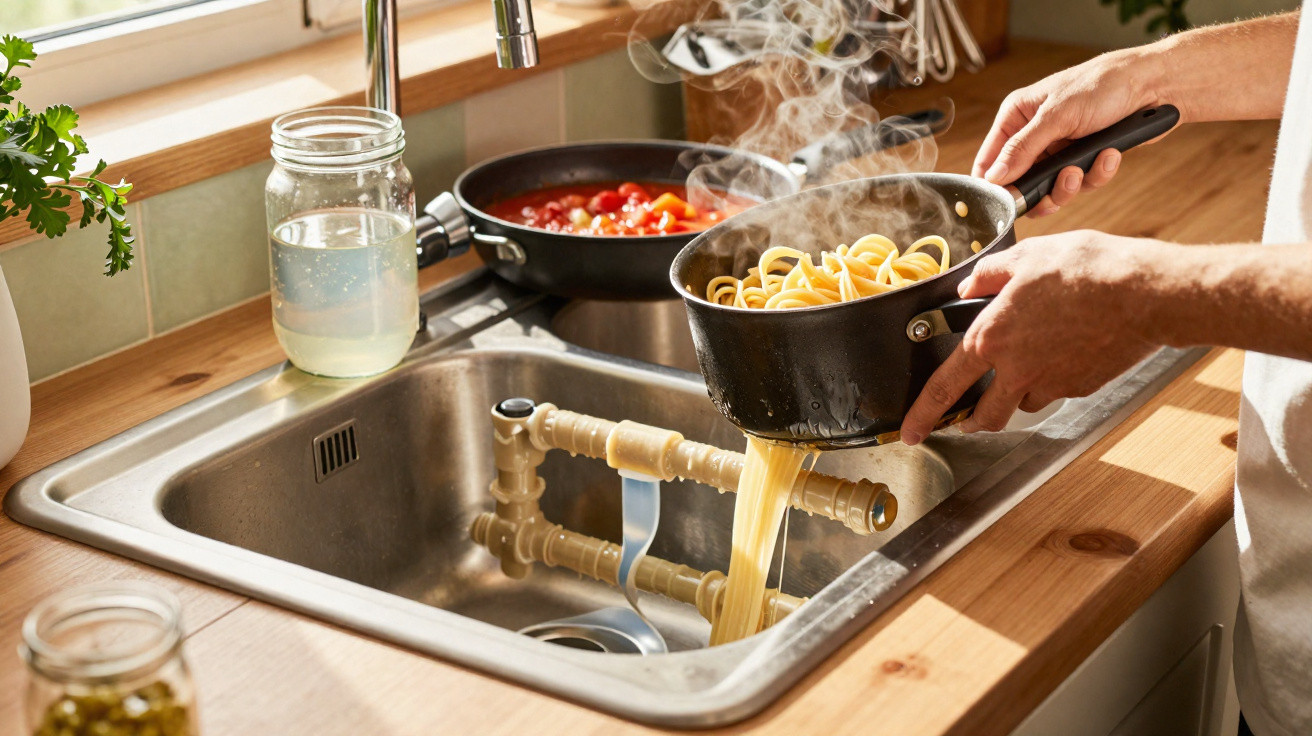
When draining, place a large bowl or a second pan in the sink. Pour the pasta into a colander so the hot water is collected rather than going straight down the plughole. Then:
- set aside one or two ladles for your sauce
- let the rest cool for a few minutes
- only pour it away once the temperature has dropped significantly
This greatly reduces the heat shock to both pipework and sink.
Option 2: “Dilute” with cold water
If you do want to send the cooking water directly into the sink, run cold water at the same time. The temperatures mix in the bowl and the siphon/U-bend, avoiding an extreme temperature swing. You can still catch a small amount in a mug beforehand to use in your cooking.
Gentle home remedies instead of brute-force drain tactics
Rather than relying on extremely hot water, it’s better to keep pipes clear with regular, gentle cleaning habits. Two simple approaches have proved effective:
- a slow pour of lukewarm water (up to a maximum of 50 °C) mixed with coarse salt
- bicarbonate of soda with clear vinegar, left for about 15 minutes, then rinsed through with hot (but not boiling) water
If a blockage is already there, physical effort often works better than aggressive heat. A basic rubber plunger can shift many plugs mechanically, without putting additional stress on materials or seals.
“Anyone who regularly uses lukewarm water, salt and bicarbonate of soda prevents problems - without harsh chemicals from a bottle.”
Getting more value from a single pan of water
Pasta water isn’t only useful for sauces. Many home cooks put it to work in other ways too:
- for pre-soaking pulses or grains, since the water is already warm and lightly salted
- for soaking heavily soiled pots and pans - the starch helps loosen residues
- for bread or pizza dough: cooled pasta water can replace part of the liquid and adds a touch more aroma
If you need to cook with less salt, though, take care: heavily salted cooking water isn’t suitable for every use. For sensitive plants, for instance, it doesn’t belong in watering cans.
Once you keep all of this in mind, the cloudy pan of water looks different. What used to be treated as pure waste turns out to be a useful resource - and a potential risk if you tip it thoughtlessly into the sink. By adjusting one or two small parts of your kitchen routine, you protect your pipework and get more flavour from an ordinary pasta dish.





Comments
No comments yet. Be the first to comment!
Leave a Comment