
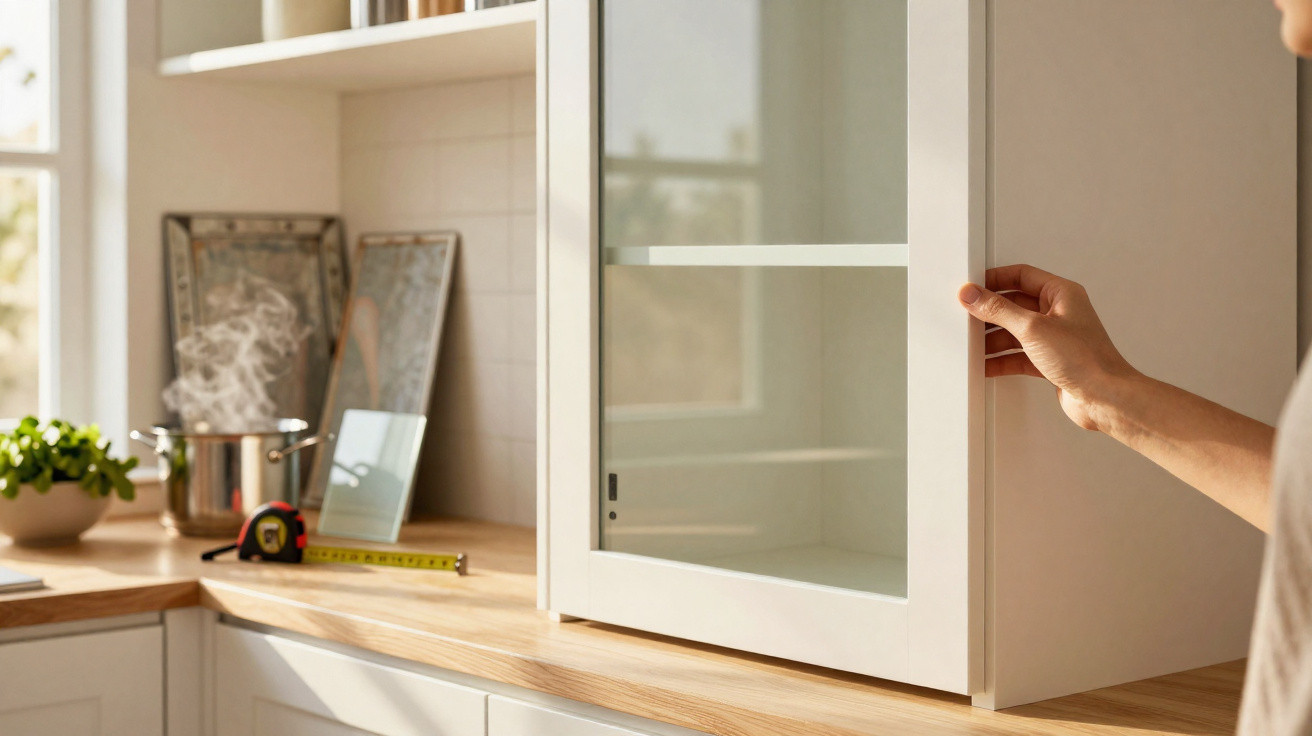
Aluminium kitchen doors were once a very common choice because they coped well with moisture and needed little upkeep. In today’s more contemporary fitted kitchens, however, toughened glass is showing up as a more refined alternative for cupboards, larders and internal partitions, thanks to its smooth finish, lighter look and quick day-to-day cleaning.
Why are aluminium doors losing ground?
Aluminium doors are still practical, but the metallic appearance can make a kitchen feel colder or a bit dated, especially on wall units and highly visible fronts. In newer designs, the preference for continuous surfaces and more understated finishes has reduced the appetite for exposed aluminium.
Aesthetics matter here too. Wide frames, obvious tracks and too much shine can feel heavy in small kitchens. Because of this, many joinery workshops have moved towards toughened glass, reflective glass, fluted glass or opaque (milk) glass for doors paired with more discreet hardware.
Which material best replaces aluminium in the kitchen?
Toughened glass is one of the strongest replacements for aluminium kitchen doors when the aim is to combine durability, moisture resistance and a more up-to-date finish. It will not rust, it does not swell with steam, and it does not soak up grease in the way porous materials can.
In practice, glass doors can be specified in different versions to suit the style of the project:
- Clear toughened glass for cupboards where crockery is neatly arranged.
- Reflective glass to partially conceal what is inside the unit.
- Fluted glass to add texture and obscure stored items.
- Opaque (milk) glass for a brighter kitchen and a cleaner-looking finish.
- Smoked glass for dark cabinetry, industrial kitchens or schemes featuring black metal.
Why does toughened glass cope better with moisture?
Toughened glass does not develop rust because there is no exposed iron in the door itself. In a kitchen with steam, sink splashes and frequent cleaning, this helps prevent oxidation marks and keeps the surface stable for longer.
Even so, the hardware must be chosen carefully. Hinges, handles and profiles should have a moisture-resistant finish-such as stainless steel, anodised aluminium or a high-quality powder-coated finish-so the whole door assembly lasts longer.
How do you choose the right model for the kitchen?
The best choice depends on where the door sits, how often it is used and how much of the cupboard interior you want on show. On wall units, reflective and fluted glass work particularly well because they keep the cabinetry feeling light without fully revealing plates, jars and food stores.
Before replacing aluminium kitchen doors, it is worth checking a few design details:
- Select toughened glass with a thickness suited to the size of the door.
- Use a safety film when there is a risk of frequent impacts.
- Opt for discreet handles or a finger-pull channel for a cleaner look.
- Avoid fully clear glass on cupboards that are very full.
- Confirm the cabinet structure can carry the weight of the new doors.
Can you swap them without refurbishing the entire kitchen?
In many situations, you can replace only the old fronts with toughened glass doors while keeping the carcasses, shelves and part of the existing joinery. The joiner will need to measure the openings, check module alignment and adapt hinges or tracks to account for the new door weight.
Costs are usually higher than for a basic aluminium door, particularly with specialist glass such as reflective, fluted or smoked. Even so, the change can modernise the kitchen without breaking up flooring, replacing wall finishes or rebuilding every unit-leaving the room brighter, more moisture-resistant and easy to wipe clean.



Comments
No comments yet. Be the first to comment!
Leave a Comment