
The finish is lifting. The slats are starting to split. You swear you’ll sort it out “next weekend”, and then the months disappear. But what if the answer has been sat quietly above the cereal all along-cheap, unobtrusive, and far tougher than you’d expect?
He arrived with a flask and that carpenter’s half-smile that suggests he’s repaired the same headache more times than he can count. It was still early. The deck boards felt icy, and the chairs had gone that guilty shade of grey that makes you blame yourself for the weather. Instead of heading to the shed, he went straight to the kitchen pantry and produced three unlikely items: a bottle of flaxseed oil, white vinegar, and a leftover nub of canning wax from last summer’s jam.
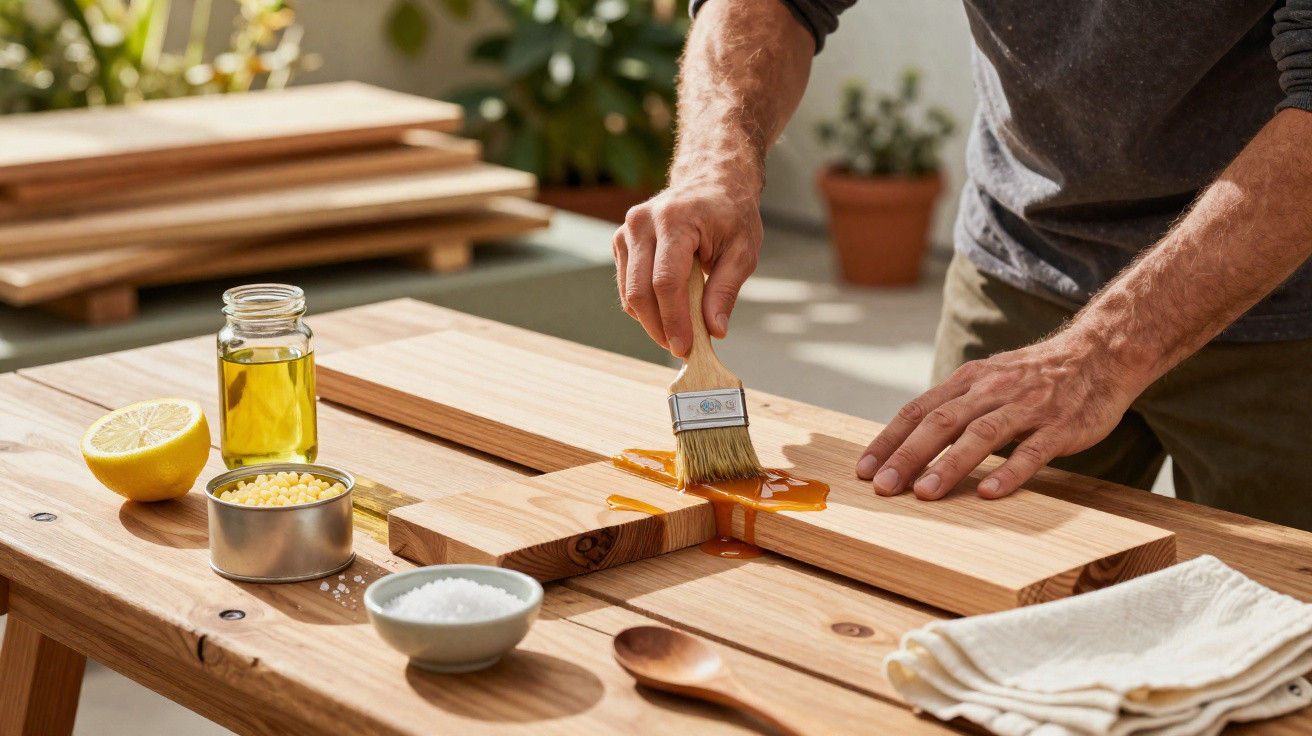
The kettle began to hiss. He set up a makeshift double boiler-one saucepan sitting inside another-and soon the air carried a warm, nutty scent across the garden. He held the brush with the steadiness of a barber: unhurried, exact. The timber seemed to drink it in. We watched the colour return, like blood rushing back into a cold hand. He gave a quick wink and delivered the line I still can’t shake. It all smelt like toast and rain.
Why pantry ingredients can outsmart the weather
What stands out first isn’t gloss-it’s how the water reacts. Once treated, droplets gather into beads and roll away like tiny marbles, rather than pooling and sinking into the grain. That behaviour buys time-and time is about the only thing wood ever asks for. A kitchen-grade oil that cures into a flexible layer, paired with a hint of wax, creates a thin, breathable coat over the fibres.
We tested it on one Adirondack chair and left the matching chair untouched as a control. By the next morning, a sudden May squall had come through. Afterwards, one chair wore bright, rounded pearls of water while the other looked sodden and weighed down. Under a hesitant bit of sunshine, the beading chair dried within minutes. The untreated one held on to moisture like a jumper in fog. Everyone knows that feeling when you realise the easiest remedy was the one you kept ignoring.
The reasoning is straightforward. Food-grade flaxseed oil (the edible relative of linseed) is a drying oil: it polymerises, forming a stronger, linked structure as it reacts with air and light. Wax doesn’t really penetrate; it stays near the surface and reduces surface tension so water can’t get a grip. Vinegar isn’t a finish at all-it’s a reset that cuts through grime and mildew so the oil can reach clean wood. This isn’t magic; it’s chemistry you already own. The outcome isn’t a brittle shell that later cracks; it’s a supple skin that shifts with the timber.
The carpenter’s pantry blend, step by step
Begin with cleaning. In a bowl, combine one part white vinegar with one part warm water, then add a single drop of washing-up liquid. Wipe the wood patiently, rinse with clean water, and leave it until it looks and feels completely dry. Sunshine helps. This prep removes residues and spores that feed mildew, and it freshens greyed wood without erasing its character.
Then make the finish. Pour one cup of flaxseed oil into a heatproof jar. Shave in one to two tablespoons of canning paraffin or beeswax, if you’ve got some left from preserving season. Stand the jar in a small pan of gently simmering water to melt the wax, stirring (a chopstick works well) until the mixture turns clear and silky. If you’ve no wax, use the oil on its own-it still does the job, you’ll simply recoat a bit more often. Warm the wood in the sun. Brush on a generous layer. Leave it for 30 minutes. Then wipe off all the excess with a cotton rag. Apply two to three coats over the day, wiping back each time. Allow 48 to 72 hours to cure before heavy use. The aim is for water to bead, not burrow.
What usually goes wrong? Reaching for olive oil. Outdoors it stays tacky and can go rancid. Drenching the surface and walking away. That can leave a gummy film that attracts dust. Missing the wipe-down between coats. The wipe is the secret handshake. Trying to hurry the drying. The oil needs oxygen and time to properly set. And, if we’re honest, nobody manages that perfectly every day. Rags go outside to dry, never in a pile. Oily cloths can self-heat and ignite if screwed up together. Lay them flat over a railing or hang them until they’re crisp, then dispose of them safely.
“People think you need a chemistry set,” the carpenter laughed. “Most days, the wood wants a meal and a raincoat. You already own both.”
- Pantry prep: 1:1 white vinegar and water for cleaning.
- Finish mix: 1 cup flaxseed oil + 1–2 tbsp canning wax or beeswax.
- Warm gently using a double boiler setup; no open flame under the jar.
- Apply 2–3 coats, wiping back every time, then cure 48–72 hours.
- Top up with a light coat each season in harsh sun, or twice a year in mild climates.
What changes when you treat wood this way
The timber can still breathe-and that’s the understated advantage. Film finishes often look flawless right up until they fail; after a season of sun, they can lift and peel like sunburn. This pantry blend wears by fading, not flaking. Touch-ups are uncomplicated: a small jar from the cupboard, a brush, and half an hour before dinner. The surface stays tactile and natural rather than plasticky. You keep the grain and add durability. Your deck chairs stop demanding a huge “project weekend” with sanders and dust sheets; instead, they ask for a Saturday coffee and a rag. The routine matters as much as the recipe. After the next storm, you’ll notice water sliding away and wonder how many other solutions are hiding in plain sight-somewhere between the pasta and the honey. That thought sticks around.
| Key point | Detail | Why it matters to you |
|---|---|---|
| Use a drying oil from the pantry | Food-grade flaxseed oil cures into a flexible protective network | Affordable, low-odour protection without speciality products |
| Add a touch of wax | Canning paraffin or beeswax improves water beading and helps it last longer | Better resistance to rain and fewer re-coats |
| Prep and safety matter | A vinegar wash improves penetration; dry rags flat to prevent ignition | Cleaner results and a safer at-home workflow |
FAQ
- Can I use olive or vegetable oil instead of flaxseed oil? They don’t cure hard outdoors and can go sticky or rancid. Flaxseed oil is a drying oil that polymerises; it’s the pantry option that behaves like a real finish.
- What if I don’t have canning wax or beeswax? Use oil alone and plan on one extra coat and slightly more frequent refreshes. Wax helps bead water but the oil does most of the preserving.
- Will this work on pressure-treated lumber or painted surfaces? It’s for bare or weathered, unsealed wood. Pressure-treated can take it once aged and dry; paint blocks absorption, so this method won’t penetrate through a solid film.
- How often should I reapply? Harsh sun or coastal air: a light coat each season. Shaded or mild climates: twice a year is plenty. Watch the beading-when it flattens, it’s time.
- Is the vinegar step really necessary? It lifts grime, knocks back mildew, and improves absorption. Skip it and the oil may sit on dirt instead of soaking the fibres where it matters.





Comments
No comments yet. Be the first to comment!
Leave a Comment