
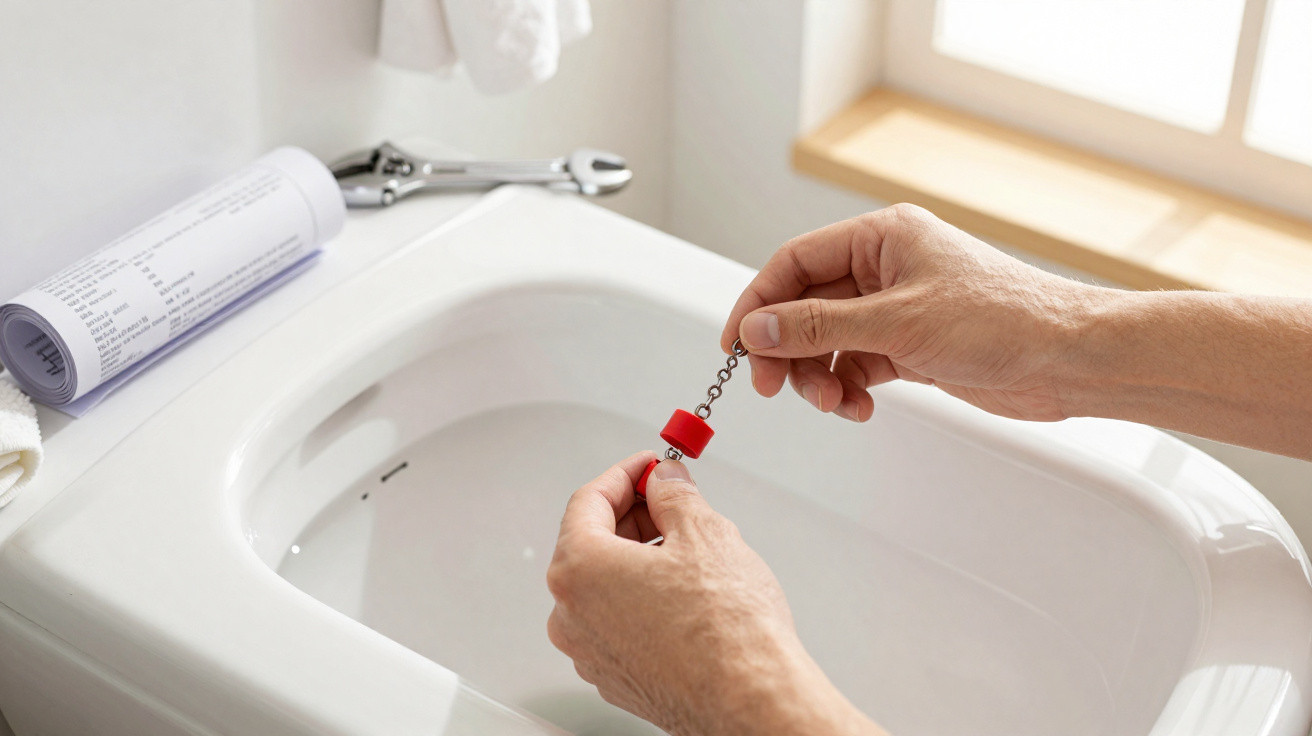
A faint hiss coming from the loo can quietly wear down your patience, push up your water bill, and even steal your sleep.
Moving quickly makes all the difference.
That steady trickle after a flush usually doesn’t mean the toilet is finished. In plenty of homes, a small adjustment to the flapper chain or the float will stop the noise, reduce waste, and bring back silence in minutes.
Why a running toilet matters more than you think
A running toilet can feel harmless - more like background sound than a real issue. But while it’s making that noise, water is slipping away litre by litre, hour after hour. In both the UK and the US, water companies now warn that one faulty toilet can waste thousands of litres - or hundreds of gallons - in a single month.
A typical running loo can waste enough water in a day to match several full bathtub loads, without you ever seeing it on the floor.
With water charges climbing and drought spells affecting more areas each year, households are already being pushed to use less. That constant cistern trickle turns into noticeable cost and contributes to a much bigger environmental issue that extends well beyond your bathroom.
The upside is that most running toilets don’t need a plumber, a full replacement, or hours spent watching tutorials. In most cases, the culprit is one of two straightforward parts inside the tank:
- the flapper and its chain
- the float that controls water level
Once you know what these components are meant to do, that “mystery” noise in the middle of the night becomes easier to diagnose.
Inside the tank: what actually makes your toilet run
Take the lid off the tank and you’ll find a small mechanical set-up driven purely by gravity and water pressure. There are no electronics, no lights, no alarms - just a simple sequence that repeats every time you flush.
The flapper: a small hinge with a big job
The flapper is the rubber (or silicone) valve at the base of the tank. When you press the handle, a chain lifts the flapper so water can rush into the bowl. After the flush, the flapper should fall back into place and seal the outlet completely.
When it doesn’t seal properly, water continues to leak out. The fill valve then responds by topping the tank up again. The toilet never fully “rests”, which is why you might hear brief refilling bursts or a light, constant hiss.
Most chronic running toilets trace back to one simple fault: the flapper does not close cleanly and stay shut.
The chain between the handle and the flapper is often part of the problem. If it’s too tight, it can hold the flapper slightly open. If it’s too loose, it can drop under the flapper and stop it sealing - just enough to create a slow leak.
The float: your tank’s water-level manager
Higher up, the float is connected to the fill valve. As the tank refills, the float rises with the water level. When it reaches its set position, it signals the valve to shut off.
If that shut-off height is set too high, water will start to creep into the overflow tube in the centre of the tank. You may not see any flooding, but you’ll hear the tank continuously refilling as water drains away via the overflow.
Older toilets typically have a large ball float on an arm. Newer systems often use a slimmer float that moves up and down a vertical shaft. Either style can usually be adjusted in seconds once you know where to look.
Five-minute fix: adjusting the flapper chain
In many homes, the quickest repair is simply setting the flapper chain correctly. No tools are required, and you don’t need much DIY confidence - just careful observation and a small change to a metal link.
| Step | What to do | What to check |
|---|---|---|
| 1. Turn off the sound, not the water | Lift the tank lid and flush once to watch how things move. | Note how the chain lifts and how the flapper drops. |
| 2. Check chain length | Look for slack when the flapper is fully closed. | Roughly 0.5–1 cm (¼–½ inch) of slack works best. |
| 3. Shorten or lengthen the chain | Unhook the chain from the handle lever and reattach it to a different link. | The flapper should sit flat with no constant pull. |
| 4. Test the flush | Flush again while watching closely. | The flapper should open fully, then close cleanly without the chain catching. |
| 5. Listen for leaks | Wait a minute after the tank refills. | No trickling sound, no ripples in the bowl, no extra refills. |
Aim for a chain that lifts the flapper easily but hangs loose enough that it never stops the flap from sealing.
If the chain still catches, look for corrosion or kinks. A replacement chain is inexpensive - often less than a coffee - and can sort out an otherwise perfectly serviceable cistern.
Fine-tuning the float for a quieter toilet
If the chain is set correctly and the toilet still runs, the next place to look is the float. This adjustment determines the final water level in the tank and whether water is spilling into the overflow tube.
Adjusting a modern vertical float
Many newer toilets have a narrow plastic float that slides on a vertical shaft beside the fill valve. Its height is usually set with a small screw or clip.
- Locate the adjuster: a plastic tab or a small screw near the float.
- Lower the float slightly so the water level finishes about 2–3 cm (around 1 inch) below the top of the overflow tube.
- Flush, allow the tank to refill, and check where the water line stops.
If you still see water going into the overflow, lower the float a little further. Small adjustments can make a noticeable difference to the cut-off level.
Adjusting an older ball float
A traditional ball float sits at the end of a long arm made from metal or plastic. Changing the ball’s height changes where the tank stops filling.
- Check for a screw where the arm attaches to the fill valve - turning it down lowers the arm.
- On some versions, you carefully bend the metal arm downwards to reduce the float height.
- Let the tank refill and keep an eye on the overflow tube. The water line should sit just below the top.
If you can see water slipping into the overflow tube, the tank is overfilling and the float sits too high.
Once the water level is set correctly, the constant refilling sound usually disappears. The tank fills, shuts off, and stays quiet until the next flush.
When fast fixes are not enough
Some toilets won’t be solved by a quick tweak. As soon as you start checking parts, you may uncover wear that needs more than an adjustment.
- Cracked or warped flapper: If the rubber is hard, distorted, or covered in gritty limescale, it may fail to seal even with the chain set perfectly. A universal replacement is inexpensive and works with most models.
- Damaged overflow tube: A split tube can leak without much noise. You might notice water trickling from a crack rather than flowing over the top. This typically means replacing the flush valve assembly.
- Tired fill valve: If the valve won’t fully shut off even with the float lowered, the internal parts may be worn. Many people can fit a modern replacement valve in under half an hour.
In hard water areas in both the US and the UK, mineral build-up often speeds up wear. Some households now add a quick tank inspection once a year - alongside smoke alarm tests and boiler servicing - to catch early signs before they become costly.
Why this tiny repair has bigger consequences
This year, water regulators in both countries have repeated the same message: domestic leaks quietly undermine conservation targets. Toilets are consistently near the top of the list. Unlike a burst pipe, they don’t demand attention - they simply whisper away through the night.
Fixing one running toilet can save more water in a month than switching off the tap while brushing your teeth for a year.
Across a city, the numbers add up quickly. If tens of thousands of homes each have a small leak, it puts pressure on ageing infrastructure and increases the cost of treating water. Those costs are then passed back to customers. It also strengthens the case for new reservoirs and treatment plants, rather than using existing supplies more effectively.
A simple adjustment to the flapper or float becomes a quiet form of prevention. Your bill benefits, local networks face less demand, and in drought-prone areas - such as the American West or parts of southern England - small everyday repairs support wider efforts to keep water available without stricter restrictions.
Extra checks and habits that keep the toilet honest
After you’ve dealt with the obvious cause, a few simple habits can help stop that late-night hiss from returning.
- Twice a year, lift the tank lid and look for slime, limescale, or rubber that’s becoming brittle.
- Add a few drops of non-staining food colouring to the tank and wait 20 minutes; if colour shows up in the bowl, water is leaking past the flapper.
- Don’t put bricks or heavy objects in the tank to “save water” - they can damage parts or alter water levels unpredictably.
- Watch for sudden increases on your water bill; a hidden toilet leak is often the reason.
Landlords, especially, are paying more attention to these quiet leaks. In blocks of flats or multi-unit buildings, one faulty toilet can distort shared charges and trigger disputes. As a result, quick checks between tenancies - including a basic chain and float inspection - are now commonly added to lists alongside door locks and smoke alarms.
For homeowners, learning this small skill often opens the door to other low-pressure maintenance. Someone who adjusts a float today may feel ready to replace a washer or fit a water-saving shower head tomorrow. Confidence tends to come from small successes, not major projects.
Some councils and water suppliers now offer free or discounted flappers and leak strips as part of conservation drives. They’ve seen the same pattern: once people realise how easy it can be to stop a running toilet, they deal with it sooner next time rather than waiting months for a repair appointment.
Behind a simple five-minute adjustment sits a bigger change in mindset. Fixtures start to feel less like sealed mysteries and more like quiet machines you can tune. One chain link moved, one float lowered, and the bathroom becomes still again - with the water staying in the system, the bill staying steadier, and the only sound at night being the gentle creak of a house that is no longer leaking money down the drain.






Comments
No comments yet. Be the first to comment!
Leave a Comment