
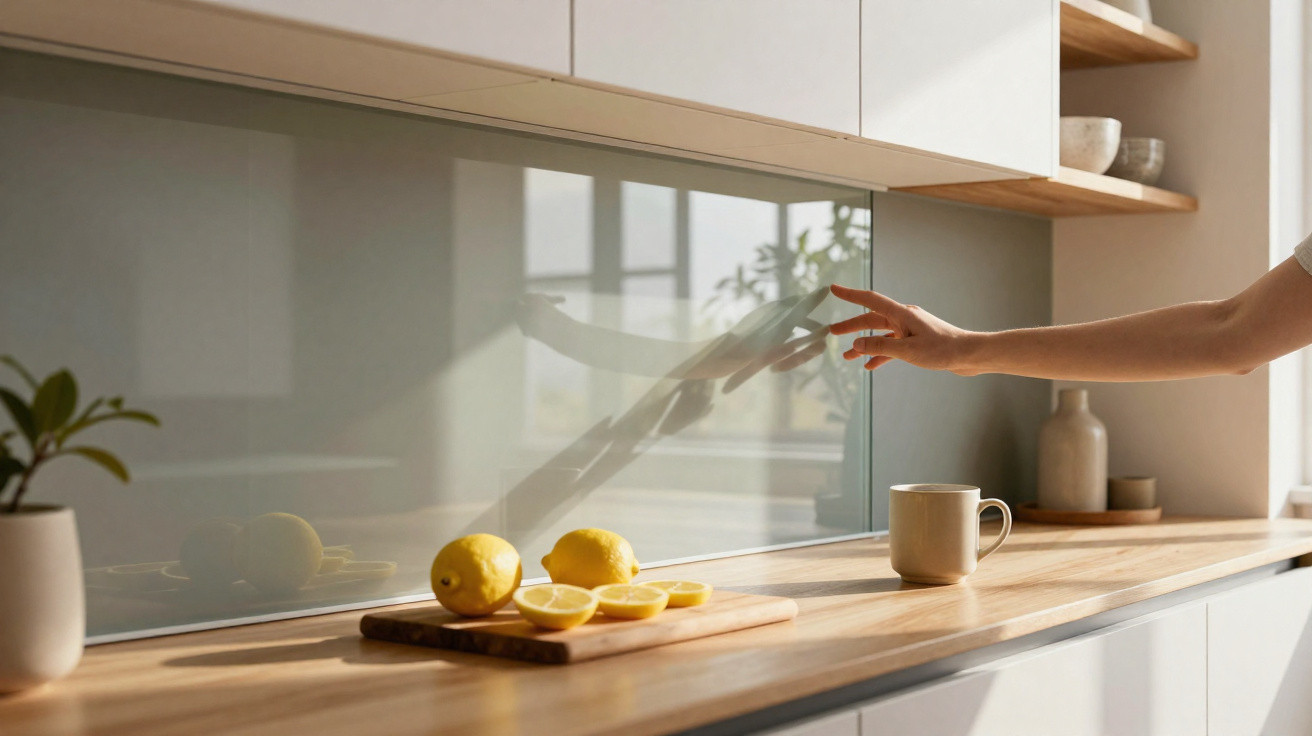
If you hear “dark, tinted glass” in a kitchen, you might instantly picture those orange-brown built-in kitchens from the 1970s. Yet that very material is turning up again-unexpectedly-as a sleek, gently reflective splashback behind the hob and worktop. Interior designers are applauding its return, while purists roll their eyes. So what’s making the smoky glass kitchen splashback so desirable-and why does it divide opinion so sharply?
Why an old kitchen idea is coming back right now
As winter draws to a close and the days begin to stretch out, many of us are still spending plenty of time at home-and the kitchen starts to feel like the room that matters most. All of a sudden, white metro tiles look a bit dull, and stainless steel can seem flat and cold. People want a change, but not a full kitchen refit. This is exactly where a tinted glass splashback comes into play.
Not long ago, hardly anyone would have chosen this finish on purpose. It was seen as dark, dated-almost embarrassingly retro. That perception has shifted noticeably. Glass makers and kitchen studios are now working with subtler tints, cleaner lines and higher-quality detailing. What once felt like a “tacky” leftover becomes a deliberate statement of considered, long-lasting design.
Smoky glass works like a subtle filter: a hint of nostalgia, paired with a clearly modern attitude.
The timing also fits a broader mood: many buyers no longer want to redecorate from scratch every few years. Favourite pieces are meant to stay, and the kitchen should still feel current years down the line. A new tinted glass splashback can dramatically update an existing kitchen-without replacing cabinets, the worktop or appliances.
What sets today’s glass splashback apart from the 1970s version
To see why the trend now feels so different, it helps to look at the new colour palette. The muddy browns have gone, replaced by richer, more nuanced tones:
- a soft charcoal tint with a slight mirror-like effect
- warm bronze with a restrained golden shimmer
- deep black with transparency that still lets light through
These shades are easier to live with and far less overpowering. They can bring a rustic wooden kitchen up to date instantly, or make an ultra-minimal white run feel softer and more homely.
Price is another factor. Natural stone, labour-intensive tiling or handmade ceramics can push costs up quickly. A well-made glass splashback, cut precisely to size, is in many projects significantly more affordable-yet still looks premium.
How smoky glass plays with light-and makes small rooms feel bigger
The most important quality of tinted glass isn’t the colour itself, but how it handles light. Where matt tiles tend to absorb brightness, and a standard mirror can feel too harsh (and too demanding to keep pristine), a lightly tinted glass splashback sits neatly in the middle.
It bounces light back into the room without dazzling. Daylight becomes gentler, and artificial lighting feels less stark. In compact kitchens-especially in older properties or narrow galley layouts-the benefit is obvious: the area behind the worktop appears deeper, almost like an extra layer of space.
Because it’s semi-transparent, it can feel as though the wall shifts slightly backwards-making tight layouts noticeably calmer.
Day to day, the material also proves surprisingly forgiving. Water marks, grease splashes and fingerprints tend to show far less on tinted glass than on clear glass or highly polished stainless steel. Most of the time, a quick wipe with glass cleaner is enough; for heavier grime, a soft sponge with a little mild washing-up liquid usually does the job.
Which materials smoky glass works best with
One reason these new glass splashbacks have taken off is how well they match the finishes currently popular in kitchens. Instead of fully smooth, high-gloss fronts, many brands and homeowners are moving back towards natural surfaces, visible grain and tactile texture.
A strong pairing: glass and wood
A particularly popular route is combining smoky glass with wood tones:
- lightly grey-tinted glass with pale oak
- bronze-toned glass with walnut or smoked oak
- near-black smoky glass with black-stained timber
Wood brings warmth; glass adds crispness and a touch of elegance. This combination can look understated yet distinctly more upmarket-especially with handleless fronts-than a straightforward white tiled splashback.
Contrast with concrete, stone and ceramic
If you’re using concrete effects, plastered walls or natural stone, you’ll often be working with very matt, almost powdery surfaces. Glass introduces a highlight without tipping the whole scheme into “high-gloss kitchen” territory. The tint softens the finish, too. Rather than a hard mirror, it reads more like deep water with a gentle reflection.
Designers often suggest keeping the rest of the run fairly calm when you choose a dark glass splashback. Too many bold accessories, shelves and decorative items can dilute the impact. Usually, two or three strong ceramic vases or a well-curated set of wooden chopping boards is enough to complete the look.
Why the trend divides opinion-and who it suits
Despite its advantages, smoky glass isn’t universally loved. Some still read dark glass as “retro”; others dislike the fact that, depending on the tint, you can faintly sense the wall behind it. And the associations-bars, hotels or office-kitchen vibes-don’t appeal to everyone.
This kind of splashback tends to suit people who:
- want to upgrade an existing kitchen without buying everything new
- cook often but don’t want to be cleaning constantly
- prefer clean lines and restrained colour palettes
- still appreciate a subtle lounge or bar-like character
On the other hand, if you love a very decorative country-house look with patterned wallpaper and open shelving, smoky glass is less likely to feel right. In that setting, tiles-especially with texture or relief-often make more sense.
Practical questions: safety, installation and maintenance
Technically, it’s almost always made from toughened safety glass or laminated safety glass. It can cope with heat near the hob and, if it ever fails, it breaks into small, blunt pieces. Typically, the kitchen is measured first, then the glass is cut at the factory; edges are polished and cut-outs for sockets are defined in advance.
Installation is usually done either with a specialist adhesive directly onto the surface, or with rail systems. If you don’t want to remove an existing tiled splashback, the glass can often be fitted over it. If you’re renting, it’s worth checking with your landlord whether this kind of alteration is permitted. Some systems can even be removed again without leaving residue.
For everyday care, glass cleaner and a microfibre cloth are usually enough. Cream cleaners and abrasive pads are best avoided, as they can scratch the surface over time. Strongly alcoholic cleaners can damage the tint or any coatings.
What to consider when choosing the colour
Brochure photos tend to show perfectly lit display kitchens. Real homes are different. Before ordering, it’s sensible to request several sample panels and hold them against your wall at different times of day. In particular, check:
- How does the tone read in daylight from north- or south-facing windows?
- How does it shift under warm or cool LED lighting?
- How much does it reflect if there are windows or lights opposite?
Many people are surprised by how much lighter an initially “very dark” option looks once it covers a whole wall and starts reflecting light. Equally, a bronze tone that’s too pale can quickly feel busy if lots of wall units, handles or appliances are mirrored in it.
If you’re unsure, a mid-grey is usually the safest choice: it works with white, black and wood-toned kitchens without demanding all the attention.
More than a hype: what the trend says about our kitchens
The return of smoky glass points to a wider shift in how we think about kitchens. They’re no longer just workrooms; they’re part living space, part video-call backdrop, part everyday stage set. Materials that once felt more at home in hotels or bars are now moving naturally into private homes.
If you’re planning a new kitchen-or refreshing an existing one-a smoky glass splashback can deliver a big visual change with comparatively little effort. Yes, it polarises. But that’s also why it’s compelling: it forces a clear design decision, rather than defaulting to the nearest standard tile.





Comments
No comments yet. Be the first to comment!
Leave a Comment