
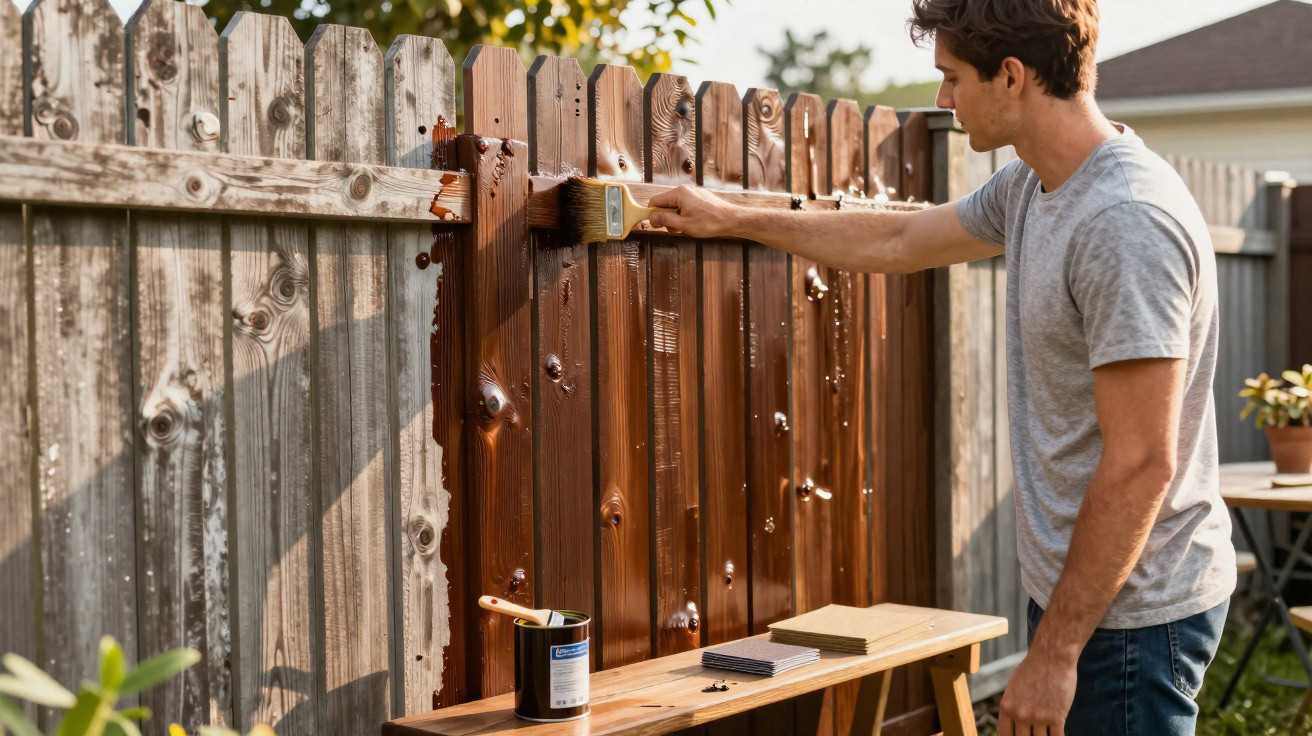
A quick look at the terrace, balcony or garden is usually enough to see it: cold weather, rain and frost have left clear marks on outdoor timber. In many cases, that’s when maintenance gets expensive - wood preservatives and stains can easily cost 30 Euro or more per tub at DIY stores. Right now, a dark brown Spectrum wood stain at Action is seriously shaking up that pricing.
Winter damage to timber: why it’s worth acting now
Outdoor wood is constantly under strain throughout the year. Over winter it absorbs moisture, frost can open up tiny hairline cracks, and then spring brings UV exposure on top. Together, these conditions attack the surface until paint or stain starts to lift and peel.
- Rain and snow soak into unprotected timber
- Frost forces fine cracks to open further
- Sunlight fades the surface and dries it out
- Older coatings lose adhesion and start flaking away
If you leave it like that, timber can swell over time, warp, or even become rotten. At that stage, a fresh coat won’t be enough - and you may be looking at a costly replacement. As a homeowner or garden owner, that’s exactly the moment you want to postpone for as long as possible.
"Anyone who paints or stains their timber regularly often extends the life of fences, pergolas and garden furniture by many years."
Action offer: dark Spectrum stain for under five euros
In many Action branches, there’s currently a product on the shelf that’s catching the eye of budget-minded DIYers: a dark brown Spectrum wood stain for exterior use, sold in a 2,5-litre canister for 4,78 Euro.
Broken down, that works out at around 1,90 Euro per litre - a price that even professional-grade wood protection products from the DIY superstores rarely match. For bargain hunters, it sounds almost too good to be true.
Key details of the stain at a glance:
- Contents: 2,5 litres
- Shade: dark brown
- Base: water-based, acrylic stain
- Areas of use: indoor and outdoor
- Suitable for: doors, frames, shutters, fences, garden furniture, privacy screens
According to the product description, it’s intended for common exterior timber types and promises a long-lasting protective layer against weathering. That’s particularly appealing for heavily used surfaces such as front doors, window frames, or the dining table out on the patio.
How good can a stain this cheap really be?
Many DIYers have the same initial reaction: if it’s that inexpensive, it can’t be any good. In practice, it’s not quite that straightforward. Water-based stains have improved significantly in recent years. They’re typically far more pleasant to apply than traditional solvent-based options, and the smell is much less intense.
For typical jobs around the home, a decent water-based stain is often perfectly sufficient - especially if you plan to recoat every few years anyway. What matters most is the quality of your preparation and how many coats you build up on the timber.
"Price is only one factor - what really determines durability is the substrate, the film thickness and regular upkeep."
People reporting on comparable products often say the same thing: if you don’t let wood weather to the point of no return and you tackle it early, budget stains can deliver very respectable results. Fences and garden furniture, in particular, look dramatically better after a fresh coat - even if the absolute maximum lifespan of a premium product isn’t achieved.
Step by step: get it painted in a weekend
1. Preparing the timber
Before applying any stain, the surface needs to be right. A few straightforward steps are usually enough:
- Remove loose paint or old stain residue using sandpaper or a sanding block.
- Lightly sand the whole area so the new coat grips properly.
- Clear all dust thoroughly with a hand brush or vacuum cleaner.
- Wipe away grease or dirt marks with a slightly damp cloth, then let the surface dry.
If the timber is heavily greyed or already soft, it’s worth taking a hard look at whether staining still makes sense. In borderline cases, it may improve the appearance, but it can only do so much for the underlying condition of the material.
2. Applying the Spectrum stain
Because it’s water-based, the job is generally quite comfortable. Using a soft, flat brush or a small roller, you can spread the stain evenly across the surface.
- Stir the canister well so the pigments are evenly distributed
- Apply thin but covering coats - two thin coats are better than one thick one
- Always work along the wood grain
- Coat long edges and profiles first, then fill in the larger areas
One practical advantage: afterwards, you can clean the tools with plain water. There’s no need for aggressive thinners, which keeps garages and utility rooms far more pleasant.
3. Drying time and a second coat
Depending on temperature and humidity, a thin coat of water-based stain is usually dry within a few hours. After that, a second coat can go on, noticeably boosting protection and deepening the colour.
Using this approach, it’s realistic to refresh a full terrace, several chairs, or a small garden shed over a single weekend - as long as the weather cooperates and rain doesn’t hit the surface while it’s still wet.
How much area will one canister cover?
The 2,5-litre canister goes a surprisingly long way, depending on how absorbent the timber is. As a rough guide, you can expect around 10 to 12 square metres per litre per coat.
| Item | Estimated amount needed |
|---|---|
| Garden table + 4 chairs | approx. 1–1,5 litres for two coats |
| Small balcony fence | approx. 1,5–2 litres for two coats |
| Carport posts (standard size) | approx. 2–2,5 litres for two coats |
| Wooden windows on a detached house (street side) | approx. 1 litre for touch-ups |
If you apply it efficiently, one canister can cover several jobs. For smaller repairs and refresh projects, the volume is generous.
Dark shade: visual effect and practical benefits
The stain on offer comes in a strong dark brown. On many timbers it looks smart and hides older discolouration far better than a very light shade. Scratches and small defects become less noticeable, and the wood gains a deeper, richer look.
A darker finish also brings other benefits:
- Greyed areas are barely visible after coating
- The grain stays visible, but appears calmer
- Dirt is less obvious than it is on pale timber
If you prefer a very natural, light appearance, it’s important to recognise that a dark stain will change that character. For hard-wearing areas such as privacy screens or garden gates, though, the darker tone often feels more suitable - and easier to live with.
What buyers should watch out for
Before heading straight to the shelf at Action, it’s worth doing a quick check:
- Stock levels vary by branch, and the promotion may be limited
- Check the production date or best-before date on the canister
- At home, test first on an inconspicuous spot to see how much the timber darkens
Water-based stains dry quickly, but they’re more sensitive to damp weather soon after application. Checking the forecast before you start can save a lot of frustration.
Why regular wood protection pays off even on a tight budget
Timber has become expensive - whether it’s fence panels, decking boards or a seating set. If you keep up a routine of brushing on stain, you can often avoid spending several thousand euros, because replacement gets pushed much further into the future. Low-cost options like the Spectrum stain at Action make it even easier to get started.
It’s also practical: one canister can handle a larger project and still leave enough for small touch-ups later in the year. A quick refresh on weather-facing sides or areas in strong sun helps stop the protective film disappearing completely - and prevents moisture from soaking back into the timber unchecked.
If you like keeping your home looking well cared for while watching the spending, offers like this can be a genuine opportunity. With minimal outlay, the garden can look freshly updated again - no expensive overhaul required, just a weekend and an affordable canister of wood stain.






Comments
No comments yet. Be the first to comment!
Leave a Comment