
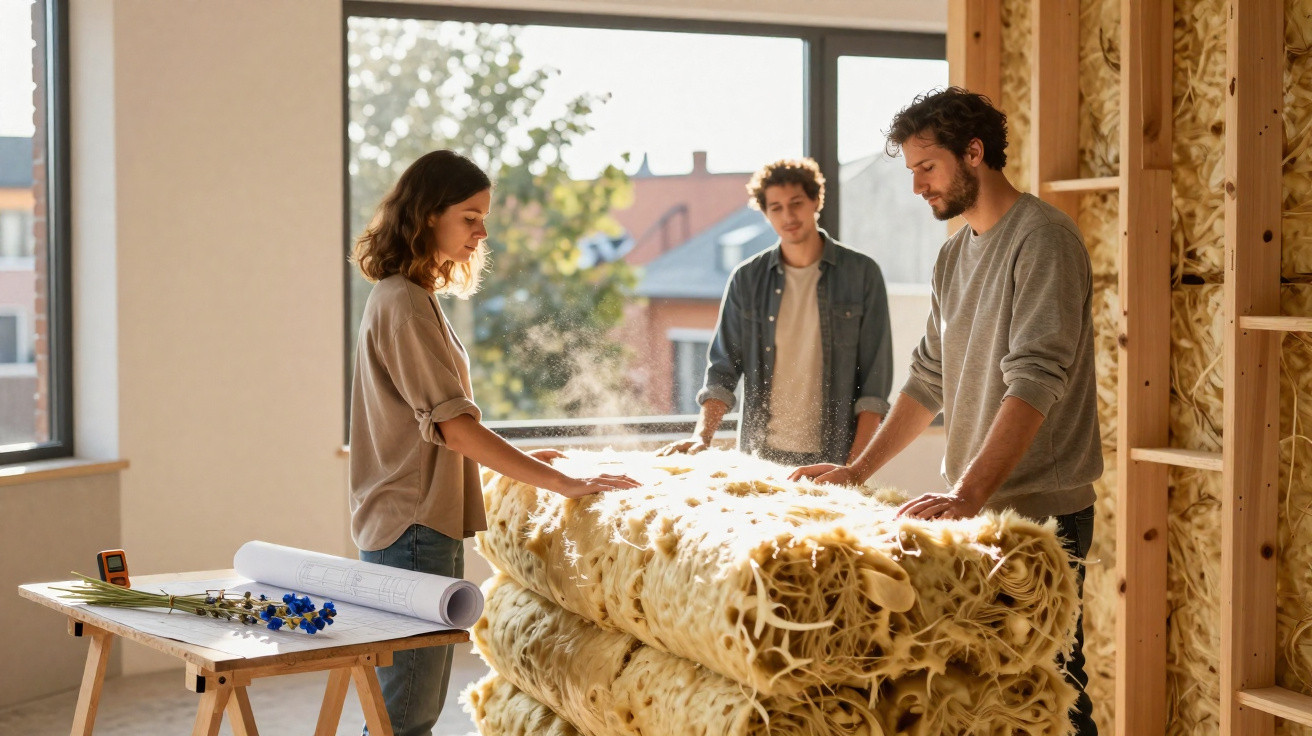
Anyone building today, or refurbishing a home, is thinking well beyond attractive façades and a sleek kitchen. A property’s energy standard, eligibility for grants, and resale prospects are all heavily shaped by one factor: how effectively the building is insulated. That is exactly where an old agricultural crop is stepping into the spotlight-flax, more specifically flax fibre insulation. It promises lower heating costs, a more comfortable indoor environment and a cleaner ecological conscience, and it can noticeably raise a home’s value.
Why insulation now determines a home’s future
The building envelope has become the biggest lever for energy efficiency. Cut corners here and you typically pay for it later. High-quality insulation:
- keeps warmth inside during winter
- blocks heat in summer
- reduces heating and cooling costs over the long term
- protects against outdoor noise
- improves the property’s CO₂ balance
In existing buildings, the impact is easy to feel: a poorly insulated detached house can lose up to two thirds of its heating energy through the roof, external walls and floor. Once refurbishment is on the table, the question follows quickly: which material should go into the walls, the roof and beneath the screed?
For a long time, mineral wool, polystyrene and similar products were the default choice. They insulate reliably, but there is a catch: manufacturing and disposal can burden the environment and the climate, while recycling is often complex or simply not economical.
"More and more homeowners are therefore looking for a solution that saves energy, improves the indoor climate and reduces the ecological footprint at the same time-without turning the site into an experiment."
Flax insulation: an ancient crop turned modern building material
Most people associate flax with textiles. Yet the same plant can also be processed into a high-performing insulation material that is seeing growing demand across Europe. The raw material can be grown locally-particularly in Northern European regions-and typically requires comparatively little water and fewer plant protection measures.
Renewable, regional and resource-efficient
From a climate and environmental perspective, the advantages are clear:
- Flax regrows annually and binds CO₂ while it is growing.
- The crop thrives without extreme water consumption.
- Many cultivation areas are within Europe, avoiding long transport distances.
- The fibre can be recycled 100% and is biodegradable.
That makes flax fibre insulation a strong match for approaches such as “climate-neutral building stock” or “cumulative CO₂ savings across the lifecycle”-terms that increasingly appear in energy certificates, bank discussions and grant applications.
Technical performance: thermal insulation and sound insulation in one
A natural material only makes sense if it actually lowers heating costs. This is where flax surprises many sceptics. Typical flax fibre products achieve insulation values that can compete with widely used mineral or synthetic alternatives.
And for occupants, there is another practical benefit: flax does not just help with temperature control-it also absorbs noise. Traffic, neighbours or nearby commercial areas can sound noticeably quieter when roofs, walls and intermediate ceilings are lined with the natural fibre.
"Flax insulation acts like a triple filter: against cold, against heat and against noise-and all of that without a chemical smell in the house."
Healthier living: what flax fibre does indoors
Many conventional insulation products make homeowners wary during installation: itchy fibres, dust, and recommendations for respiratory protection. Flax scores points here with handling that is markedly more pleasant.
- No itchy fibres like those found with some mineral wool products
- no emission of volatile organic compounds (VOCs) that can burden indoor air
- good moisture regulation: the fibre buffers humidity in the air and releases it again
- therefore a lower risk of mould formation within the build-up
For families with children, allergy sufferers, or people with respiratory conditions, these can be compelling arguments. When refurbishing with ecological goals in mind, many owners pay attention not only to a better energy figure on paper, but to a genuine improvement in everyday comfort.
How flexibly flax can be used in practice
Flax fibre insulation now arrives on site in a range of formats:
| Application area | Typical product form |
|---|---|
| Pitched roofs and timber frame walls | flexible rolls or boards |
| Intermediate floors, internal walls | rolls, sometimes blown-in material combined with other natural fibres |
| Floor build-up, top floor ceiling | more rigid boards, sometimes combined with wood fibre |
| Timber-framed and period building structures | adapted boards and packable fibre products |
Its light, elastic structure makes installation straightforward. Many tradespeople report that flax mats can be cut cleanly, wedge into place well, and reliably fill cavities. Confident DIYers can also work with it, provided they respect the basic principles of building physics.
"If you are refurbishing your roof or façade anyway, switching to natural insulation can tick several boxes at once: better performance, a better indoor climate, and a clearer conscience."
Comparison with conventional insulation materials: where flax leads-and where there is still room
In the market, flax fibre competes with well-established options: mineral wool, polystyrene and polyurethane. These products are widely used, installed millions of times over, and often cheaper to buy.
Strengths in environmental and health credentials
When it comes to ecological footprint, flax makes a strong statement:
- significantly lower energy demand during manufacturing
- renewable raw materials instead of fossil origins
- no problematic fibres or plasticisers for occupants
- at end of life, easier to reuse or compost
As requirements tighten around embodied energy and CO₂ emissions, these points matter more and more. For developers, local authorities and private clients, factors like these can determine whether a concept looks viable in the long run-or soon feels outdated.
The price factor: short-term extra cost, long-term effects
At present, the per-square-metre cost of flax insulation is usually higher than that of many standard products. The market is smaller and production chains are less industrialised. Set against this are:
- an uplift in the energy certificate that can support resale value
- improved chances of qualifying for certain grant programmes
- a long service life when installed correctly
- fewer disposal headaches at the end of its life
Particularly for refurbishments planned with a later sale or follow-on financing in mind, it can pay to consider the full calculation: bank advisers and buyers increasingly focus on energy efficiency class and building ecology.
Political tailwinds for natural insulation
With stricter energy requirements for new builds and tighter expectations for existing stock, pressure on owners is rising. At the same time, many states promote materials with low climate impact-through grants, tax relief or low-interest loans.
Natural insulation products such as flax fit this framework precisely. Those who switch early often benefit from more attractive conditions and position their property for the future. Some programmes explicitly rate ecological building materials more favourably, which can increase the overall level of support.
"Choosing insulation is no longer just a technical detail-it influences grant amounts, energy labelling and, ultimately, the market value of a house."
Thinking practically: which buildings benefit most from flax?
Flax fibre is not reserved for ambitious eco-projects on greenfield sites. In fact, the material can be especially persuasive in these cases:
- Older buildings with timber structures: vapour-open build-ups that regulate moisture well
- Detached houses with loft conversions: noticeably better comfort under the roof in summer
- Apartment buildings exposed to noise: a considered combination of acoustic and thermal performance
- KfW or low-energy projects: advantages for life-cycle assessment and certification
If you are unsure, it is sensible to bring in an energy consultant who has experience with natural building materials. Quality depends heavily on design and workmanship: junction detailing, moisture protection, suitable vapour control layers-these decide whether flax fibre achieves its full potential.
What owners should pay close attention to
When reviewing quotations, it is worth checking several points carefully:
- the product’s exact thermal conductivity (lambda value)
- fire protection class and approved applications
- specifications for moisture absorption and release
- certifications, for example on emissions and provenance
- the installer’s experience with natural insulation materials
A carefully designed build-up helps prevent later damage caused by moisture or poor airtightness. Flax may be more forgiving than some synthetic alternatives, but it still forms part of a sensitive system of layers, joints and connections.
More than a trend: how flax insulation is changing the market
By combining energy cost savings, improved indoor comfort and a credible environmental profile, the material aligns with several societal shifts at once. Sustainable building is no longer mere image management; it increasingly shows up financially in insurance premiums, loans and purchase prices.
That creates a new equation for clients: it is not only the sticker price of the material that matters, but the overall package of lifespan, energy performance, grant uplift and later market appeal. Viewed this way, flax moves out of a niche and into the consideration set of a broader audience-from young families renovating older homes to investors preparing portfolios for future climate requirements.
"Anyone insulating today influences the value of their home for decades. Natural fibres such as flax therefore become a strategic building block, not just a likeable eco option."




Comments
No comments yet. Be the first to comment!
Leave a Comment