
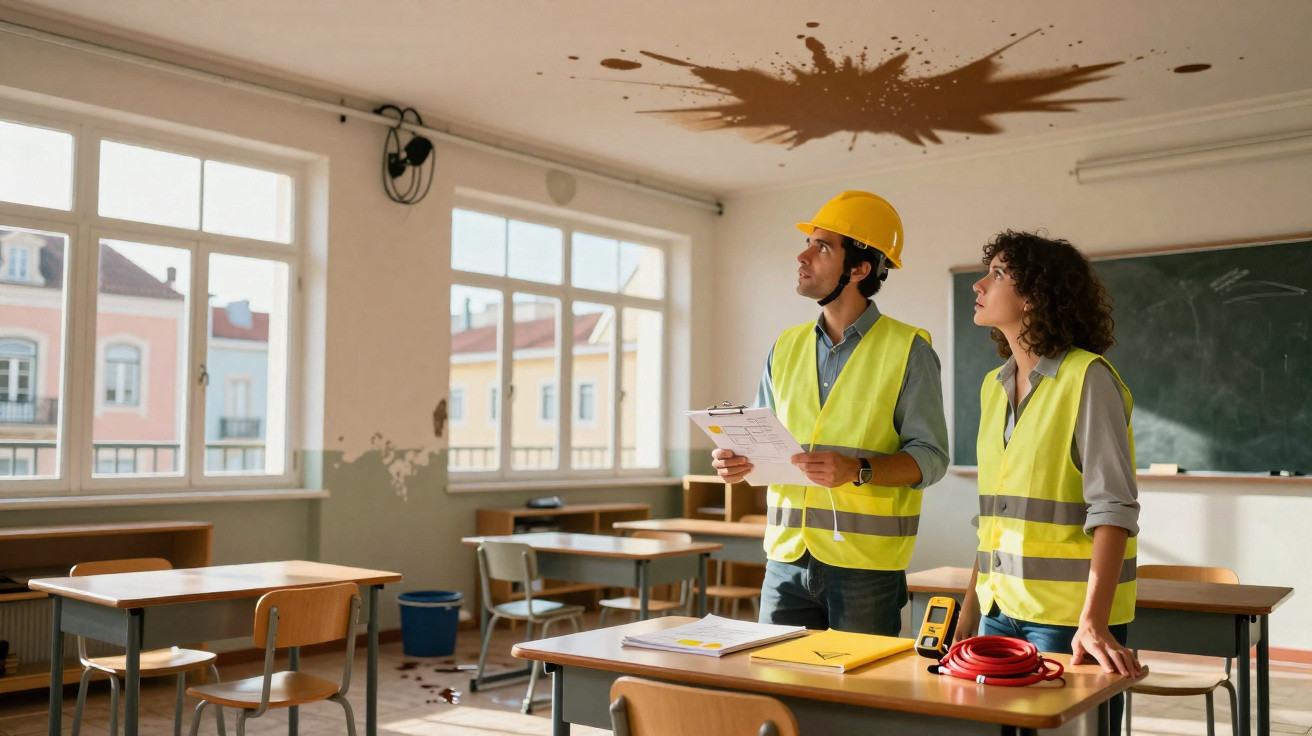
Leaks, deteriorating electrical systems and even asbestos are among the issues highlighted in an assessment by Metaprof of schools in Lisbon. The independent observatory’s review points to serious structural shortcomings across dozens of state schools and suggests that more than half of the cases identified still have no assured funding. The City Council acknowledges that most buildings have needs, but says works are being scheduled in phases and that there are no situations posing a safety risk.
Metaprof diagnosis of Lisbon public schools
The disagreement begins with how the problem is framed. Metaprof, an independent observatory that tracks conditions in public schools, lists 33 establishments as needing intervention and warns of direct effects on learning conditions and the health of school communities. The City Council does not dispute that building work is required, but rejects the idea that there is danger. "The Municipality has no knowledge of any situation that puts the safety or health of school communities at risk", it states in a reply sent to JN.
Funding and the timetable for requalification
There is also a gap between the two readings when it comes to funding. The survey points to 17 schools with no prospect of refurbishment in the short term. The local authority responds that this is not about leaving schools out, but about sequencing. "The fact that the available funding does not cover all schools does not mean exclusion, but rather a phased scheduling of interventions", it says, stressing that responsibility lies with the Government.
City Council: transferred buildings and priority levels
In the City Council’s account, the scale of the issue is significant, but not surprising. A total of 32 schools were transferred into municipal management and, of those, 28 require rehabilitation, having been graded by priority level on the basis of technical assessments. Seventeen are deemed very urgent or urgent, while the remainder fall into an intermediate stage, with more limited, targeted works.
The local authority also points to a long-standing lack of investment. "Many buildings, as a result of years without investment in maintenance and/or rehabilitation by the Central State, require structural interventions", it says, describing problems that pre-date the handover of responsibilities. It adds that the choice of works and the associated funding follow nationally defined rules under the decentralisation process, which in turn constrains delivery times.
In the meantime, the response has largely involved maintenance and conservation measures intended to keep schools operating properly. "CML has been carrying out maintenance and conservation actions in the transferred schools, whenever necessary", it notes, while awaiting more substantial interventions whose scheduling depends on central decisions and budgets.
Asbestos
The most sensitive element of the assessment-the possible presence of asbestos-also draws different interpretations. Metaprof includes the issue among the problems it identified. The City Council replies by pointing to work already completed and to further checks now under way, highlighting the removal of asbestos from 11 schools between 2022 and 2023 and an analysis requested from the Ricardo Jorge Institute.
Long-term plans versus the current picture
This situation sits uneasily alongside longer-term planning. Lisbon’s Education Charter sets out new schools, refurbishments and a network aligned with demographic change through to 2034. For now, however, the picture is different: ageing buildings, postponed interventions and a response that progresses in stages.






Comments
No comments yet. Be the first to comment!
Leave a Comment