
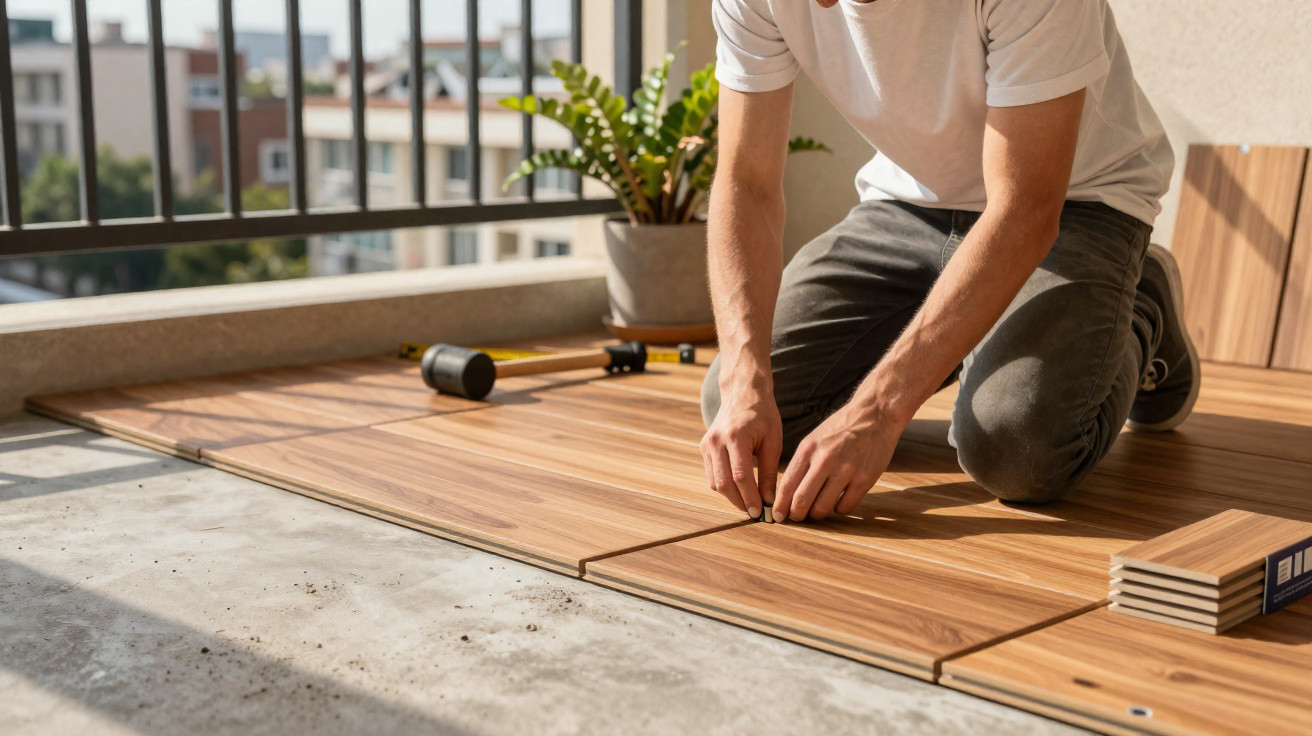
In outdoor areas of flats and houses, click-together modular decking-also known as modular balcony flooring-is increasingly being chosen as a contemporary alternative to traditional cold tiles. It suits anyone who wants a balcony that looks smarter and feels cosier without a major project, without mess and demolition, and without paying for lots of tradespeople, because fitting it is straightforward and fast. The material also stands up well to everyday use and changing weather.
What is modular balcony flooring and why is it so popular?
Modular balcony flooring is made up of tiles or slats that connect to one another using a click or locking system, like a large jigsaw that becomes a continuous “rigid mat”. Depending on the style, it may be produced from treated timber, WPC (a blend of wood and plastic), high-strength plastic, or synthetic rubber-giving you plenty of options to tailor the look of an outdoor space.
This type of covering has been replacing more traditional flooring on many balconies because it does not require removing the existing surface. It can also hide minor imperfections, and it tends to make the area feel warmer both visually and underfoot. Some versions include a raised underside that lets water drain beneath the modules, helping to reduce puddles, mould and that constant damp feeling-particularly useful for balconies with plants or those exposed to direct rain.
How to install modular balcony flooring yourself
Modular balcony flooring is designed with DIY in mind, so you can fit it without relying on a bricklayer or enduring a long refurbishment. On many products, each tile has tabs and slots that join together easily; the key is paying attention to alignment and measurements to achieve a neat finish.
- Check the existing base: the surface should be clean, solid and fairly level, with only gentle unevenness-no loose or broken sections.
- Plan the direction of the clicks: begin from a square corner of the balcony to make the edging and finishing simpler.
- Start clicking the pieces together: assemble the first row carefully, then continue in parallel rows.
- Make cut-outs where needed: measure and trim modules around columns, skirting, doors and any other obstacles.
- Confirm everything is secure: ensure all locks are engaged and that no modules wobble.
Which tools make fitting modular flooring easier?
Although it is simple to lay, modular balcony flooring looks cleaner and more professional with a few basic tools. Before you start, it is worth checking the product packaging for any specific guidance and gathering everything you will need.
These items help the job go faster, improve accuracy and reduce rework:
- Tape measure to measure the area and work out how many modules you need.
- Pencil or marker to note cutting lines on the pieces.
- Bow saw, handsaw or jigsaw to trim modules for corners and obstacles.
- Straightedge or set square to keep cuts straight and lines aligned.
- Rubber mallet (optional) to tighten clicks without damaging edges.
What about the look and durability of modular balcony flooring?
Modular balcony flooring can be arranged to create different visual effects-such as straight runs, diagonal layouts or alternating directions-and you can also combine colours and textures. Wood-effect options give the space the feel of a deck and leisure area, while neutral shades such as grey and black tend to suit more urban, minimalist styles.
When it comes to durability, materials like WPC and high-strength plastics generally cope well with sun, rain and temperature changes, whereas treated timber typically needs protective coatings reapplied from time to time. One major benefit is easy upkeep: day-to-day cleaning is usually just a sweep and a damp cloth with a mild, neutral detergent. And if a piece gets damaged, you can replace only that module-extending the overall lifespan without taking on a full renovation.

Comments
No comments yet. Be the first to comment!
Leave a Comment