
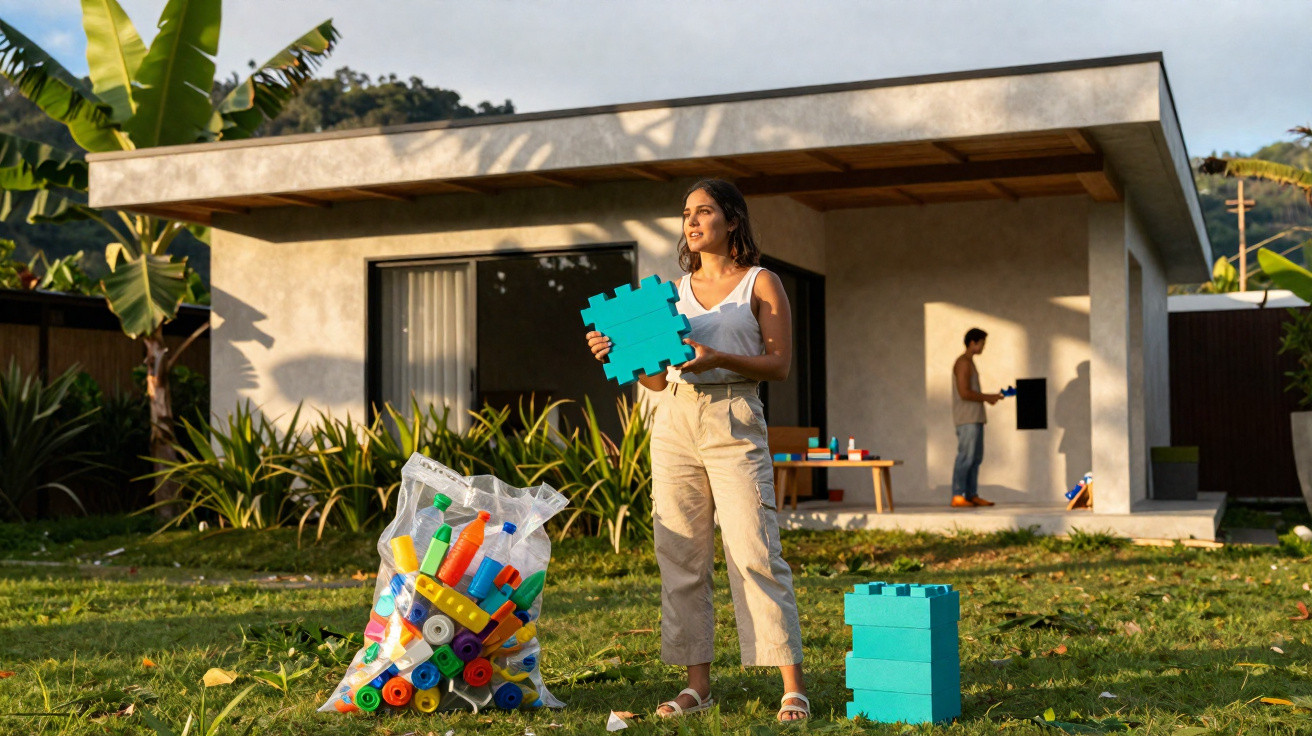
For many families, the quest to own a home demands years of commitment and constant sacrifice. In Costa Rica, one resident turned a long stretch of hard work into an admirable achievement, showing that green technology and solidarity can make innovative housing projects possible in vulnerable, low-income areas.
How did persistence make buying the plot possible?
Cindy Mora Abarca spent almost a decade setting money aside with strict discipline. In Alajuelita, Costa Rica, she ultimately fulfilled her goal of buying a plot of land-an example of how personal effort can be the first step towards the long-awaited home.
Even after securing ownership of the land, putting up the walls of the house still felt financially out of reach. With no extra funds available, she could not start conventional building work straight away, highlighting the harsh reality faced by people trying to build without any form of support.
How did 8,000 plastic bottles become a seven-bedroom house?
Volunteers collected thousands of abandoned plastic containers along the coast of Pernambuco and built an impressive property when… Read more
Which partners turned the masonry project into reality?
A combined effort from social organisations and private companies made the building’s structure feasible. Joint support from Habitat for Humanity Costa Rica, Procter & Gamble, Urbarium and Ekojunto provided an effective technical solution to overcome the lack of resources.
This strategic collaboration also delivered all the engineering backing Cindy needed. The initiative enabled a dignified and safe home, underlining how collective co-operation can generate a direct impact in communities facing severe social vulnerability.
Below is a video from Ekojunto Costa Rica’s YouTube channel that explores the points discussed in this topic in greater depth:
How do interlocking recycled-plastic blocks work?
The Bloqueplas system uses modular pieces produced from recycled discarded materials. This industrial approach makes it possible to assemble solid walls quickly, reducing build time while providing excellent thermal and acoustic insulation for the new home.
Because the walls are assembled with modular components, the method avoids heavy use of water and cement during installation. The plastic parts offer strong resistance to fire and to the elements, turning polluting waste into a safe, highly durable alternative.
Bloqueplas Modular System
Construction advantages
Key benefits of the recycled-plastic model:
- Fast, simplified wall assembly;
- High resistance to flames and damp;
- Efficient natural sound and thermal insulation.
What is the ecological impact of reusing 7 tonnes of waste?
Redirecting 7 tonnes of plastic prevented that substantial volume from contaminating rivers, soils and oceans. Large-scale reuse supports the circular economy, transforming accumulated urban discards into a valuable, useful material for housing infrastructure.
Closing the materials loop reduces pressure on landfill sites and lowers construction’s carbon footprint. This approach shows that municipal solid waste holds valuable potential for advancing sustainable development.
Using plastic waste in residential building brings several direct environmental benefits:
- Major reduction in plastic rubbish dumped in nature;
- Sharp decrease in the consumption of traditional masonry inputs;
- Ongoing stimulus for recycling supply chains and environmental protection.
What does this initiative represent for the future of housing?
Cindy’s story shows that sustainable technology is a practical route to tackling the housing shortfall. Integrated green projects can deliver dignity for families, serving as an inspiring model of innovation for cities seeking affordable urban solutions.
Expanding partnerships between the private sector and community organisations strengthens new construction alternatives worldwide. This sustainable method protects the environment while providing safety and comfort for those who most need a home.
Comments
No comments yet. Be the first to comment!
Leave a Comment