
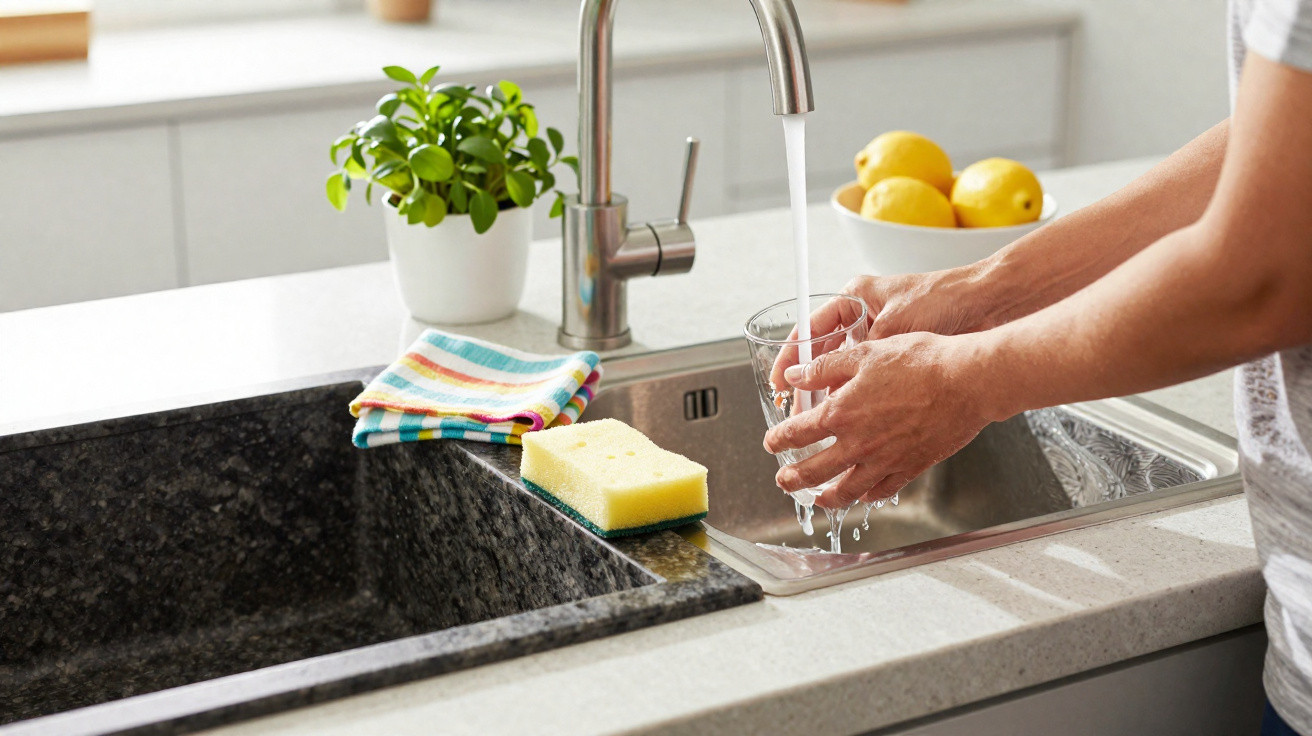
A granite kitchen sink has lost some of its spotlight in projects that favour a lighter-looking worktop, faster cleaning and lower stain absorption. In place of natural stone, a stainless steel kitchen sink has become a practical alternative for compact kitchens, integrated wet areas and refurbishments that involve less demolition.
Why is granite losing ground in the kitchen?
A granite kitchen sink is still hard-wearing, but it calls for care with sealing, cleaning products and liquids that can leave marks once the protective layer has worn down. Coffee, oil, wine and tomato sauce are common worries with more porous stones.
In kitchens that see heavy daily use, that upkeep can strongly influence the choice of material. Anyone cooking every day tends to want a worktop that copes with water, grease and frequent cleaning without relying on regular re-sealing.
What makes a stainless steel kitchen sink more practical?
A stainless steel kitchen sink has a smooth, non-porous surface, which makes it harder for liquids and residue to soak in or cling. That is why stainless steel is standard in professional kitchens, where hygiene, water resistance and quick cleaning are priorities.
- It does not absorb coffee, oil, sauce or wine in the way some natural stones can.
- It can be cleaned using mild washing-up liquid and a soft cloth.
- It stands up well to everyday contact with water and moderate heat.
- It can come with an integrated bowl, which reduces gaps and joints.
How does stainless steel make the worktop feel lighter?
Unlike a solid slab of stone, a stainless steel worktop is typically made from a formed metal sheet over a structural base. This reduces the visual heaviness and makes it easier to create made-to-measure solutions for the bowl, upstand, edges and cut-outs.
That sense of lightness helps in flats, older kitchens and quick refurbishments. When the cabinetry is sturdy and level, a stainless steel kitchen sink and top can replace the existing surface without changing the entire room layout.
What daily care does stainless steel require?
Stainless steel does not stain easily, but it can scratch, show fingerprints and highlight water splashes. A brushed or satin finish tends to disguise these marks better than a highly mirrored surface.
- Use a chopping board to avoid deep scratches.
- Avoid standard steel wool and abrasive cleaners.
- Dry the worktop after cleaning to reduce limescale marks.
- Wipe in the direction of the brushed finish.
- Choose mild washing-up liquid for everyday maintenance.
When is it worth swapping stone for a metal surface?
Changing makes the most sense when the priority is a continuous wet area, with fewer joins and straightforward cleaning after food preparation. A granite kitchen sink still works well in many designs, but stainless steel suits those who want less maintenance and fewer worries about absorption stains.
Before deciding, it is worth measuring the worktop, checking the cupboard structure, and specifying the bowl, tap, upstand and cut-outs. A stainless steel kitchen sink delivers a more technical look and a simpler cleaning routine, as long as the homeowner is comfortable with the natural wear marks that come with use.
Comments
No comments yet. Be the first to comment!
Leave a Comment