
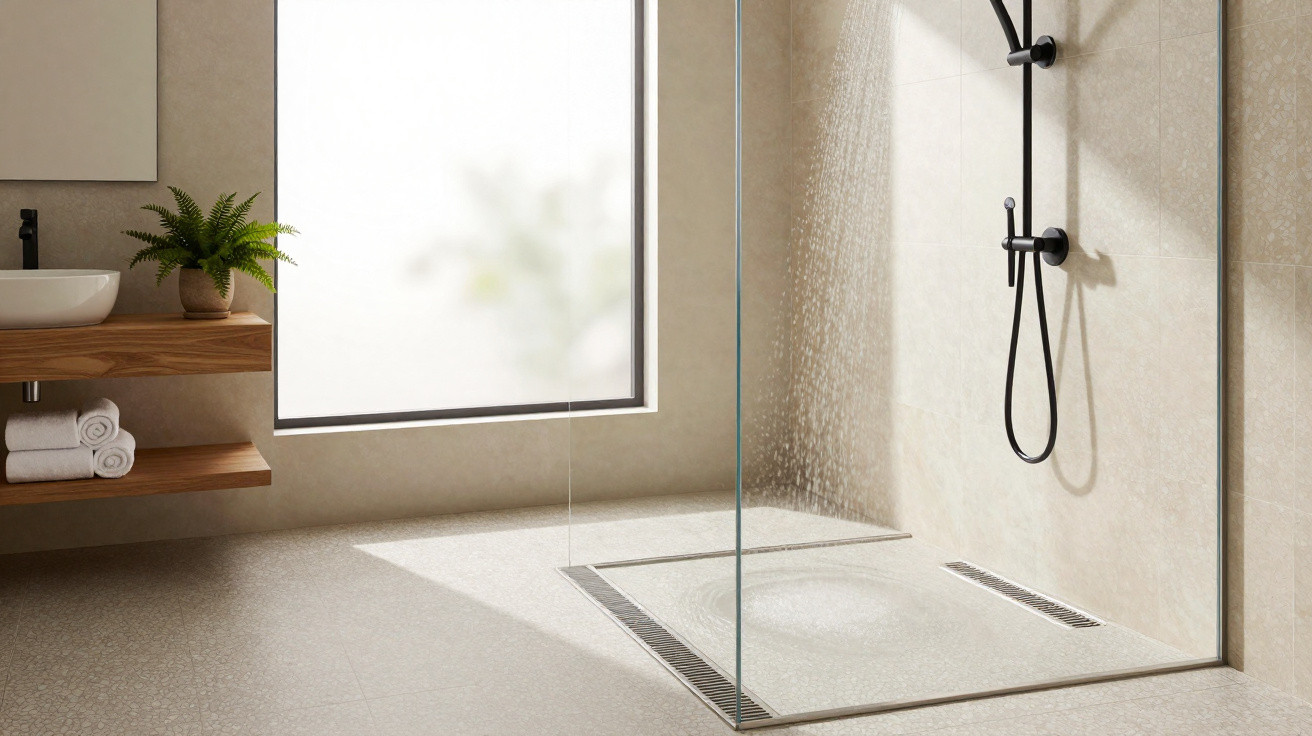
A shower without a shower enclosure does away with doors, aluminium profiles and, in some layouts, even the glass screen that usually separates the showering zone. The payoff is a bathroom that feels more visually continuous and easier to move around in, but it only works with a well-resolved drainage design: without the right floor fall, proper waterproofing and splash control, water can creep into areas that should stay dry.
Why does removing the enclosure make the bathroom feel larger?
When nothing vertical breaks up your sightline, the floor, walls and finishes read as one more uninterrupted surface. This effect stands out most in compact bathrooms, where an open showering area-or one without a threshold-reduces visual barriers and makes circulation feel less chopped up.
- fewer visible profiles and structural elements;
- a continuous finish between the shower area and the rest of the bathroom;
- more freedom to incorporate recessed niches and built-in benches;
- access without needing space to open an enclosure door;
- fewer corners and tracks where residue builds up during cleaning.
What stops the water spreading across the entire bathroom?
The single most critical factor is the floor. In an open shower, the surface must guide water to the drain rather than letting it run towards the basin, the toilet or the doorway. Threshold-free solutions rely on this floor fall to keep water concentrated in the wet zone.
Shower position also changes the outcome. A spray directed into the showering area, adequate separation from the dry parts of the room, and a well-placed drain all help contain splashes. Depending on the floor plan, a half-height wall or a fixed glass panel can keep the open feel while avoiding a completely exposed layout.
What needs planning before you give up the enclosure?
A bathroom without a shower enclosure performs best when drainage and waterproofing are decided at the design stage, not treated as a last-minute finish. If the system is poorly specified, you can end up with standing water, grout problems and leaks. Before work begins, several points need to be considered together.
- floor fall directed towards the drain;
- correct waterproofing in the areas exposed to water;
- flooring suitable for wet conditions;
- location and capacity of the drainage system;
- how far the shower spray is likely to reach;
- enough ventilation to help the room dry.
Can a linear drain help in this type of project?
A linear drain is often used in open shower areas because it lets you organise the floor fall towards a single drainage line, including along a wall. Some systems are designed specifically for barrier-free showers, allowing an almost level transition between the shower zone and the rest of the bathroom.
That said, a linear drain is not mandatory. Point drains can work just as well when the floor is correctly sloped and waterproofed. The right choice depends on the shower area’s size, the format of the tiles, where the pipework sits, and how water will be channelled to the outlet.
Does an open shower work in every bathroom?
Not always. In a very short bathroom-where the shower sits close to the toilet, vanity or door-removing containment altogether can mean a wet floor after every shower. In these situations, a slim fixed screen or another discreet barrier can cut down splashing without recreating the fully enclosed feel of a traditional shower cubicle.
Where there is enough space and the design properly resolves waterproofing, drainage and floor fall, removing the enclosure can create a continuous shower area with fewer obstacles and simpler access. The minimalist look comes from reducing visible components, but performance depends on what’s hidden beneath the finish: a base built to receive water and move it quickly to the drain.




Comments
No comments yet. Be the first to comment!
Leave a Comment