
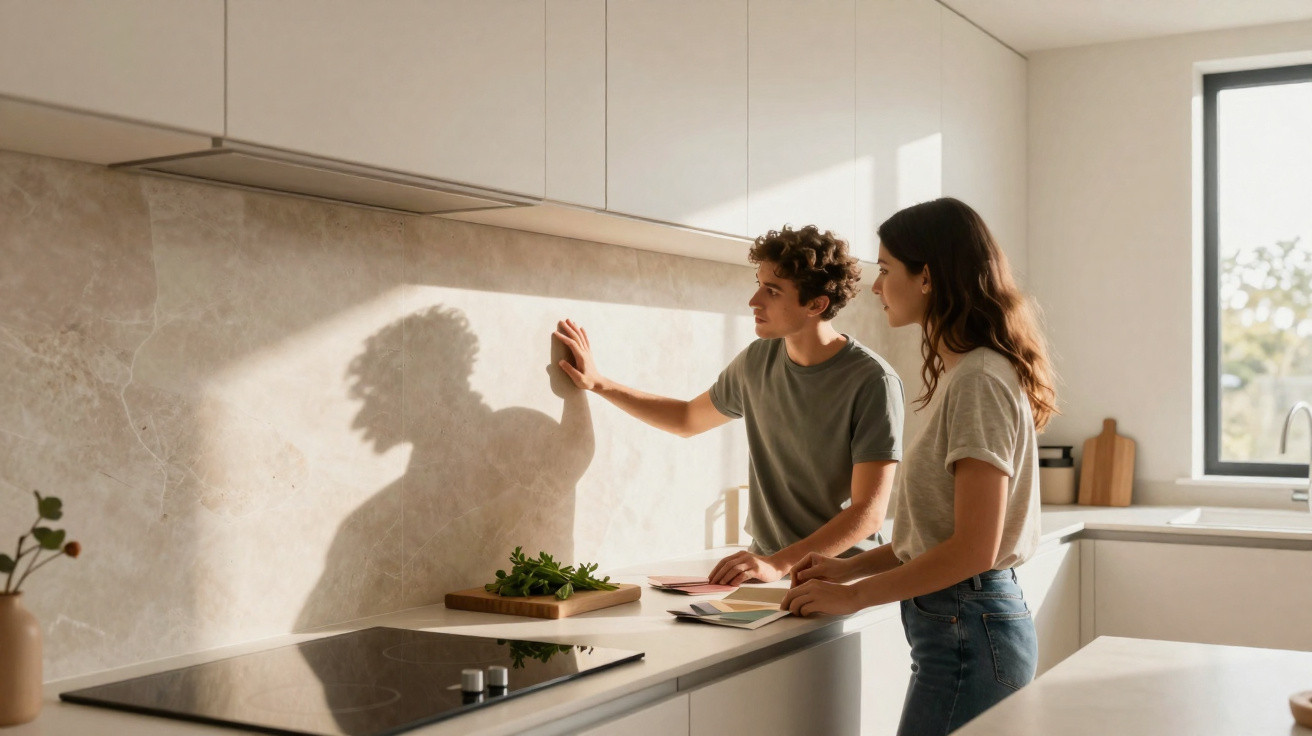
If you’re planning a new kitchen or considering an upgrade, you’ll keep seeing one term cropping up: seamless wall cladding. Instead of traditional tiles with visible grout lines, the worktop and the splashback run upwards as though they’re made from a single piece - smooth, calm and almost like a solid block of stone. What sounds like something from a design showroom is now finding its way into everyday family kitchens, because appearance, maintenance and durability fit together surprisingly well.
Why kitchen tiles are suddenly starting to look dated
For decades, tiled splashbacks above the worktop were the default choice: hard-wearing, fairly affordable and reassuringly familiar. But that look - lots of small tiles broken up by many grout joints - suits today’s interior trends less and less. Many homeowners now want clean lines, less visual noise and surfaces that can be wiped down quickly.
Grout goes against that shift. It can discolour, it can crack, and dirt and grease settle into it even with careful cleaning. In open-plan kitchens that flow into the living area, those small, busy patterns can also make the whole space feel restless.
“The new kitchen look for 2026: a calm, continuous wall surface with no interruptions - from the hob right up to the extractor.”
That’s exactly where seamless wall cladding comes in: large-format panels or cast surfaces replace the patchwork of tiles. The wall still does the practical job, but it looks far more ordered.
The “monolith effect”: one material, one look, one sense of space
Kitchen designers often talk about a “monolithic” impression. What they mean is that the worktop and the splashback appear to be made from one single material - no edges, no breaks in the pattern.
More space, more light, less visual clutter
Because the surface is uninterrupted, the kitchen can feel bigger - even when the room is small. Your eye no longer stops at grout lines; instead, it moves across one continuous plane. In narrow kitchens in particular, that brings a noticeable sense of calm.
- the surface reflects light more evenly
- colours and veining show up more clearly
- wall units, shelves and lighting become the focal points
Subtle natural tones work especially well in this format - light beige, sand, warm stone-greys or a calm marble effect - giving a premium feel without making the room seem cold. Combined with wood-fronted units, the result is a warm, welcoming atmosphere that suits long evenings of cooking and busy family breakfasts.
Which materials work for seamless kitchen walls
This trend isn’t just about the concept - it’s enabled by modern materials. The main options include:
- Quartz and quartz composites: highly durable, resistant to stains, and available in many understated plain or stone-like finishes.
- Dekton and other ultra-compact surfaces: extremely resistant to heat and scratches, making them a strong choice behind the hob.
- Natural stones such as marble, granite or quartzite: unique patterns and a luxurious look, but they do need careful sealing.
- Resin and solid-surface minerals such as Corian or Hi-Macs: can be formed with minimal joints to fully seamless, and feel pleasantly warm to the touch.
- Newer composite panels made from ceramic and engineered stone: relatively thin yet stable, with very realistic stone or concrete effects.
Many of these materials are available both as a worktop and as a wall panel - ideal if you want to achieve the monolith look without obvious changes in material.
Everyday reality: how practical are seamless kitchen walls?
Easier to clean than tiles - especially over time
The biggest benefit shows up in daily use. The area behind the hob and sink gets splashed during almost every cooking session. Where grease and tomato sauce used to cling to grout, a damp cloth is now often genuinely enough.
“No more scrubbing porous grout lines - one wipe and the surface looks like new again.”
Many panels cope well with standard household cleaners and barely absorb odours. If you choose a heat-resistant surface, you can even rest a hot pan briefly against the splashback without damage - but the specific manufacturer’s rating is what matters here.
Hygiene and long-term durability
Because far fewer deposits build up, the walls not only stay looking better, they’re also more hygienic. That’s especially noticeable in family kitchens where cooking happens all the time, or on kitchen islands used for casual dining.
There’s another advantage: many seamless systems can last for decades when planning and installation are done properly. On some solid-surface mineral materials, scratches or small marks can even be sanded down and repolished.
A design playground on the wall: colours, textures, finishes
From velvety matt to stone-like texture
“Seamless” doesn’t have to mean “boring”. Right now, manufacturers are putting a lot of emphasis on feel and finish:
- Gently textured surfaces feel less cold than mirror-smooth panels and suit Scandinavian-inspired kitchens.
- Ultra-matt options are popular because fingerprints show less and light reflects more softly.
- Slightly glossy, satin finishes strike a balance between easy cleaning and a refined look.
In terms of colour, the movement is clearly towards earthy, mineral shades: brick-red-style tones, warm greige, deep anthracite or muted greens. In white kitchens, a dark seamless wall panel creates an elegant contrast; in wood-heavy kitchens, pale stone effects feel calm and timeless.
How professionals plan the new splashback
Architects and kitchen studios pay close attention to the transitions: where the panel finishes at the sides, how it runs beneath wall cabinets, and whether it goes all the way to the ceiling or stops at the bottom edge of the upper units.
| Option | Effect |
|---|---|
| up to the bottom of the wall cabinets | classic look, less material, more affordable |
| up to the ceiling | maximum calm, looks especially premium |
| only behind the hob | a focused accent, ideal for a partial refurbishment |
In existing kitchens, a partial solution often makes sense: remove the old tiled splashback and install a large-format panel, while keeping the worktop for the first stage. If you upgrade later, you can then match the worktop to the wall material.
Planning and costs: what homeowners should consider
Steps from the initial idea to the finished wall
To make sure the seamless look doesn’t fall apart around sockets or awkward corners, careful planning pays off. A typical process looks like this:
- Clarify your needs: cooking habits, willingness to maintain, and the style you want.
- Choose a material: view samples in your actual kitchen lighting and setting, not only in a showroom.
- Arrange precise measuring appointments: including cut-outs for sockets, lighting rails and window reveals.
- Have installation done by a specialist: essential for heavy stone or Dekton panels.
If you’re confident with DIY, you may be able to fit lighter composite panels or certain resin systems yourself. For perfect joints, invisible bonding and accurately cut openings, however, a professional usually delivers the cleaner result.
Price range and common mistakes
Seamless splashbacks are firmly in the premium category. Depending on the material and specification, budgeting a few hundred pounds per running metre is realistic, and branded stone or specialist surfaces can cost more.
Common pitfalls include:
- panels that are too thin and can bow on large spans
- inaccurate measuring - even small errors are very obvious
- poor substrate preparation, for example over old plaster or leftover tiles
- pairing with very cheap worktops that can’t keep up visually or in quality
If you’re already planning a new kitchen, it’s best to think of the wall panel and the worktop as one unified element. That’s how you get a coherent overall look that stays current for longer than the next glossy cabinet finish or on-trend colour.
How the trend fits with other kitchen priorities
Seamless walls show their biggest advantage in open-plan layouts. The kitchen feels less like a workspace and more like part of the living area. Combined with warm wood fronts, dimmable lighting and a handful of carefully chosen decorative elements, you end up with a room that works for cooking and for home working too.
The trend is also interesting from a sustainability angle: choosing long-lasting materials means renovating less often. Natural stone, high-quality composites and ultra-compact surfaces often outlast fashionable door colours or cheap laminate worktops by a long way. Investing here focuses on enduring value rather than short-lived showpieces.
One more point many people only notice once they live with it: a simple, calm wall is less distracting. Spice shelves, open boards with attractive crockery or designer pendant lights stand out much more. The kitchen becomes the stage - and the wall becomes the quiet backdrop that holds everything together.


Comments
No comments yet. Be the first to comment!
Leave a Comment