
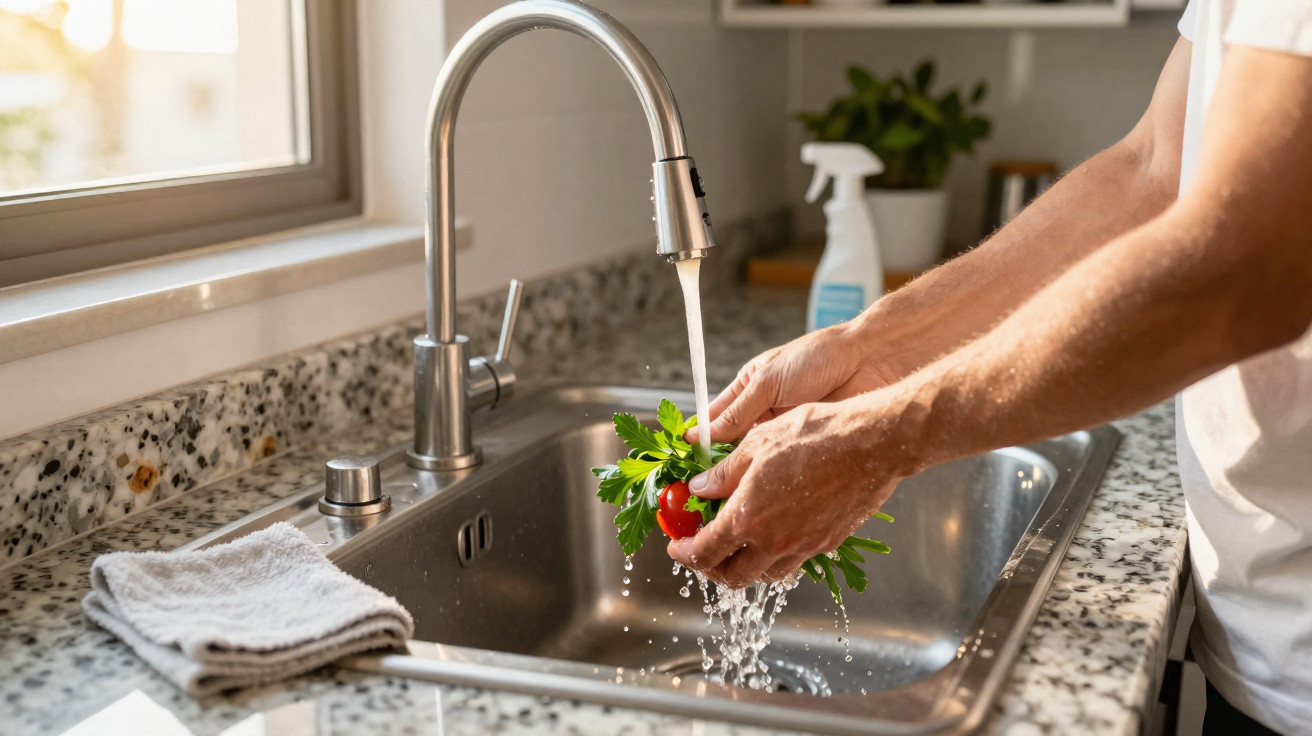
The stainless-steel kitchen sink has returned to the heart of modern kitchen design as a practical alternative to granite. The material isn’t new in itself, but it has regained momentum because it brings a contemporary look, a non-porous surface, straightforward cleaning, and solid resistance to stains, water, and everyday heat.
Why is stainless steel replacing granite in practical kitchens?
Granite remains hard-wearing and highly regarded, yet it tends to demand more attention when it comes to sealing, cleaning products, and dealing with stains from grease, wine, coffee, or strongly coloured liquids once the protective layer has worn down. Countertop maintenance sources point out that granite is a porous natural stone and needs periodic sealing to keep good stain resistance.
By contrast, stainless steel has a smooth, non-porous surface, which prevents liquids and grime from soaking in. That’s why it’s standard in professional kitchens and is increasingly appearing in homes that prioritise hygiene, quick clean-ups, and a refined industrial aesthetic.
What makes stainless steel lighter and easier to adapt?
Unlike a solid slab of stone, a stainless-steel worktop is typically a metal sheet formed over a structural base. This approach makes it easier to commission made-to-measure pieces with an integrated bowl, upstand, folded edges, and cut-outs for a hob-without the visual and physical heft of thick stone.
That lighter build is especially helpful in older kitchens, flats, and fast refurbishments. In many situations, a stainless-steel top can be fitted over existing cabinetry, as long as the structure is level, rigid, and protected against moisture.
Why does stainless steel stain less in everyday use?
Stainless steel doesn’t absorb coffee, sauce, oil, or wine in the way a porous surface can. Day-to-day cleaning is usually done with a damp cloth, mild washing-up liquid, and then drying straight afterwards-always wiping in the direction of the brushed grain to avoid visible marks.
- No periodic sealing is required, unlike many natural stones.
- It copes well with water and typical kitchen heat.
- It won’t soak up liquids, grease, or food residue.
- It allows for a welded or integrated bowl, with fewer gaps where dirt can build up.
- It suits compact, industrial, minimalist, and professional-style kitchens.
Is stainless steel perfect? What care does it require?
Stainless steel’s main drawback is aesthetic: it scratches, shows fingerprints, and can reveal water splashes easily. This doesn’t affect hygiene, but the look changes over time, developing a lived-in patina that some people enjoy and others would rather avoid.
To minimise this, opt for a brushed, satin, or linen finish, which disguises fine scratches better than mirror-polished stainless steel. It also helps to use chopping boards, avoid ordinary steel wool, and dry the worktop after cleaning to prevent limescale marks.
How much does it cost compared with granite?
Pricing varies widely depending on sheet thickness, the steel type, the finish, welding, an integrated bowl, and labour. In general, standard granite can still work out cheaper in many areas, while bespoke stainless steel tends to compete with newer, more customised materials.
The difference is that stainless steel can lower indirect costs when it replaces several separate components with a single solution: worktop, bowl, upstand, and wet area in one integrated piece. Granite, on the other hand, may require waterproof sealing, cut-outs, a separate bowl, grouted joins, and periodic upkeep of the protective treatment.
How to adapt it in an existing kitchen without a full renovation
To switch without ripping everything out, start by measuring the current worktop and assessing the cabinetry. If the units are sturdy, level, and free from moisture damage, a made-to-measure stainless-steel top can replace the old stone with minimal disruption.
- Measure the width, depth, upstand height, and the position of the bowl.
- Check that the cabinetry will support the new top without warping.
- Choose an integrated bowl to simplify cleaning and reduce joints.
- Prefer a brushed finish to disguise everyday wear.
- Confirm cut-outs for the tap, hob, and sockets before fabrication.
- Use correct sealing on the sides to prevent water ingress into the cabinets.
The new trend: less stone, more functional surface
Saying granite has “gone out of fashion” is an exaggeration: it’s still durable, attractive, and valued. What has shifted is what projects prioritise. In kitchens with heavy daily use, stainless steel is gaining ground because it offers faster cleaning, lower stain absorption, and a technical look that suits modern spaces.
For those who cook every day and want simple maintenance, the stainless-steel sink is a strong alternative. It feels lighter visually, works well for bespoke installation, and turns the wet zone into one continuous, practical, hard-wearing surface-provided the homeowner accepts natural scratching and sticks to gentle cleaning products.


Comments
No comments yet. Be the first to comment!
Leave a Comment