
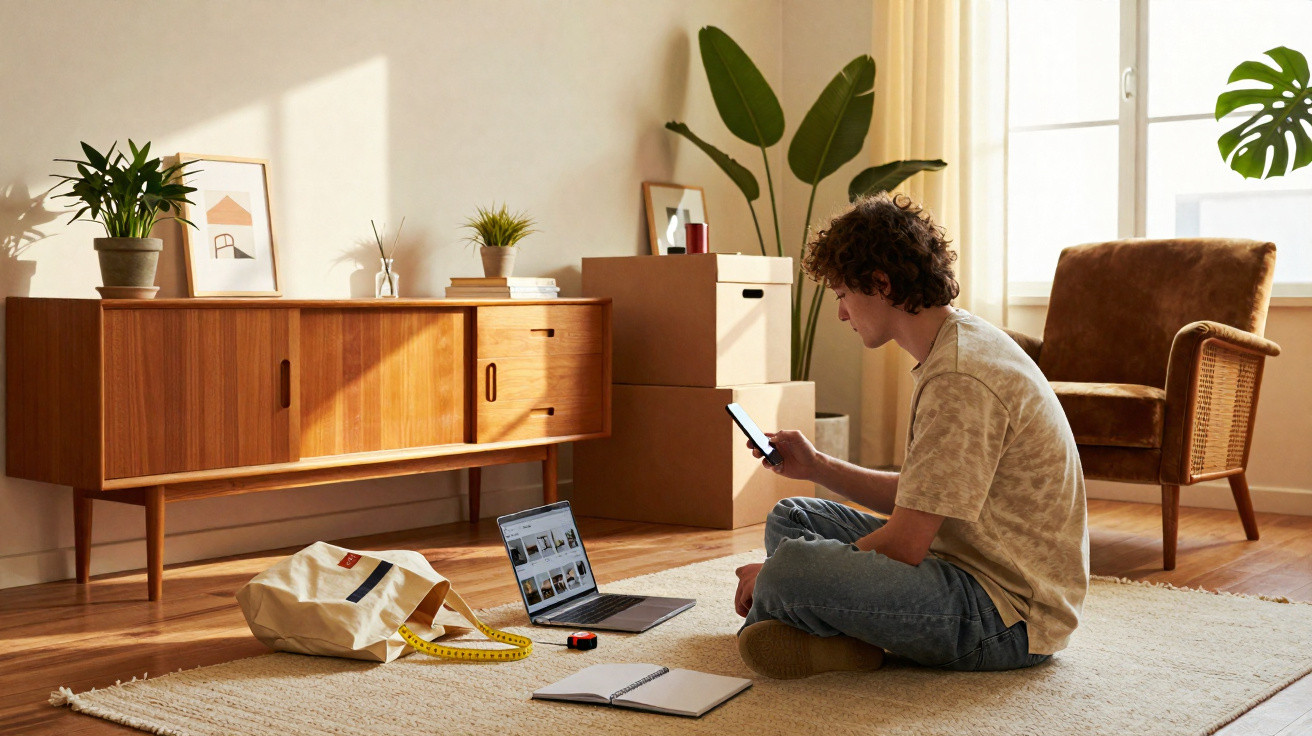
With cleverly chosen second-hand furniture, it works surprisingly well.
More and more people are furnishing their homes with used pieces rather than buying everything new. It is kinder to the budget, conserves resources and often gives a home more character than any off-the-shelf furniture-store set. Five platforms stand out in particular, ranging from a legendary digital classifieds site to a social project that gives unwanted items a second life.
Why second-hand furniture is in such high demand
The move towards second-hand interiors is no longer simply about being thrifty. Three developments are strongly driving the trend:
- Pressure on budgets: Rent, energy and food are all becoming more expensive, leaving little room to experiment when buying furniture.
- Environmental common sense: Producing fewer new items saves raw materials, energy and CO₂.
- Individual interiors: A vintage sideboard paired with a modern dining table often looks more interesting than a complete catalogue set.
“Used furniture has shifted from being an ‘emergency purchase’ to a deliberate choice – for both the wallet and the feel of a home.”
The good news is that today’s buyers no longer need to spend hours freezing at musty flea markets. Digital platforms put sofas, shelving and tables within easy reach, often just a few streets away.
1. Le bon coin – the French second-hand giant
In France, Le bon coin is broadly equivalent to eBay Kleinanzeigen in German-speaking countries: a vast online classified marketplace where almost anything can be found, including countless furniture items at every price point.
Typical finds include a solid oak dining table for a few dozen euros, a vintage shelf discovered in someone’s loft, or an almost-new sofa bed that is suddenly surplus after a move. Many users have furnished their entire first flat through listings like these.
The platform becomes particularly useful for UK buyers furnishing a holiday property in France or avoiding the need to buy everything new during a year abroad. Those who are local can use area filters to search within their own neighbourhood, arrange a viewing and collect the furniture directly. For longer distances, the platform now also offers its own secure payment system and optional delivery.
2. Label Emmaüs – buying furniture with a social purpose
Label Emmaüs combines second-hand shopping with social commitment. The project is backed by the well-known Emmaus communities and other social organisations, which collect, restore and resell donated furniture and home accessories.
The process follows a clear structure: furniture and decorative items first arrive at workshops or sorting centres, where they are checked, cleaned or repaired before being listed online. The proceeds support educational provision, training programmes and people disadvantaged in the labour market.
“Anyone buying a shelf or table here is not only furnishing their own home – they are also funding practical support for others.”
This platform is especially appealing to buyers who want used goods but dislike anonymous classified marketplaces. Products are catalogued, described and checked in advance. Many items show signs of use, but their restoration generally makes them appear far better cared for than typical flea-market finds.
3. IKEA ‘second life’ – discounts on familiar classics
Even furniture giant IKEA is increasingly adopting circular models. Under the slogan ‘second life’, display pieces, returned items and products with minor blemishes are offered at substantially reduced prices in dedicated areas of its stores.
Examples include:
- Display sofas that have spent only a few weeks in the showroom
- Wardrobes with a tiny scratch on one side
- Chests of drawers returned by customers because they did not fit in the bedroom after all
Many stores now list these items online as well. Shoppers can look specifically for the furniture model they want, check whether a reduced example is available at the nearest branch, and collect it there. The familiar shopping experience remains intact, just at a lower cost and with less impact on resources.
For students, young families or people needing a full basic set-up quickly, this is often the most practical entry point into the second-hand world: a familiar brand, clearly stated prices and a receipt included.
4. Donnons & co. – furniture for free
Anyone who truly needs to save money, or wants to live in a radically minimalist way, will eventually come across platforms dedicated solely to giving things away. In France, Donnons is one such option, alongside apps such as Geev, which work on a similar principle.
Private individuals post listings for items they no longer need and simply want to pass on – with no payment and no bartering. Every day, listings include:
- Beds and bed bases
- Shelving and alternatives to BILLY units
- Desks, children’s chairs and small chests of drawers
- Decorative items ranging from mirrors to lamps
“Many users report furnishing an entire shared-house bedroom or student flat almost exclusively through giveaway listings.”
The arrangement is straightforward: the first person to respond politely and reliably collects the furniture. On apps such as Geev, donors earn points that later help them access offers themselves – a kind of reward for generosity. In the UK, it is worth looking at local giveaway boards and neighbourhood groups that operate in the same way.
5. Selency – treasures for design enthusiasts
At the other end of the price range is Selency, a platform for people drawn to pieces with character. It hosts not only private sellers but also professional dealers specialising in design, vintage furniture and carefully restored items.
The focus is less on the cheapest bargains and more on furniture with a story: teak chests of drawers from the 1960s, Scandinavian armchairs, handmade wooden tables and sideboards produced in small runs. Many objects have a patina, but have been professionally restored and are ready to use.
Selency acts as an intermediary, offering secure payment methods, organised delivery in some cases and a right of return. This makes higher prices easier to plan for and lowers the risk of encountering fakes or pieces described without sufficient transparency.
What buyers should check when buying second-hand furniture
Anyone looking to furnish a home cheaply should still not trust every listing blindly. A quick inspection can prevent trouble later:
- Check stability: Does the frame wobble, does the bed base creak, or are doors hanging crookedly?
- Do a smell test: Strong-smelling upholstery or cabinets can indicate damp, smoke or animals.
- Take measurements: Will the wardrobe fit through the stairwell, or will the table fit into the lift?
- Assess the material: Solid wood is easier to restore than cheap chipboard.
- Arrange transport: Will you need a van, extra pairs of hands, straps and blankets?
For upholstered furniture, it is worth examining the fabric closely: stains, holes or sagging seats mean more restoration work. A used wooden table with scratches, on the other hand, can often be made presentable again quickly with sandpaper and oil.
Added value: planning a more sustainable home
Those who consistently choose used furniture not only reduce new purchases but actively extend the life of existing products. This makes a significant difference to environmental impact, because manufacturing is usually the most energy-intensive stage in a piece of furniture’s life, from timber harvesting through to logistics.
As a practical addition, many local authorities now run reuse shops or recycling centres with attached stores. These receive furniture that residents might otherwise send to bulky-waste collection. By combining platforms such as Le bon coin, social sellers and these local options, it is often possible to furnish an entire home second-hand – with the biggest difference usually showing in the bank balance.
At the same time, a small ecosystem of craftspeople, upcycling workshops and hobby carpenters specialising in restoring used furniture is growing. A battered vintage wardrobe then becomes not a problem item but the starting point for a one-off piece unavailable in any catalogue. For many people, that is precisely the real appeal: living with items that have already had a life, and whose history shows in a pleasing way.




Comments
No comments yet. Be the first to comment!
Leave a Comment