
With energy bills still elevated and households using less heating, minor moisture issues can easily develop into serious mould problems. A straightforward windowsill routine, combined with better ventilation, is attracting interest as an affordable way to protect walls, respiratory health and household budgets.
Why your windowsill can control mould in your flat
Mould commonly begins in the coldest area of a room, which in many properties is around the windows. Warm air indoors meets cold glass, causing its moisture to condense and trickle towards the frame. If it is not dealt with, this water can penetrate plaster, silicone seals or wood, creating ideal conditions for mould spores.
Moisture first shows up where warm indoor air meets cold surfaces. The edges of windows often become the earliest warning sign.
This is why building specialists in damp nations such as the UK and Germany often recommend the same low-tech approach: set a bowl of moisture-absorbing material on the windowsill. It is inexpensive, uses no electricity and may reduce the damp conditions in which mould thrives.
The principle is simple. Some materials behave like magnets for moisture, drawing in and retaining water vapour before it becomes condensation. Positioning them where humidity is highest – frequently on a sill above a heater or radiator – can interrupt an important stage of the mould cycle.
The inexpensive bowl trick: what to place on the windowsill
There is no need to buy a branded dehumidifier container before getting started. A number of everyday cupboard items can be surprisingly effective if used properly, particularly in compact rooms or troublesome corners.
Salt: a traditional moisture absorber
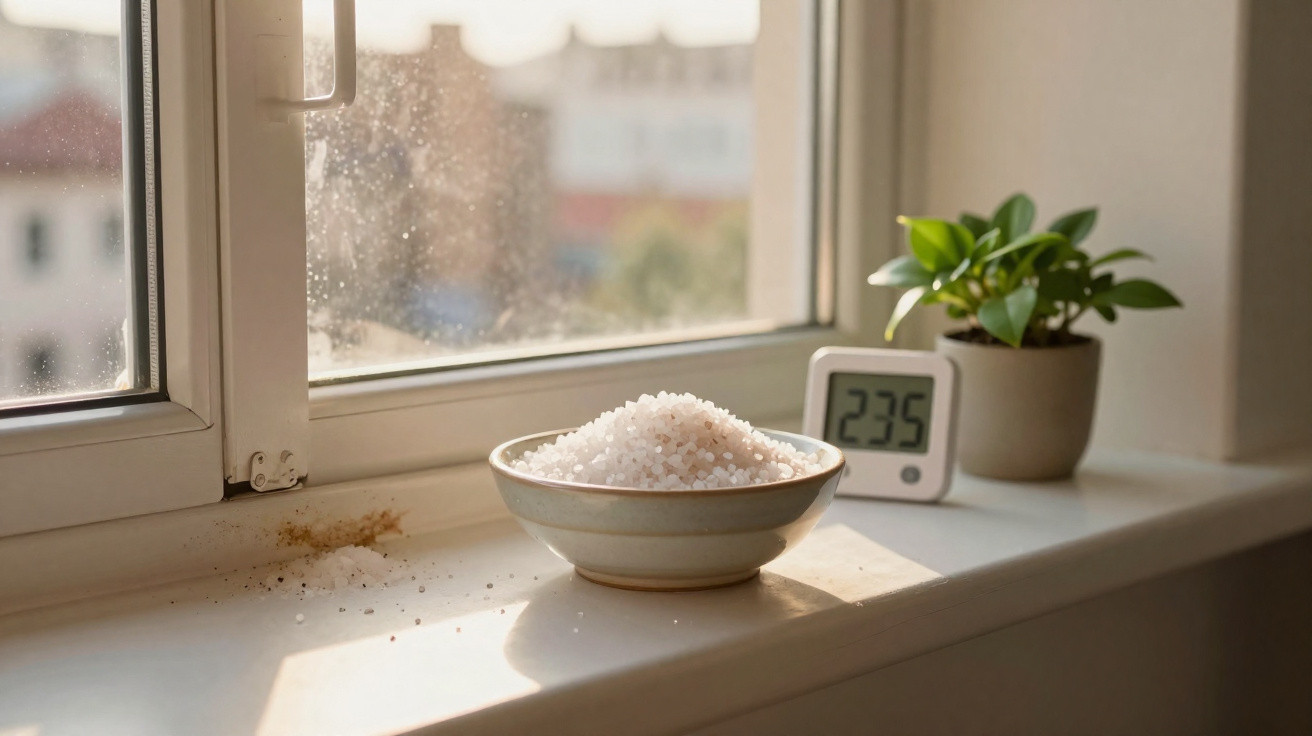
Ordinary table salt takes in moisture from the air. Chemically, it is hygroscopic; in practical terms, a bowl of salt on the sill will gradually become clumped and then wet as it captures humidity.
A shallow bowl filled with cooking salt on the windowsill can intercept condensation before it creeps into plaster and frames.
Replace it regularly to maintain its effectiveness. Empty and refill the bowl once the crystals begin sticking together or become slushy. It is a cheap option for bedrooms, home offices and storage spaces with mild damp.
Rice: a helpful emergency alternative
Dry, uncooked rice absorbs moisture too, although it is less effective than salt. The familiar phone-in-rice remedy relies on the same basic idea, which can also be applied near window corners.
- Choose a broad bowl or tray to increase the exposed surface area.
- Mix the rice every few days to keep the outer grains effective.
- Renew it once it feels weighty and a little soft.
Rice is best for slight seasonal dampness or as a short-term solution when there is nothing more suitable in the cupboard.
Cat litter: an overlooked dehumidifier
Unperfumed mineral cat litter, particularly clay- or silica-based types, can absorb substantial quantities of water. Similar minerals are used in many purpose-made dehumidifier products.
Put a layer into a ceramic bowl, metal tin or old baking dish, then place it on the windowsill in the dampest room. Inspect it each week. Dispose of it and add fresh litter when the granules darken, become heavy or turn mushy.
| Material | Best use | How often to replace |
|---|---|---|
| Table salt | Light to moderate damp in bedrooms and living rooms | Every 1–2 weeks, or when clumpy and wet |
| Uncooked rice | Short-term help, small rooms, travel | Every 1–2 weeks, sooner in very humid rooms |
| Mineral cat litter | Heavier damp, cold corners, basements | Every 2–4 weeks, depending on saturation |
Why the windowsill is more important than the wardrobe
Some people hide these bowls behind a sofa or place them on a bookshelf, then wonder why they achieve little. Where you put them makes a major difference.
The windowsill often holds the highest local humidity in a room, especially above a radiator and beside cold glass.
Condensation usually appears first on the glass and lower window frame. Keeping the drying bowl in this exact spot forms a small “buffer zone”. It absorbs water from the nearby air before that moisture settles on surfaces, helping to limit water trails, mouldy sealant and black corner marks.
In older properties with single glazing or draughty double glazing, this modest step may slow visible deterioration. It is not a substitute for repairs or a professional dehumidifier where damp is severe, but it can provide time and stop small problems becoming more widespread.
Ventilation and heating habits that make the trick effective
No bowl can cope with a room where damp washing is left hanging for days and windows remain closed. Day-to-day habits are still crucial. Building advisers generally recommend several measures that work alongside the windowsill method:
- Ventilate in short bursts: Fully open windows on opposite sides for 5–10 minutes several times daily, instead of leaving one window on the latch all day.
- Lower heating while airing: Turn radiators down during these periods to prevent unnecessary energy loss.
- Keep temperatures even: Big temperature changes promote condensation, particularly in corners and behind furniture.
- Leave gaps behind furniture: Move wardrobes, beds and sofas a few centimetres away from cold external walls to allow air to circulate.
- Shut doors in steamy rooms: Keep doors closed when cooking or showering, then open the window afterwards so moisture does not travel into cooler bedrooms.
Humidity, health and the 40–60% rule
Humidity indoors affects more than windows: it influences comfort and the ease with which viruses spread. Research from organisations including Yale University points to an ideal relative-humidity range of roughly 40 to 60 percent, depending on the type of room.
Below roughly 40% humidity, mucous membranes dry out. Above around 60%, mould and dust mites gain an advantage.
Living rooms, bedrooms and studies tend to be most comfortable and healthier at around 40–55%. Humidity may rise temporarily in kitchens and bathrooms after cooking or showering, provided it is then removed through effective ventilation.
Spotting early signs allows action before dark marks develop. Excess humidity can often be identified by:
- Condensation trickling down window glass or collecting on the frame.
- An ongoing musty or earthy odour, particularly in fabrics.
- Small marks on silicone seals, wallpaper edges or behind curtains.
- Fabrics that seem cool and faintly damp to the touch.
Air that is too dry brings problems of its own, including irritated airways, sore throats, headaches, cracked lips, dry skin, extra dust and static shocks from synthetic carpets. Prolonged low humidity can also cause wooden floors and furniture to crack or distort.
When the windowsill trick is insufficient
A bowl on the sill is most useful as prevention or for slight dampness. Rapidly spreading black patches, crumbling plaster or soaked wallpaper may indicate a problem deeper within the property, such as a leaking roof, damaged pipework, failed seals or concealed thermal bridges.
In these circumstances, moisture-absorbing materials address only the symptom. A professional inspection is the safer option, especially in homes with children, people with asthma or allergy sufferers. Insurers and landlords may also require recorded evidence when structural defects are responsible for the damp.
Useful additions for mould-prone homes
For households that frequently deal with damp winters, a small digital hygrometer can be valuable. It measures humidity and shows how everyday routines affect the figures. Many cost less than a takeaway meal, and can demonstrate how quickly humidity falls after a five-minute cross-breeze or how much washing on an airer raises the level.
It can also help to divide household routines into zones. Dry washing in the same room each time, preferably one with a window and a bowl of cat litter or salt on the sill. Air that room more often and keep its door shut to stop moisture moving through the entire flat.
Seasonal conditions matter too. During winter, outdoor air generally contains less moisture than indoor air, making rapid ventilation effective. In hot, humid summers, opening windows at the muggiest times can have the opposite effect. Early mornings and late evenings are usually more helpful, while the windowsill bowl continues to be a quiet, low-tech helper throughout the year.





Comments
No comments yet. Be the first to comment!
Leave a Comment