
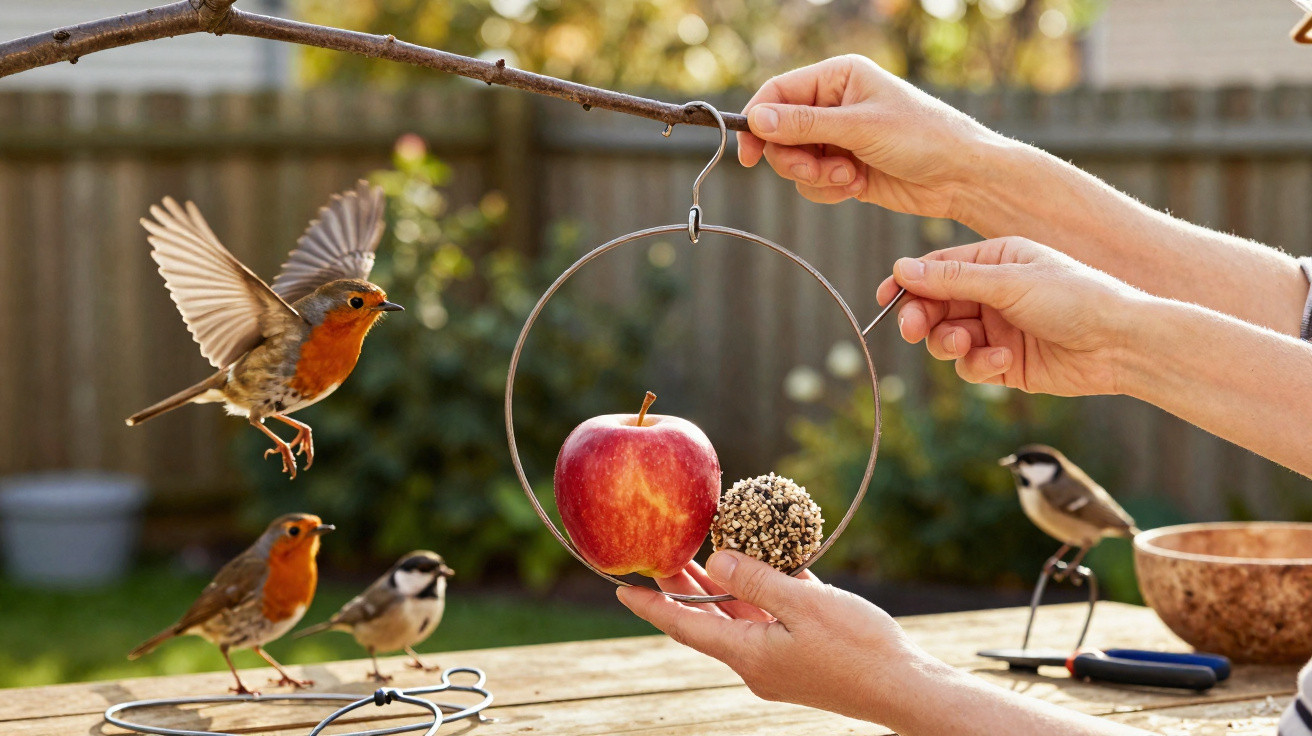
Anyone with a garden, balcony or even just a view of greenery will recognise the scene: in spring, tits, sparrows and robins are constantly searching for food. Many people turn to costly feeding stations from garden centres. Yet a simple metal wire coat hanger from the wardrobe can be turned into a remarkably sturdy, free bird feeder – with no specialist tools or crafting expertise required.
From wardrobe to garden: a coat hanger becomes a feeding spot
The principle could hardly be simpler: using pliers, a thin metal coat hanger of the kind often supplied by dry cleaners can be reshaped in just a few moves to hold fruit or fat-based food securely. The result is a small snack bar for wild birds that can be hung from any tree.
“A piece of wire, pliers and an apple are all you need to make an effective feeding aid for garden birds.”
Rather than buying plastic items and new products, an object that would otherwise often end up in the bin or at the back of a cupboard gets a second, far more useful purpose. At the same time, this homemade feeding spot helps support feathered neighbours during a demanding season.
Materials: what you actually need
Four items are enough for a DIY bird feeder
This small crafting task needs only a basic kit that is already available in most homes:
- 1 thin metal coat hanger
- 1 pair of side cutters
- 1 pair of flat-nose or needle-nose pliers
- 1 whole apple or 1 fat ball / suet ball without a plastic net
The main advantage of the usual dry-cleaning coat hangers is that their wire is thin enough to bend by hand with ordinary pliers, while remaining strong enough to support an apple or fat ball for a long time. This exact combination makes them ideal for use in the garden.
A wire bird feeding station in three minutes
Step 1: Reinforce the hook
Start with the hanger’s hook. As this will later suspend the feeder from a tree, it needs to be especially secure. Use flat-nose pliers to undo the small twist beneath the hook, releasing the long wire section below.
The hook itself should retain its basic shape. It simply needs to feel firm rather than loose or able to twist. Squeeze the section immediately below the hook tightly with the pliers so that nothing moves. This creates a stable axis from which the remaining structure can hang freely.
Step 2: Shape a holder for the apple or fat ball
Next, work on the lower part of the metal hanger, which will form the actual food holder. There are two versions, depending on the type of food you wish to offer:
- Apple version: Bend the lower wire end firmly upwards to create a U-shaped support or a slightly upward-pointing spike. A halved or whole apple can then be pushed onto this point. Make sure the apple fits tightly so it cannot fall off.
- Fat ball version: Shape the wire end into a tight spiral or a small basket. Press the fat ball into this wire cradle, where the tension of the wire will hold it securely. This avoids using a plastic net, in which birds can easily become tangled.
One key safety measure is to bend the final, sharply cut wire end inwards at all times. This prevents birds from injuring their feet or wings when landing and taking off.
“Anyone who consistently bends sharp edges inwards creates a feeding station that is safe, durable and easy for birds to use.”
Why garden birds love this feeding aid
Ideal for tits, finches and robins
The slim wire frame offers a clear benefit to small, agile species. Great tits, blue tits, house sparrows, chaffinches and robins can grip narrow metal bars and wire structures very effectively.
Compared with bulky plastic bird feeders, it has several advantages:
- narrow perches that are particularly suitable for lightweight birds
- fewer opportunities for larger, dominant species to block access
- food hangs freely and is difficult for cats to reach
- good air circulation, so food is less likely to go mouldy quickly
This small wardrobe-based trick can therefore also help maintain balance in the garden. Small songbirds gain a peaceful feeding place where they are not continually pushed aside.
The perfect position: safety comes first
How high, how far away and where?
The completed feeding station needs a well-chosen location. A sturdy branch 2 to 3 metres above the ground is considered ideal. This height deters most cats while keeping the feeder easy to observe.
A few basic rules can guide your choice of site:
- at least 2 metres above ground level
- not immediately beside dense hedges where cats may wait
- 10 metres away from large windows to prevent bird strikes
- sheltered from strong winds, but with a clear flight path
If you wish, distribute several of these coat-hanger feeding stations around the garden or balcony. This spreads out the demand and gives timid species a better chance to feed.
Why feeding in spring and summer can be worthwhile
The energy demands of the breeding season
For a long time, the usual advice was to feed birds only in winter. Many bird conservationists now recommend moderate year-round feeding instead. During the breeding season in particular, adult birds need enormous amounts of energy to feed themselves while raising their chicks.
An apple or a high-quality fat ball provides readily available energy. Adult birds can replenish their strength and devote more time to finding insects for their young. Those insects are vital to the growth of nestlings.
Food, hygiene and variation tips
What belongs in the wire feeder – and what does not
Suitable food choices for the coat-hanger holder include:
- apples, pears or half bunches of grapes
- fat balls without plastic nets
- homemade fat blocks containing oats and sunflower seeds
The following options are less suitable or may cause problems:
- seasoned or salted leftovers
- bread, as it quickly swells and becomes mouldy
- raw meat scraps, which attract rats or crows
To keep the feeding station usable for a long time, give it a quick check every few days: if fruit has shrivelled or started to rot, remove it. Old fat balls that have been left hanging in rain for an extended period should also be replaced promptly.
More than crafting: upcycling and conservation together
Why this idea makes so much sense
The coat-hanger bird feeder combines several benefits at once: it saves money, reduces waste and supports local wildlife. Instead of purchasing new products with lots of packaging, one simple action transforms an existing piece of wire into a useful aid.
“A single metal hanger that once sat unnoticed in a wardrobe can serve thousands of bird visits over the years.”
Anyone who enjoys the idea can develop the principle further: old wire coat hangers can be shaped not only into food holders, but also into supports for nest boxes or simple plant supports. Gradually, this creates a garden where reuse and nature conservation go hand in hand.
Children in particular are often delighted when a boring hanger suddenly becomes a “bird restaurant”. They can see blackbirds, tits and sparrows arriving at the new feeding spot straight away. It builds awareness of biodiversity – without being preachy.


Comments
No comments yet. Be the first to comment!
Leave a Comment