
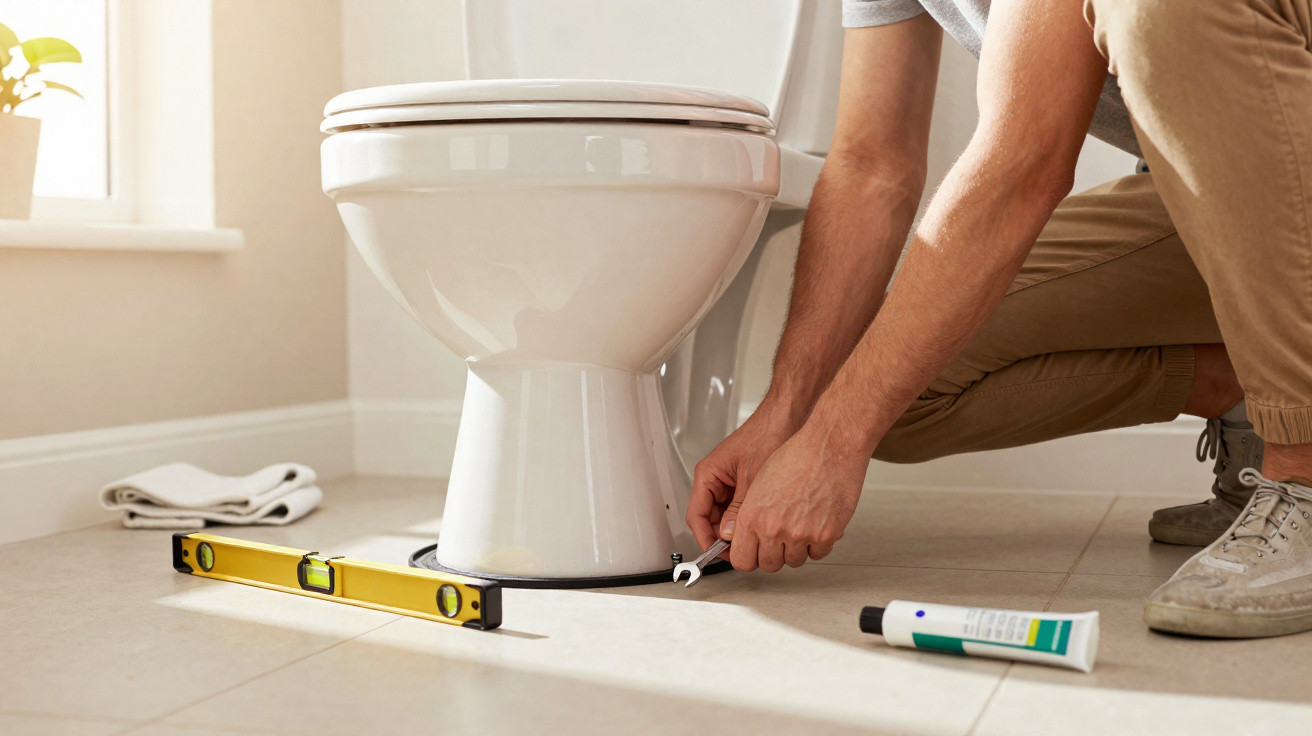
A wobbly toilet usually points to a loose base, slack fixing bolts, an uneven floor, or a worn-out seal. Rather than forcing anything tight straight away, you need to pinpoint what’s causing the movement so you can stop the rocking without cracking the ceramic or upsetting the waste connection.
Why does the toilet start to wobble?
A wobbly toilet most often develops because the fixing bolts gradually work loose with everyday use. It can also occur when the base isn’t sitting evenly on the floor, leaving small gaps that let it shift when you sit down or stand up.
Another frequent cause is an old seal at the waste outlet. If the sealing ring dries out, compresses, or slips out of place, the toilet can lose stability and you may also notice unpleasant smells or dampness around the base.
What should you check before tightening the bolts?
Before you try to deal with any looseness, take a close look at the toilet base, the surrounding floor, and the bolt area. This quick inspection helps you avoid over-tightening, which can crack the porcelain or hide a leak.
- Check for any water pooling near the base of the toilet.
- See whether there’s a persistent sewer-like smell in the bathroom.
- Look for tiles or flooring that are cracked, sunken, or out of level.
- Test the movement gently, without forcing the toilet from side to side.
How can you remove the looseness without damaging the ceramic?
The safest way to fix a wobbly toilet is to tighten the fixing bolts gradually, alternating from one side to the other. Use the correct tool and stop as soon as the toilet feels stable-don’t try to “give it one more turn” just to be sure.
- Pop off the caps covering the side bolts.
- Turn one side half a turn, then do the same on the other side.
- Continue only until the base no longer moves.
- If there’s a gap between the toilet and the floor, fit proper levelling shims.
When do shims help stabilise the base?
Shims are useful when the wobble is caused by a slightly uneven floor. They fill small voids beneath the base and stop your body weight from making the ceramic flex against the bolts.
Once the toilet is level, you can finish by applying sanitary silicone around the base, leaving a small gap at the back. That opening makes it easier to spot future leaks if the internal seal starts to fail.
When is it better to call a plumber?
A straightforward fix is often enough when the issue is limited to the fixing bolts or minor levelling differences. However, if there’s water on the floor, ongoing bad smells, a crack in the ceramic, or movement that remains after adjustment, the toilet needs to be removed so the seal can be checked.
In these situations, continuing to tighten the bolts can break the ceramic and make any leak worse. A wobbly toilet with signs of dampness should only go back into normal use after the sealing ring, the waste outlet, and the way the base is seated have all been inspected and put right.






Comments
No comments yet. Be the first to comment!
Leave a Comment