
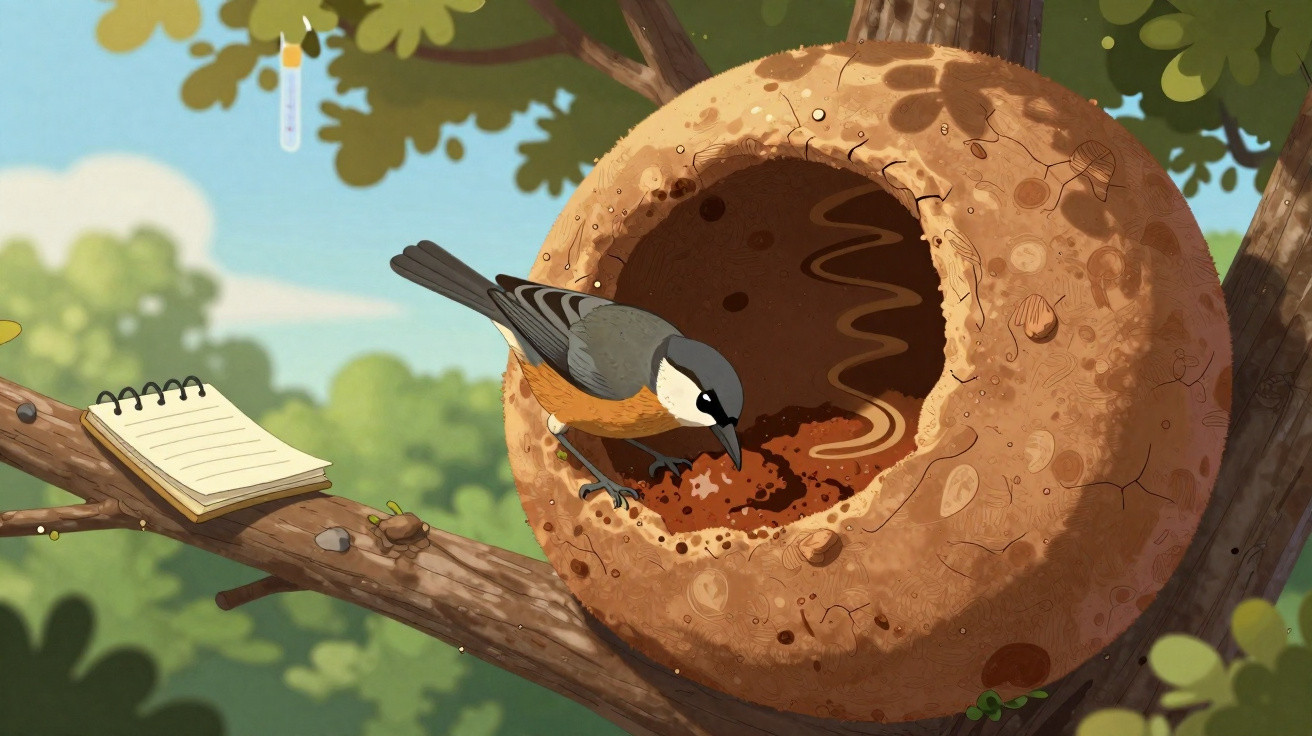
The joão-de-barro nest stands out as one of nature’s most remarkable builds, combining mud, plant fibres and clever architecture to keep chicks safe from heat, cold and strong winds.
How does the joão-de-barro turn mud into a tough structure?
The work begins with a careful choice of raw materials. The pair looks for soil with a balanced mix of clay and silt, steering clear of ground that contains too much sand, which could leave the structure weak once it dries.
By blending the mud with vegetable fibres, along with roots, leaves and other organic matter, the bird produces a kind of natural mortar. This mixture helps prevent cracking and supports a steadier internal temperature.
Why does the joão-de-barro nest act as natural thermal insulation?
The bird forms dense, compact walls with low thermal conductivity, meaning outside heat takes longer to reach the inside during periods of intense sunshine.
On colder days, that same barrier slows the loss of stored warmth. The outcome is a protected microclimate, which is vital for incubating the eggs and for the chicks’ development.
How does the nest entrance help control wind and temperature?
The entrance opening is shaped with a practical purpose, working a little like a small aerodynamic system. Its design limits the direct impact of strong winds and helps avoid abrupt shifts in the nest’s internal conditions.
The direction of the opening follows a natural logic too. The joão-de-barro typically positions it away from cold winds and heavier rain, creating a first line of defence against harsh weather.
What is the secret of the inner wall that creates a maze effect?
Inside, the nest shows one of the species’ most effective architectural solutions. Rather than a single open chamber, the structure includes an internal mud partition that forms an access corridor.
This maze-like layout slows airflow, blocks direct sunlight and creates a transition zone between the outside and the space where the eggs and chicks are kept. The joão-de-barro’s internal design offers several survival benefits:
- Airflow control: reduces fast draughts that could chill the interior.
- Protection from solar radiation: keeps the chicks’ area shielded from direct light.
- Humidity stability: supports suitable conditions for egg development.
What are the impacts of this discovery for science?
This bird’s construction demonstrates how straightforward approaches can deliver highly sophisticated results. The combined use of natural materials and efficient geometry produces protection comparable to methods found in human building.
Researchers note that the joão-de-barro nest is an example of biological engineering, showing how animals have developed strategies over evolution to cope with temperature changes.





Comments
No comments yet. Be the first to comment!
Leave a Comment