
A sharp, metallic cry from the hallway-right when you’re half-asleep and the house ought to be still. You stop, listening. A door shifts again, another thin shriek from the hinges, as though the building itself is having a moan.
By morning, you reach for whatever happens to be nearest: an aerosol spray, a splash of cooking oil, perhaps that mysterious “multi-use” lubricant lurking at the back of a cupboard. The hinge behaves for a day or two, then the sound edges its way back-along with dust, sticky smears and greasy fingerprints.
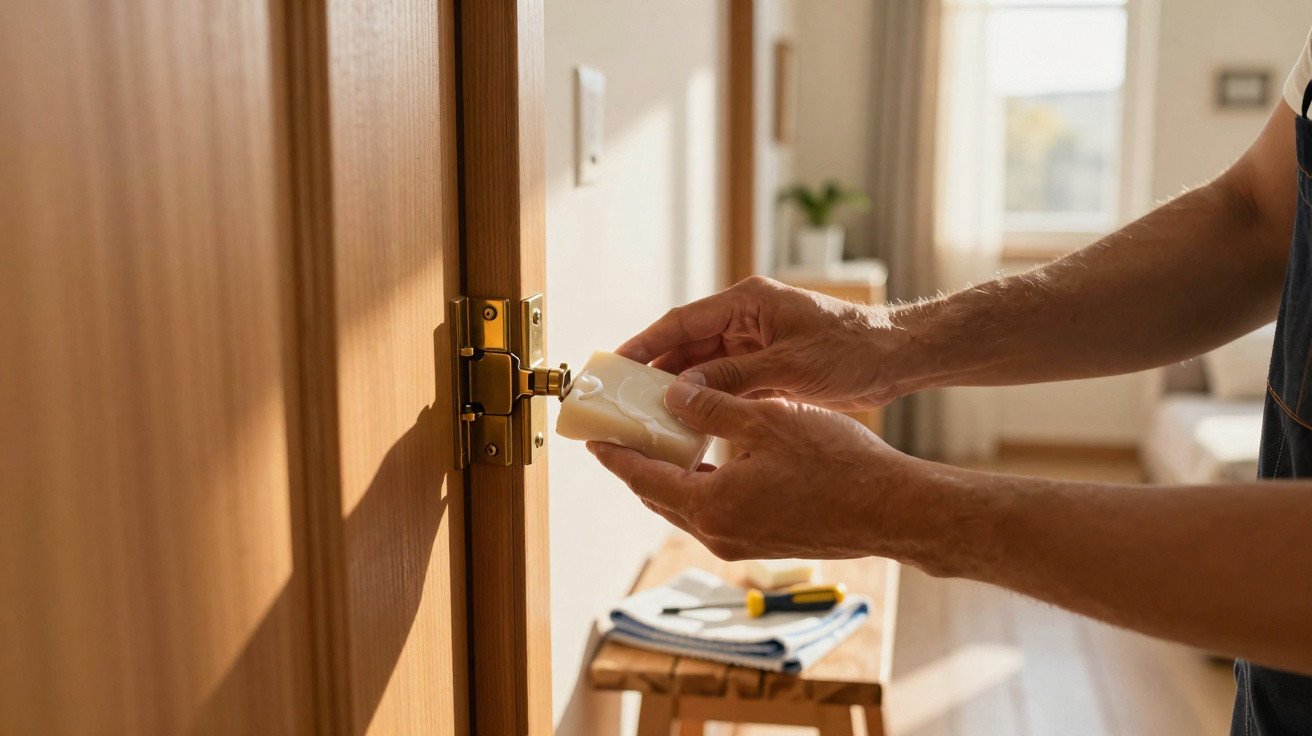
Eventually a handyman sees you battling with it, gives a little shrug, takes an ordinary bar of soap from his toolkit and runs it calmly over the metal. No mess, no smell, no fuss. The squeak vanishes on the spot. The strange part is what he says afterwards.
“Oil is overrated on hinges.”
Why handymen quietly swear by soap on hinges
Watching someone rub a bar of soap on a creaking hinge can feel almost laughably wrong the first time. It seems too basic. Too cheap. We’re used to every minor problem having a specialist product-with a glossy label and a warning symbol on the back.
And yet plenty of experienced tradespeople will reach for a plain bar of soap before they even consider oils or sprays. No gloves. No dust sheets. No newspaper on the floor. Just two or three steady passes over the metal, a few swings of the door, and the noise has gone. It’s a disarmingly assured little move.
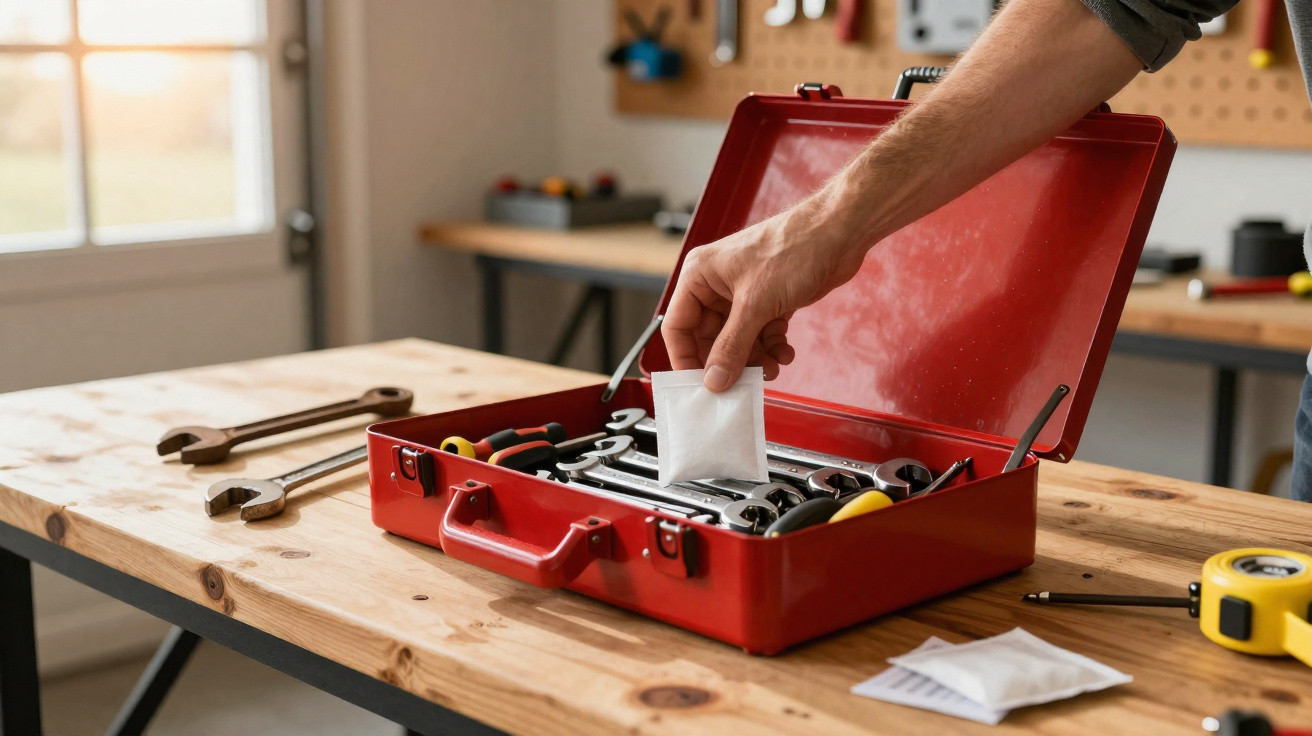
On a job, you might notice a scuffed white bar-half-wrapped in paper-living at the bottom of a toolbox for good. Not for washing up. For silencing doors.
One handyman in London told me he learnt the trick from an elderly caretaker in a Victorian mansion block. The lifts groaned, the corridors carried every sound, and each flat door was a potential complaint. Lubricant spray would help for a bit, but then the hinges would gather fluff and grime until they turned dark and gummy.
The caretaker had a different routine. “Watch this,” he said, producing a tiny hotel-style soap from his pocket. He ran it down the hinge knuckles from top to bottom, then told him to open and close the door a dozen times. That was a decade ago; the handyman still brings a cheap supermarket bar to every job.
There may be no official UK statistic for “squeaky hinges fixed with soap”, but if you ask local trades and caretakers you’ll hear the same refrain: soap is the quiet, no-nonsense answer. People remember it because it works-not because it looks impressive.
So why does this dull little rectangle often outperform all those shiny cans in everyday homes? The answer is friction rather than marketing. Soap doesn’t try to behave like engine oil; it simply helps two metal surfaces slide against one another more smoothly, and then it stays where you put it.
Solid soap contains fatty acids that become naturally slippery with a trace of moisture from the air. On a hinge, it leaves a thin, dry film that allows the pin and plates to move without grinding. Unlike many household oils, it doesn’t run, drip, or soak into whatever surrounds the hinge.
Oil, on the other hand, likes to travel. It creeps downward, picks up dust as it goes, and eventually forms a sticky grey ring around the hinge. Soap generally stays put. No greasy streaks down painted doors, no oil marks on the carpet. That low-drama, longer-lasting “quiet” is a big part of the appeal.
How to use a bar of soap on hinges, step by step
Choose a basic, solid bar of soap to start with. Unscented or lightly scented is fine. Skip anything gel-like or overly moisturising-you want a firm bar that’s almost squeaky to hold. Open the door wide so the hinge knuckles are easy to reach.
Run the soap up and down the moving parts of the hinge. Try to catch the pin area and the edges where metal rubs on metal. You’re not aiming for big white clumps-just a visible, waxy-looking coating. Do the same for each hinge on the door, from top to bottom.
After that, move the door back and forth slowly ten to fifteen times. As the hinge works, the soap is drawn further into the gaps. In many cases, the squeak fades within the first few swings. If there’s still a stubborn noise, add one more light pass and repeat.
A few common missteps are what lead people to say, “That soap trick doesn’t work.” The biggest is using a bar that’s too wet and soft. That tends to smear rather than leave a clean film, and it flakes away sooner. If the bar has been sitting in a shower dish, let it dry out first.
Another issue is only treating one hinge on a door that has several. Sound travels, and the squeak you hear at head height can easily be coming from the middle or bottom hinge. Treat each hinge individually, even if only one seems to be the culprit-it adds a minute at most.
And then there’s the idea that it’s a forever fix. Soap isn’t magic-it’s simply practical. On a frequently used door, the film will wear over time. A quick top-up every few months is perfectly normal. Let’s be honest: nobody is doing it every day.
“I carry WD‑40 and proper grease,” says Mark, a handyman in Bristol, “but I only use them when the job really needs it. For everyday hinges in normal homes, I’d say nine times out of ten, soap wins. It’s fast, it’s clean and it doesn’t come back to haunt you.”
There are also small tweaks that experienced hands use without making a song and dance about it. Some warm the soap in a pocket first, saying it transfers more evenly. Others rub the bar onto a cloth and then wipe the hinge with the cloth for a neater finish.
- Choose a firm, simple bar (avoid exfoliating grains).
- Treat every hinge on the door, not only the noisiest one.
- Work the door several times so the soap beds in.
- Wipe away any visible residue from painted surfaces.
- Reapply every few months on high-traffic doors.
Why soap feels like a “cheat code” for home maintenance
There’s a particular satisfaction in solving an irritating problem with something that costs pennies and sits in almost every bathroom in the country. No special shopping trip, no tiny-print instructions, no fumes-just a small action that changes the sound of your home.
On a deeper level, little fixes like this bring back a more hands-on, less anxious relationship with the spaces we live in. You’re not waiting on a landlord, a caretaker, or a “professional” product to save the day. You walk to the sink, borrow a bar of soap, and the problem eases within minutes. It’s oddly empowering.
Everyone recognises that moment when a door squeak wakes a sleeping baby, or a flatmate creeping in late triggers a chorus of complaints from the hinges. The solution doesn’t need to be high-tech; it needs to work. Soap on hinges becomes one of those quietly shared tips-passed along like a family recipe: slightly improvised, quietly brilliant, and genuinely worth repeating.
| Key point | Detail | Benefit for the reader |
|---|---|---|
| Soap reduces friction | Creates a thin, dry, slippery film between metal parts | Stops squeaks quickly without sticky residue |
| Cleaner than oil | Doesn’t drip, attract dust, or stain paint and flooring | Keeps doors quiet and surfaces tidy over time |
| Cheap and accessible | Any firm bar of household soap can be used | An immediate fix using something you already have |
FAQ:
- Can I use any type of bar soap on hinges? Choose a firm, solid bar without exfoliating grains. Very moisturising or gel-like soaps tend to smear and wear off faster.
- How long does the soap treatment last on a busy door? On a frequently used door, it can last from a few weeks to a few months. When you hear the first hint of squeak again, simply reapply.
- Is soap safe for painted or wooden doors? Yes-provided you only rub the metal parts and wipe away any visible residue from nearby surfaces straight afterwards.
- Will soap damage the hinge over time? No. Used in moderation, soap works as a gentle, dry lubricant and doesn’t corrode metal in the way some harsh chemicals can.
- When should I use proper oil or grease instead of soap? If the hinge is rusty, loose, or part of a heavy door-such as a fire door or an external gate-a proper clean, rust treatment and suitable lubricant (or replacement) is the safer option.





Comments
No comments yet. Be the first to comment!
Leave a Comment