
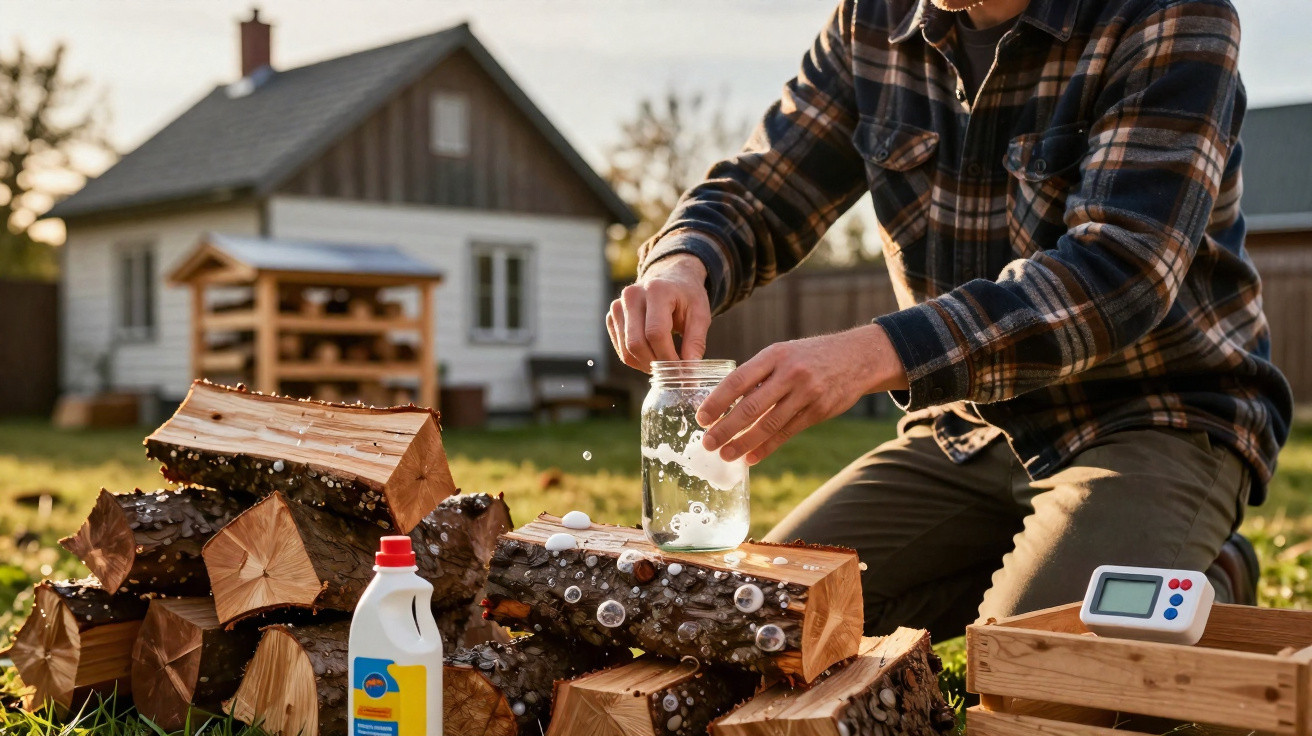
When the weather turns cold and the wood burner is back in use, one factor decides whether you get a warm, comfortable night or a house full of smoke: just how dry your firewood actually is. It’s easy to assume that any log that’s been “stored” will burn well, but moisture levels vary a great deal - and you can’t always judge them by sight alone.
Why dry firewood matters more than you think
If you burn logs that are still damp, the room won’t just take longer to heat. A significant share of the fire’s energy is spent driving water out of the wood rather than warming your home, which means you’ll get through more logs, spend more, and feel the hassle.
Smoke is the other downside. Firewood with a high moisture content tends to produce heavier smoke, and that can line your flue with creosote. This sticky build-up increases the chance of chimney fires and can add to local air pollution.
"For efficient, cleaner burning, most specialists recommend firewood with a moisture content below about 20%."
Properly dried logs catch more easily, burn at a higher temperature, and leave fewer deposits behind. The first step is understanding what you’ve really got stacked up before winter properly arrives.
First checks: how to spot dry wood with your senses
Look for cracks, colour and bark
Seasoned firewood often gives itself away through a handful of visible signs:
- Cracked end grain: logs that have dried well commonly show splitting and opening at the ends.
- Bark that’s coming loose: bark may peel off with little effort, or it may already have dropped away.
- A flatter, greyer look: freshly cut wood is typically brighter; drier wood often looks darker or greyer.
- No mould or fungal growth: white speckling, mushrooms, or greenish patches usually indicate damp storage.
Also, lift a piece. Once much of the water has left, a dry log often feels unexpectedly light for its size. Recently cut timber, in comparison, tends to feel heavy and solid.
Use your nose and your ears
Bring the cut end of a log close and smell it. If the scent of sap or resin is strong, the wood is likely still fairly green. Seasoned wood generally has a much softer smell - sometimes almost none.
Next, try the familiar “clack” test by striking two logs together.
"A clear, ringing sound is usually a sign of dry wood, while a dull thud often means it is still too wet."
It’s not a laboratory method, but people have relied on it for generations with decent results. The more you compare the two sounds, the easier it becomes to trust your judgement.
The dish soap trick: a surprising moisture test
One of the most discussed at-home checks online uses something found beside most kitchen sinks: dishwashing liquid. The logic is straightforward - dry, open wood fibres let air pass through far more readily than fibres that are saturated with water.
How to do the dish soap test step by step
No specialist kit is required, only a log and a little washing-up liquid.
- Pick a log with both ends cleanly sawn rather than ragged.
- Put a small blob of dish soap on one end.
- Place your lips around the opposite end.
- Blow firmly through the log, as though you’re inflating a balloon.
If the soap begins to bubble, it suggests air is travelling through the wood, which usually points to fibres that are dry enough and not waterlogged.
"If the soap stays flat and motionless, your log is probably still too damp inside for efficient burning."
This approach tends to work best with shorter logs and a fairly straight grain. Very thick pieces or wood with lots of knots may restrict airflow even when the log is reasonably dry, so it’s best used as a helpful pointer rather than a final judgement.
When you want numbers: using a moisture meter
If you’d rather have a clear figure than rely on feel, a moisture meter is the most dependable choice. These small handheld tools use two metal pins to gauge how much water is in the wood.
To take a reading, split a log, push the pins into the newly exposed middle, and check the display. The percentage shown represents the water content relative to the wood’s dry mass.
"A reading below 20% is usually considered ready for stoves and fireplaces; above that, the log should keep drying."
A moisture meter isn’t free, but if your household depends heavily on wood for heat, it can quickly earn its keep by reducing wasted fuel and helping your boiler or stove run better.
Comparing firewood testing methods
| Method | Main benefit | Main drawback |
|---|---|---|
| Visual checks | Fast, no equipment | Can mislead on some species |
| Sound test | Easy and repeatable | Relies on your own perception |
| Weight and smell | Good side-by-side comparison | Harder for beginners to judge |
| Dish soap trick | Cheap, fun and quite telling | Less suited to large or twisted logs |
| Moisture meter | Numeric, precise reading | Needs a small upfront investment |
Storing wood so it actually dries
Checking moisture is only part of the picture. Whether your logs ever reach that 20% mark depends heavily on how they’re stored.
Good practices for seasoning firewood
- Pick a well-ventilated location: outdoors is best - protected from rain but exposed to airflow.
- Raise the stack: pallets, bricks, or rails prevent moisture creeping up from soil or concrete.
- Create breathing space: leave small gaps between rows so air can move through and carry moisture away.
- Cover only the top: a sheet or simple roof keeps off direct rain while leaving the sides open.
A garage or a damp cellar can look neat, but they often hold moisture in. Wood kept in those conditions may remain frustratingly wet for years. With decent outdoor storage, many hardwoods take around two years from felling to become properly seasoned.
What happens if you keep burning wet wood?
If you overlook moisture content, the consequences often appear when the chimney sweep visits. Damp logs send more unburnt particles and tar up the flue, where they cool and condense on the inside surfaces. Over time, those layers of creosote can reduce the flue’s effective size and may ignite if conditions are right.
Indoors, the signs can include dirtier stove glass, blackening around air vents, and a fire that won’t stay lively. You’ll also find yourself feeding in extra logs to get the same warmth, pushing up costs across the heating season.
Key terms that help make sense of firewood
Two labels commonly trip up people new to wood burning: “green wood” and “seasoned wood”.
- Green wood: recently cut, often with moisture contents of 40–60% or more.
- Seasoned wood: timber that has been cut, split, and left to dry for many months, ideally down to around 20% moisture.
Another helpful concept is “energy density”. Some hardwoods, such as oak or beech, hold more energy per log than softwoods, but they typically need longer to dry completely. Using both the dish soap trick and a moisture meter across different species can help you learn how each type tends to behave.
Practical scenarios before the first frost
Imagine it’s late October and a load of logs arrives labelled “ready to burn”. Instead of accepting that claim, you pull a few pieces at random. One bubbles easily in the dish soap test, while another feels weighty and fails outright. That inconsistency is your cue to be choosy: keep the drier pile nearer the stove and set the wetter logs aside for next year.
Or suppose you mainly burn woodland offcuts. You cut in early spring, split the wood, and stack it on pallets with a cover above. Over the summer, you test the occasional log with a moisture meter as well as the soap method. When winter comes, you already know which part of the stack will catch quickly without filling your living room with smoke.
"Combining simple tricks like dish soap bubbles with more precise tools such as moisture meters gives wood users far more control over cost, comfort and safety during the heating season."






Comments
No comments yet. Be the first to comment!
Leave a Comment