
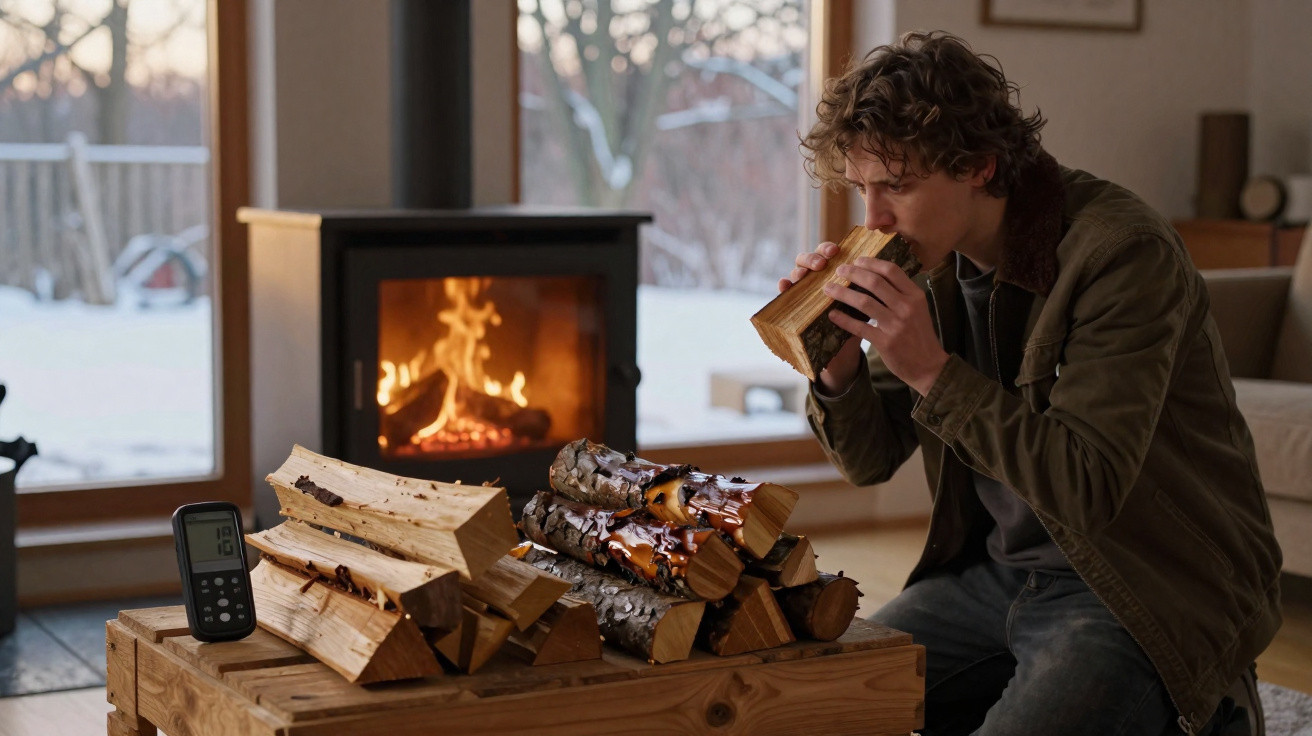
The stove glows gently, the sitting room carries a faint piney note, and a tidy pile of logs by the hearth looks like it belongs in a glossy magazine. You light a match, build your kindling, set a couple of those “perfect” logs on top… and then the flame falters, splutters, and gives up, leaving a slow drift of grey smoke.
The wood seems fine. The bark seems fine. Nothing looks “off”. Yet the room stays stubbornly cold, the stove glass darkens, and you spend the next hour prodding the same log, trying to work out what you’ve done wrong.
Between the pleasant smell of the stack and the silence of a fire that won’t take, there’s a clue many people don’t notice until winter is already properly under way.
When “good‑smelling” firewood quietly lets you down
For most people, the first jolt isn’t the soot or the smoke - it’s the let‑down. You order a load of logs that smell clean, even appealing: maybe that sweet resin of softwood, or the earthy, late‑autumn scent you associate with oak or ash. You stack it neatly and picture long evenings beside a lively fire. Then the first proper test arrives on a bitter night, and the fire simply… won’t get going.
Instead of a lively crackle, the logs hiss. There’s a soft sizzle, and tiny beads of moisture appear at the ends. The smell stays reassuring - which is exactly why the failure feels so confusing. Your nose doesn’t flag the issue. The giveaway is in the heaviness, the feel, and what the flames don’t do.
On a wet Tuesday in January, I watched a delivery arrive in a small village in Northumberland. The homeowner, Karen, had ordered “seasoned mixed hardwood” from a local advert. The logs were neatly cut, the sizes looked right, and when she lifted one she gave a satisfied nod. “Smells alright, doesn’t it?” That first evening, though, the fire sulked. By the time she’d added three logs, the stove’s glass was streaked brown, the chimney was pulling hard on thick smoke, and the room never rose beyond a lukewarm 17°C.
Karen wasn’t an exception. A UK survey by Woodsure found that a significant share of households using wood burners are burning logs with too much moisture, often above 25%. Many of those people repeat the same line when they call their supplier: “But the wood smells fine.” Smell is comforting - it calls up woodland walks, old cottages, childhood bonfires. As a moisture test, it’s close to useless.
The warning sign that arrives quietly - and often too late - isn’t in the scent at all. It’s in how the wood behaves in the fire. When logs aren’t properly seasoned, most of their energy goes into driving off trapped water. You don’t get heat; you get steam, lazy flames, and heavy deposits on the glass and inside the flue. Months after the “green” smell has faded, the log can still be wet inside, because the moisture sits where your nose can’t reach.
That’s why so many people get caught in the middle of winter. By the time they realise the load is basically “dead weight”, the cold has dug in, delivery slots are scarce, and they’re left trying to coax warmth from wood that looks and smells acceptable but burns like it’s been soaked.
How to spot unusable firewood before the freeze bites
The least romantic solution is also the most dependable: a basic moisture meter. It’s a small handheld tool with two metal pins and a digital display. Push it into the freshly split face of a log and read the figure. Under 20%? That’s the safe zone. Between 20% and 25%? It’s on the edge. Above that, you’re likely in for a smoky, irritating winter. It isn’t glamorous, but it replaces guesswork with certainty.
If you haven’t got one, you can still learn a lot from your hands and ears. Split a log and look at the centre: it should be pale rather than dark or glassy. Feel the weight - seasoned logs are often surprisingly light for their size. Then knock two pieces together. A dry, sharp clack or “ring” points towards readiness; a dull, heavy thud is the sound of hidden water. Smell only reassures you the wood isn’t rotten; it doesn’t tell you how it will burn.
This is where many people misdiagnose the problem. They blame the stove, the chimney, even the weather, before they suspect the fuel. A common routine is opening the air vents wider to “give it more oxygen”. The fire flares briefly and then dies back again because the wood itself can’t sustain combustion. Another classic mistake is trusting appearances. A log can show end cracks and flaky bark and still sit at 30% moisture inside if it’s been rushed through a drying shed or stacked badly.
The emotional side tends to show up on the coldest evenings: you’re sat in three jumpers, staring at a lazy flame when you were promised “kiln-dried”. On a very human level, it feels like being cheated by something fundamental. Fire should be straightforward. Why isn’t it working when everything looks right? That gap between expectation and reality is where the frustration builds - and where a few simple checks, done weeks earlier, could have made the whole season easier.
“Good firewood doesn’t just smell right, it behaves right: it lights easily, burns steadily, and leaves you with heat instead of resentment.”
Here’s the quiet checklist experienced wood‑burners tend to carry around in their heads well before the first frost - offered as a reminder, not a lecture:
- Buy early: late summer is the best time to order your main load, not the first icy week of January.
- Test randomly: don’t just prod the top log - split and check pieces from the middle of the stack, where moisture can linger.
- Mix species: combining slower‑burning hardwood with easy‑lighting softwood gives you better control.
- Watch the glass: fast sooting is your stove hinting the fuel is wrong long before the chimney sweep has to say it.
- Keep a “quarantine” pile: anything that hisses, steams or feels heavy should be set aside to dry for another season.
The tiny shifts that change a whole winter
Once you start noticing the right signs, your winter fires improve in small, satisfying steps. You stop judging logs by the romance of that clean woodland smell, and start judging them by behaviour. The first time you burn genuinely dry wood, you can feel it almost immediately: the flames catch without fuss, the sound is crisp, and within half an hour the room feels properly warmed, not merely lit.
That’s when you realise how much effort you were wasting before - the constant poking, the extra kindling, the half‑burnt logs slumping into a sulky heap. Let’s be honest: nobody genuinely wants to do that every day. After a month of well‑seasoned wood, going back to damp, “nice‑smelling” logs feels like swapping central heating for a candle. You start to see that the real luxury isn’t how the stack looks; it’s how ready it is to burn.
The quiet warning you want to catch early is often something small: a log that feels oddly heavy, a stack that doesn’t seem to shrink, glass that needs cleaning far too often. None of those signals is dramatic on its own. Together, they’re a gentle alarm bell that says: this load won’t see you through a hard winter. That isn’t a reason to panic; it’s a nudge to act - move those logs to next year’s pile, reorder, test, and restack under a drier roof.
The biggest change is in mindset. Fire stops being “what happens when you strike a match” and becomes more like cooking: timing, ingredients, and patience. The smell is still a pleasure, but it’s no longer a guarantee. The guarantee is in the numbers, the sound, and the feel in your hands on a cold afternoon as you stack your future warmth and think - quietly - that this winter could finally run differently.
| Key point | Detail | Why it matters to you |
|---|---|---|
| Smell is not a reliable test | Logs can smell clean while still holding high moisture inside | Stops you relying on your nose and ending up stuck with useless firewood mid‑winter |
| Use simple checks before winter | A moisture meter, split‑test, weight and sound give clear clues | Helps you choose and sort wood that will heat your home rather than just smoke |
| Act early, not in the coldest week | Buy, test and stack main supplies in late summer or early autumn | Gives you steady, efficient fires when demand is high and replacements are harder to find |
FAQ:
- How dry should firewood be to burn properly? For efficient, clean burning, logs should usually be below 20% moisture content when measured on a freshly split face.
- Can wood that smells “fresh” still be good to burn? Yes. Some hardwoods keep a pleasant scent even when dry; what matters is the moisture level, not how “woody” it smells.
- What’s the quickest way to tell if wood is too wet? Split a log and press a moisture meter into the centre; if it reads above about 20–22%, set that piece aside to dry for longer.
- Is kiln‑dried wood always better than seasoned wood? Not necessarily. Well‑seasoned, air‑dried logs stored correctly can burn just as well, while kiln‑dried wood stored badly can absorb moisture again.
- What should I do with a whole load of damp firewood? Stack it under cover with good airflow, burn drier wood this winter, and treat the wet batch as next year’s supply rather than forcing it to burn now.






Comments
No comments yet. Be the first to comment!
Leave a Comment