
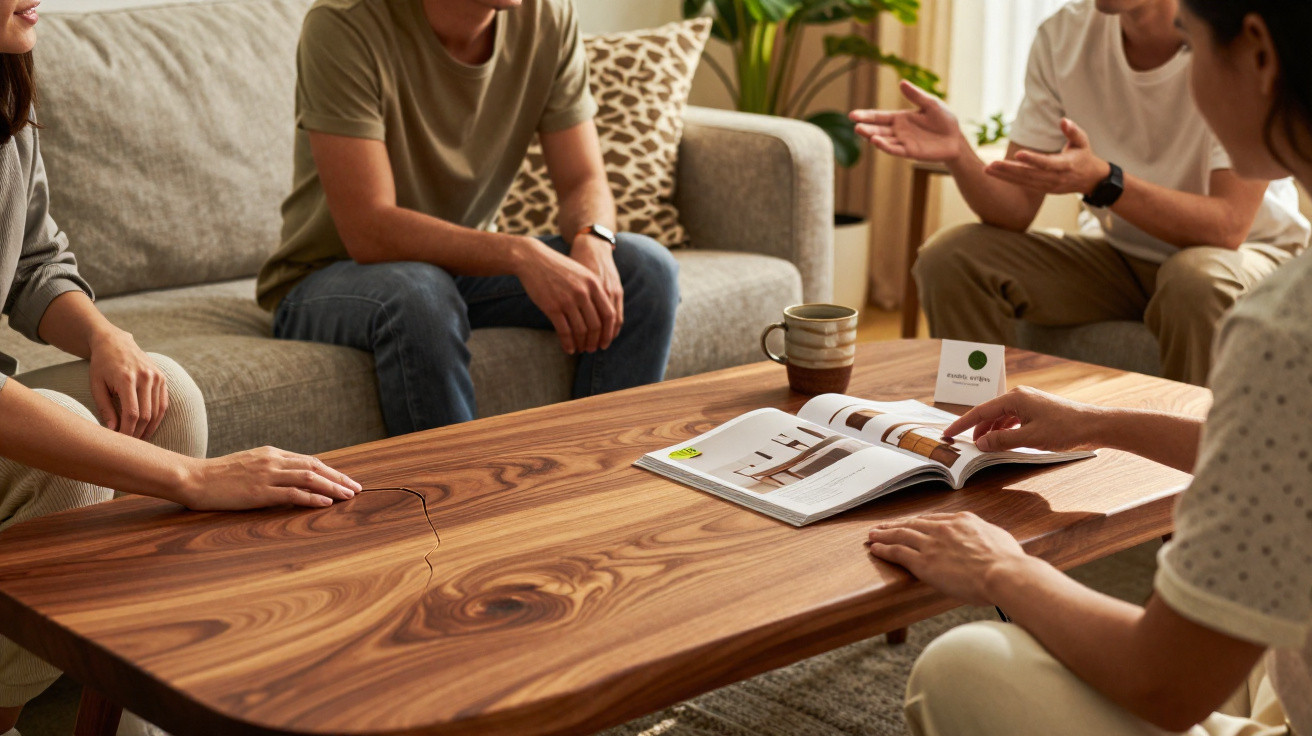
The row began with a coffee table.
Not an ordinary one, either - a heavy, lacquered slab of Amazonian hardwood, so dense and shiny it seemed to hold the memory of the original trunk. Emma stroked the surface, pleased with herself. Her sister, Lena, only looked on, eyes tightening as though she’d just stepped into a crime scene.
“Wait,” Lena said, running her fingertips along the dark grain. “Is this… rainforest wood?”
All at once, the space felt tighter. The plants, the candles, the pale beige sofa - every cosy Pinterest touch - dropped into static. A framed print on the wall announced, “Protect What You Love.”
Lena’s gaze moved from the slogan to the table,
then back to Emma.
And then the real question arrived, hanging over them like bad weather:
What are we prepared to wreck, simply so the living room looks exactly how we want?
When cozy decor quietly crosses a line
Scroll through any “warm minimalist” flat on Instagram and the trend is almost tangible. Honeyed timber shades. Oversized live-edge tables. Deep, exotic flooring, dark as melted chocolate. Captions promise “sanctuary” and “self-care”. In the comments, the same request appears again and again: “Where’s the table from?”
Almost nobody asks which forest had to disappear for the room to look like that.
The appeal is real. You keep scrolling, you save the post, you imagine that same gentle light sliding across your own dining table. Then you catch a phrase buried in the replies: “Brazilian walnut,” “rosewood,” “Amazonian hardwood.” The image stops feeling purely pretty and starts to resemble a bargain.
Comfort in here.
Cost out there.
A couple in Berlin I spoke to last year described this with a grimace. They’d put money aside for months for a “statement” dining table from a boutique brand. The listing carefully said “tropical hardwood from South America,” skirting the word “rainforest”.
They shared the photo anyway. The table was stunning - the sort of piece that makes inexpensive chairs look suddenly deliberate. Likes poured in. Then someone from their climate activist circle left a comment: “Congrats on the deforestation!”
What followed split their friends with startling speed. Some insisted the planet was already doomed and people might as well enjoy what they could. Others argued that every purchase is political, especially one displayed so publicly. The table remained.
Not every friendship did.
This is the uneasy logic tucked beneath throw blankets and mood lighting. Rainforest wood has become a shorthand for “real”, “authentic”, “luxury that feels earthy”. Brands sell the fantasy that you’re bringing a sliver of wild nature into a safe, curated nest.
Supply chains, however, tend to confirm something far less romantic. Ancient trees become more valuable as coffee tables than as living parts of their ecosystems. Once that truth sinks in, choosing rainforest wood stops looking like harmless “taste” and starts resembling radical self-prioritisation.
The planet will adapt over millennia. You just want your living room to look good before the next dinner party.
From selfish comfort to conscious choices (without living in an empty white box)
If you’re already drawn to the look, there is a softer way to unpick it. Begin with one blunt question for every wooden item you consider bringing home: where did this tree actually grow? Not just the country printed on a label - the forest, the region, the ecosystem.
Certifications such as FSC matter, but they’re not the end of the enquiry. Ask the retailer for paperwork rather than glossy lines like “ethical” or sustainably sourced. Genuine transparency tends to come with specifics: species names, forest concessions, partner communities.
Then reverse the instinct. Instead of chasing something “exotic”, look again at local woods. Oak, ash, beech, maple - treated properly, they develop the same richness and personality over time. Add texture, textiles and lighting, and the room can still murmur “sanctuary” without anything being quietly destroyed beyond your sightlines.
The uncomfortable truth is that many people would rather not dig too deeply. Answers can puncture the glow. You finally have the budget for the dream table, and suddenly someone wants to discuss illegal logging and Indigenous land rights. That’s when defensiveness slips in.
You’ll hear things like, “My one table won’t change anything,” or “Corporations are worse, I’m just decorating.” It’s a deeply human reaction. It stings to learn that something you genuinely love may rest on harm.
Let’s be honest: hardly anyone reads every sourcing report before clicking “add to cart”.
A kinder approach is to treat guilt as information, not a sentence. If you feel that small tightening in your stomach when you hear “rainforest wood,” it isn’t there to sabotage your aesthetic. It’s a signal - asking what kind of comfort you actually want to live with.
“Every object in your home tells a story,” said Ana, a Brazilian environmental lawyer I spoke with. “The question is who pays the price for that story - you, or someone far away with less power and fewer options.”
- Ask real questions at the store
Instead of “Is this sustainable?”, ask “Which forest did this come from? Do you have the certification number?” A vague response is, in itself, an answer. - Start with what you already own
Before purchasing “green” replacements, take stock of the timber already in your home. The most sustainable table is usually the one that never ends up in landfill. - Consider reclaimed and vintage first
Old-school furniture, salvaged beams, second-hand finds - they often carry more character than brand-new rainforest wood, without fresh damage attached. - Talk about it out loud
When someone admires your furniture, share the sourcing story. Quiet social pressure travels faster than any awareness campaign.
The friendships, fractures, and quiet negotiations behind one pretty table
Ultimately, the argument isn’t truly about timber. It’s about what we decide matters most when no one is formally marking our choices. One person shrugs: “The planet will survive, I need my aesthetic.” Another hears, beneath it, “My comfort matters more than your future.”
Within families, the edge can be sharper still. Parents who once spent years telling their children to recycle now unwrap rainforest hardwood floors “because they last forever”. Adult children sit through Christmas dinner, watching the glossy planks beneath their feet. Sometimes they swallow the comment. Sometimes they don’t - and the fight becomes a new family ritual.
Online, the divide is louder. Influencers who show off rainforest wood worktops collect a wave of likes, then another wave of replies accusing them of eco-hypocrisy. Some dig in and label critics “haters”. Some quietly rewrite captions to say “ethically sourced” while keeping the same suppliers.
Others choose the more exposed option: they admit they got it wrong. They post, “I bought this before I learned more. I wouldn’t buy it again.” Those updates rarely travel as far as a flawless kitchen reveal. But they hit somewhere deeper. People recognise what it’s like to change your mind while the thing you regret remains fixed to your wall.
There isn’t a tidy ending here, and no perfect shopping list that makes everything right. A home is always a patchwork of compromises: budget, taste, culture, convenience, blind spots. The question that stays - long after the coffee-table argument fades - is quieter and more persistent.
When you’re alone in the soft evening light, your hand resting on that smooth wooden surface, what sort of comfort is it, really? One built on not knowing. One built on looking away. Or a steadier comfort that comes from living with objects whose stories you can repeat without flinching.
That decision doesn’t only shape your living room.
It shapes who you are when you invite the world in.
| Key point | Detail | Value for the reader |
|---|---|---|
| Rainforest wood carries hidden costs | Many “exotic” pieces come from fragile ecosystems and opaque supply chains, despite glossy branding | Helps you see decor decisions as moral choices, not just style preferences |
| Questions change the purchase | Asking about species, origin, and certification exposes greenwashing and pressures sellers to improve | Gives you a simple script to shop more consciously without needing a PhD in forestry |
| Alternatives still feel cozy | Local species, reclaimed wood, and vintage furniture can create the same warm aesthetic | Lets you keep the “sanctuary” vibe while reducing guilt and long-term impact |
FAQ:
- Is all rainforest wood automatically bad?
Not all of it. Some community-managed forests and certified concessions do follow strict rules and support local livelihoods. The challenge is that illegal and destructive logging often hides behind the same “tropical hardwood” label, so skepticism is healthy.- How can I tell if the wood is really sustainable?
Look for credible certifications like FSC, then ask for details: species, country of origin, and certificate numbers you can verify online. If the seller only offers vague buzzwords or gets defensive, that’s a red flag.- What are good alternatives to rainforest wood for a cozy look?
Locally sourced oak, ash, beech, maple, or pine, plus reclaimed timbers and vintage pieces. Combine them with warm lighting, textiles, and natural fibers and you still get a “nest” feeling without relying on endangered forests.- What if I already own rainforest wood furniture?
Don’t throw it out. Use it for as long as possible, repair it, and be honest about its story. If it feels right, talk openly about how your choices have changed - that honesty can influence others more than silent shame.- Is refusing rainforest wood really going to change anything?
Your single decision won’t stop deforestation. But demand is built from millions of “small” choices. When more buyers ask hard questions or walk away, retailers and suppliers feel the shift. Cultural norms move first, and policy usually follows.




Comments
No comments yet. Be the first to comment!
Leave a Comment