
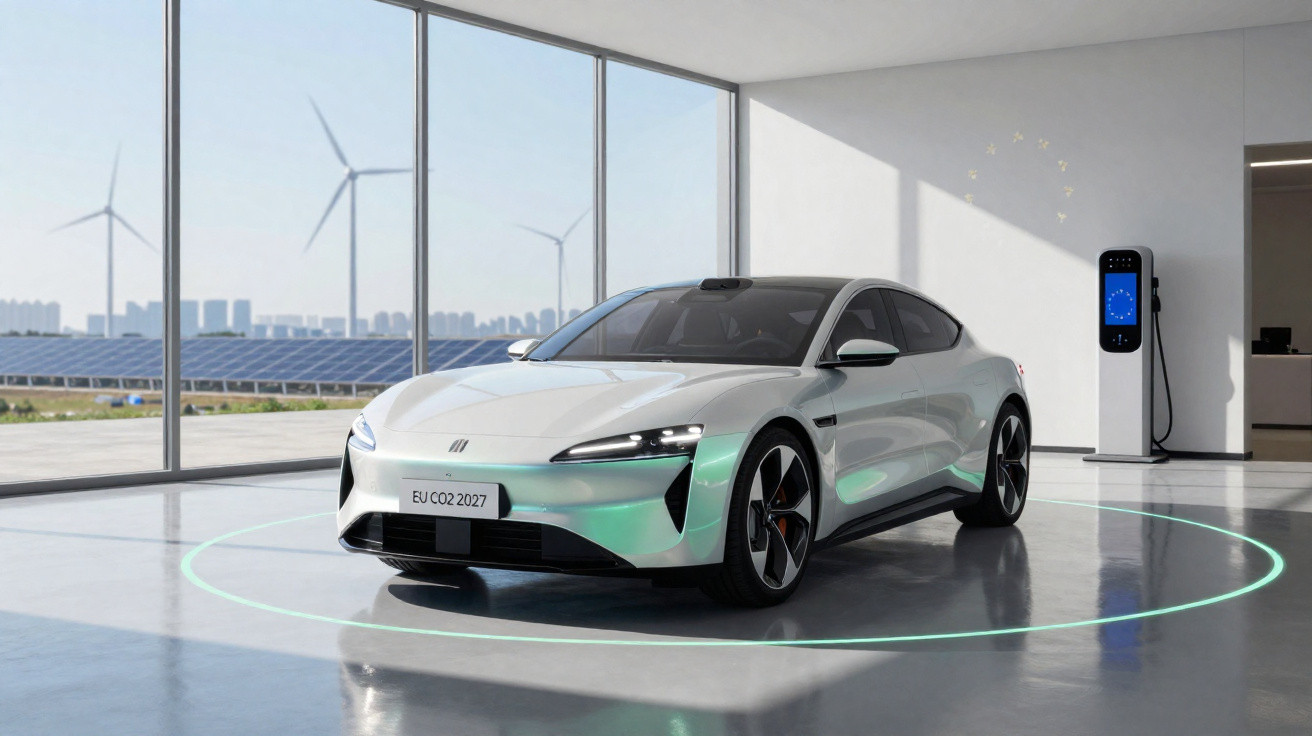
Europe’s car industry is going through a tough phase as it adapts to the European Union’s new carbon dioxide (CO₂) emissions targets, which came into force at the start of last year.
Revised EU CO₂ emissions targets for 2025–2027
Although the way compliance is calculated was adjusted in mid-2025 - with the average now measured across three years (2025, 2026 and 2027) rather than assessed year by year - manufacturers are still calling for further support measures.
T&E assessment of carmakers’ compliance and emission pools
A recent analysis by T&E (Transport & Environment) argues the outlook may be less bleak than the sector suggests. Based on the organisation’s projections, most major automotive groups will meet the targets set for 2025–2027 - either on their own or by joining emission pools.
Mercedes-Benz is the one notable exception in the forecast, as it could end up around 10 grams of CO₂ per kilometre above the permitted target. However, by pooling with Volvo, the German brand would move to roughly 8 g/km below the limit, sidestepping potential penalties.
Volkswagen Group, meanwhile, is expected to sit right on the edge of compliance, with emissions essentially matching the goal by 2027. BMW Group appears best placed: after already meeting the target last year, it is projected to be about 14 g/km under the limit in 2027.
What if it were already 2025?
If the targets had continued to be calculated annually, as originally planned, several manufacturers would have failed to hit the required levels - even with the help of emission pools. Those at risk would have included Renault Group, Volkswagen Group, Stellantis and Mercedes-Benz.
That would have meant substantial fines: for every gram of CO₂ above the set target, manufacturers would have paid 95 euros per car sold. In 2024, ACEA (the European Automobile Manufacturers’ Association) had forecast penalties totalling 15 billion euros if no changes were made.
Even so, Stellantis would have been able to avoid fines by being part of an emission pool with Toyota and Tesla, ending up under the target - albeit by a very slim margin.
What does the association say?
According to T&E, this “financial apocalypse” narrative was far from reality. The study said industry projections relied on a flawed assumption: that anticipated 2025 emissions would show no improvement compared with the first half of 2024.
Had the targets been applied as planned, T&E estimates the true fine bill for 2025 would have been two billion euros - shared between Volkswagen Group and Renault Group - which the organisation views as a tiny fraction of the 15 billion euros initially suggested.




Comments
No comments yet. Be the first to comment!
Leave a Comment