
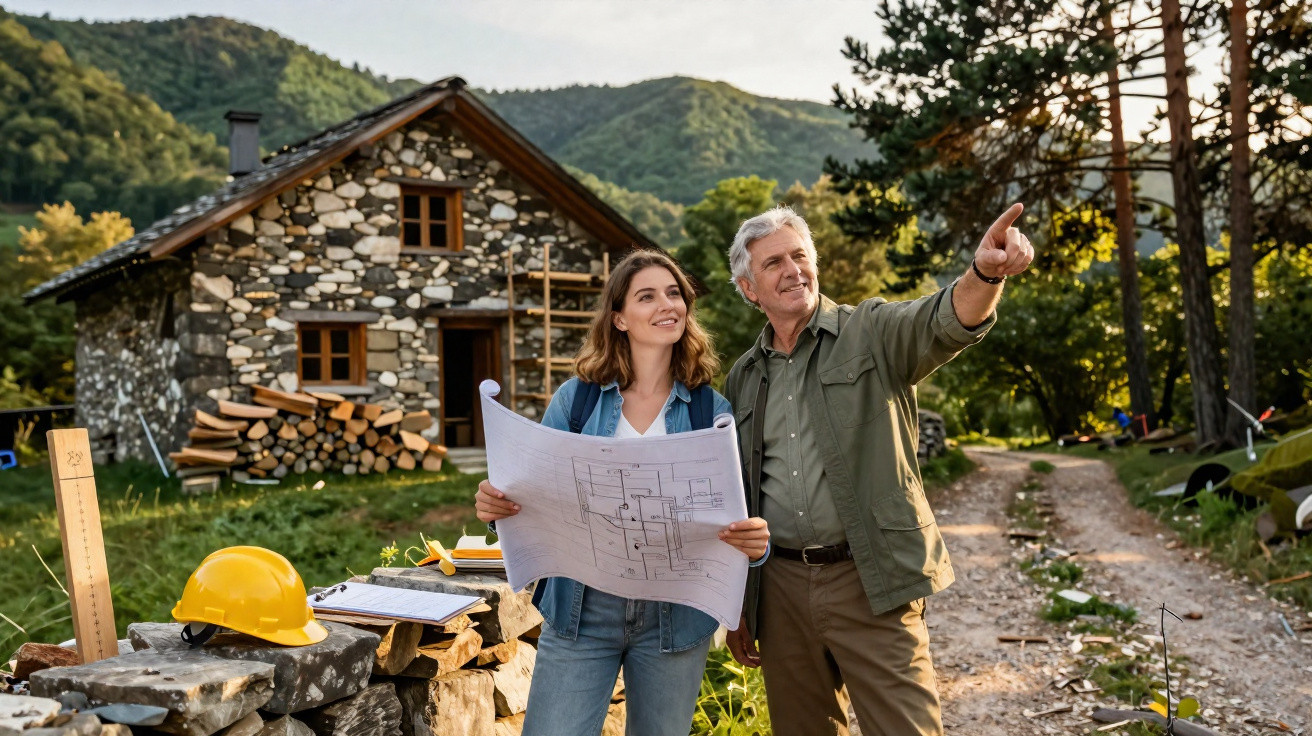
An investment of around €1.7 million is being earmarked to bring a number of buildings back into use for tourism, culture and civil protection. The plan includes new interpretive centres as well as practical support facilities.
€1.7 million plan to bring PNPG forest houses back into use
Terras de Bouro Town Council is preparing applications for EU funding to rehabilitate several former forest houses within Peneda-Gerês National Park (PNPG), with projected spending of roughly €1.7 million. The authority wants to restore these now-run-down buildings and give them new purposes, putting them at the service of local people, visitors and nature conservation.
According to the council president, Manuel Tibo, the schemes drawn up for the works provide for keeping the façades, safeguarding the existing heritage, while adapting the interiors for different uses. These range from themed interpretive centres to spaces supporting walkers, pilgrims, local associations and civil protection organisations.
Priority Portugal 2030 applications: Ermida, Pedra Bela and Leonte
Among the proposals classed as priorities and due to be submitted to Portugal 2030 is the Ermida forest house, in Vilar da Veiga. There, the council aims to set up an interpretive centre dedicated to the Iberian ibex, an emblematic species in PNPG and the symbol shown on the municipality’s coat of arms. Manuel Tibo stressed: "The Iberian ibex project is very important, because it is one of the biggest symbols of Terras de Bouro and is closely linked to its natural habitat, right in the heart of the National Park."
The building is also expected to support the forest ranger teams, nature wardens and other civil protection personnel, helping to improve conditions for surveillance, prevention and the conservation of nature.
The Pedra Bela forest house, meanwhile, will be converted-given its privileged location-into an interpretive centre about the Vezeira, an ancient tradition linked to mountain pastoralism. As for the Leonte forest house, it is intended to host a permanent exhibition devoted to water and to provide information on wellness and thermal tourism, within the framework of the World Biosphere Reserve plan.
Protocol with ICNF
For these three buildings, Manuel Tibo pointed out that the architectural projects have been completed and that protocols have already been signed between the council and the Institute for Nature Conservation and Forests (ICNF) to allow the spaces to be made available.
At a later stage, depending on financial capacity and any new funding opportunities, the municipality intends to move ahead with restoring additional forest houses, for which there are already ideas about their future roles.
Other forest houses under consideration and planned uses
As the mayor explained, the Junceda house could operate as a hostel supporting walkers using the GR50 trail, as well as an information point for the Silha dos Ursos route. The Costa Grande house, close to the São Bento da Porta Aberta sanctuary, is being envisaged as a place to welcome and allow rest for pilgrims on the Caminhos de São Bento. For the Beiral house, in Rio Caldo, the council wants it to become the headquarters for local community groups, while a PNPG interpretive centre is planned for the Portela do Homem house.
Find out more
Practical answers
Manuel Tibo, president of Terras de Bouro Town Council, explains that "this strategy makes it possible to restore heritage, create new focal points and provide practical answers to the needs of those who visit the National Park".
Co-management model
The co-management model in place in PNPG has created the possibility for municipalities to use the forest houses-owned by ICNF-provided that the buildings are rehabilitated.




Comments
No comments yet. Be the first to comment!
Leave a Comment