
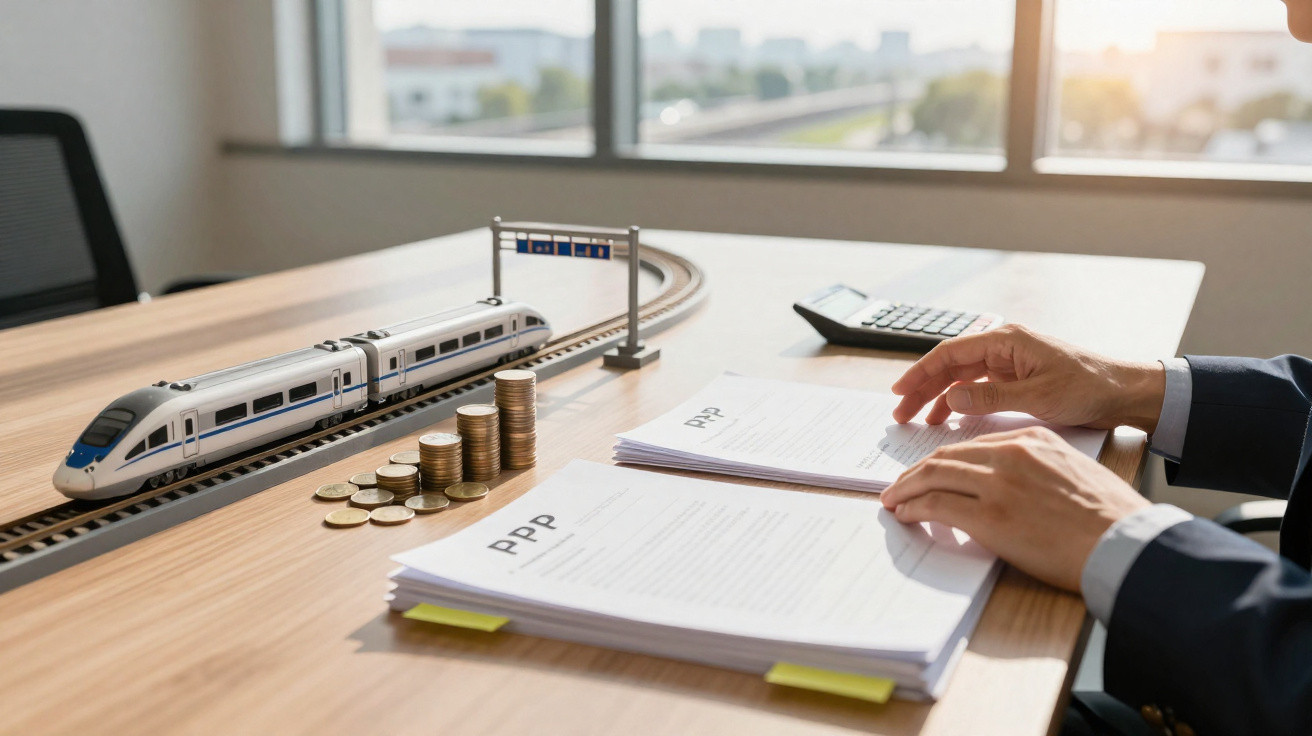
Portugal is moving into a new phase of public-private partnerships (PPP), with high-speed rail and the Porto Metro concession pushing public liabilities into the hundreds of millions. In parallel, motorway concessionaires are stepping up court pressure on the public purse, with requests to restore financial balance doubling to €2.4bn in just one year.
Rail PPPs drive commitments up to 2027
Figures set out in the 2025 General State Account show a sharp surge in commitments assumed by the State. Between 2024 and 2027, charges linked to rail PPP will rise by €200m - an increase of 328% - driven above all by the Porto–Lisbon high-speed line contract and by a new partnership being negotiated with Metro do Porto, as the operator expands with new lines, including the Ponte Ferreirinha. Across all PPP, the public bill is expected to climb by €650m in only two years, equivalent to an extra 50.5%.
This marks a strong comeback for the model that has shaped Portugal’s infrastructure policy over recent decades: long-term contracts, State-backed payments, and a continuing cycle of disputes, compensation and renegotiations that can keep generating effects long after the ribbon-cutting.
Motorway concessions intensify REF claims
Road PPP remain the main pressure point. Requests to restore financial balance (REF) and arbitration actions filed by concessionaires jumped from €1239m to €2359m in a single year. The rise exceeds €1120m and has one clear leading actor: Brisa.
Brisa asks for more than €1bn
The concessionaire led by the private group has become the State’s biggest claimant, putting the maximum value of matters under discussion at around €1122.5m in negotiations led by the Technical Unit for Monitoring Projects. The State does not accept liability, but the figure illustrates the scale of the financial battle being waged behind the scenes of motorway PPP.
The wave of disputes also includes cases tied to pandemic impacts, revenue losses, payment delays, compensation linked to legislative changes and even arguments over interest. The Douro Litoral concession increased the amount claimed to €137m due to the effects of covid-19. The Baixo Alentejo sub-concession has already moved to an arbitral tribunal, seeking compensation for the effects of the pandemic and the decree approved during the public health crisis.
What the State is already paying
Despite the legal escalation, the State continues to pay out. In 2025, net PPP charges reached €1159m, above what had been set out in the State Budget. The road sector once again weighed more heavily than any other, driven by availability payments, financial compensation and support linked to tolls.
At the same time as the Government removed tolls on several motorways in inland areas, it automatically opened the door to fresh compensation mechanisms for concessionaires. The clearest example is the Beira Interior concession, where abolishing tolls forced the State to create an extraordinary regime of interim payments to offset the concessionaire’s lost revenue.
Risk sits on the public side
The outcome is a system in which risk often still falls on the public side. When traffic drops, the State pays compensation. When the legal framework changes, the State compensates again. When extraordinary crises occur, the State faces arbitration claims. And as contracts age, further renegotiations emerge.
Now, the financial strain risks taking on a new dimension as major rail PPP get under way. The contract for the first phase of the high-speed line between Porto and Oiã has already formally entered the set of PPP overseen by the Technical Unit for Monitoring Projects. Meanwhile, new tenders are being prepared for the Porto Metro sub-concession and for the second section of the TGV line.
Past experience suggests these contracts rarely remain limited to the initially forecast cost. The State’s own report acknowledges that PPP are built on “complex” relationships and are exposed to events that can trigger compensation requests, indemnities and financial rebalancing, with unpredictable budgetary consequences.
Even when the State succeeds in reducing final amounts in an arbitral tribunal, proceedings with concessionaires can run for years and require the creation of liabilities worth millions. In many instances, litigation becomes almost a permanent extension of the contracts themselves.




Comments
No comments yet. Be the first to comment!
Leave a Comment