
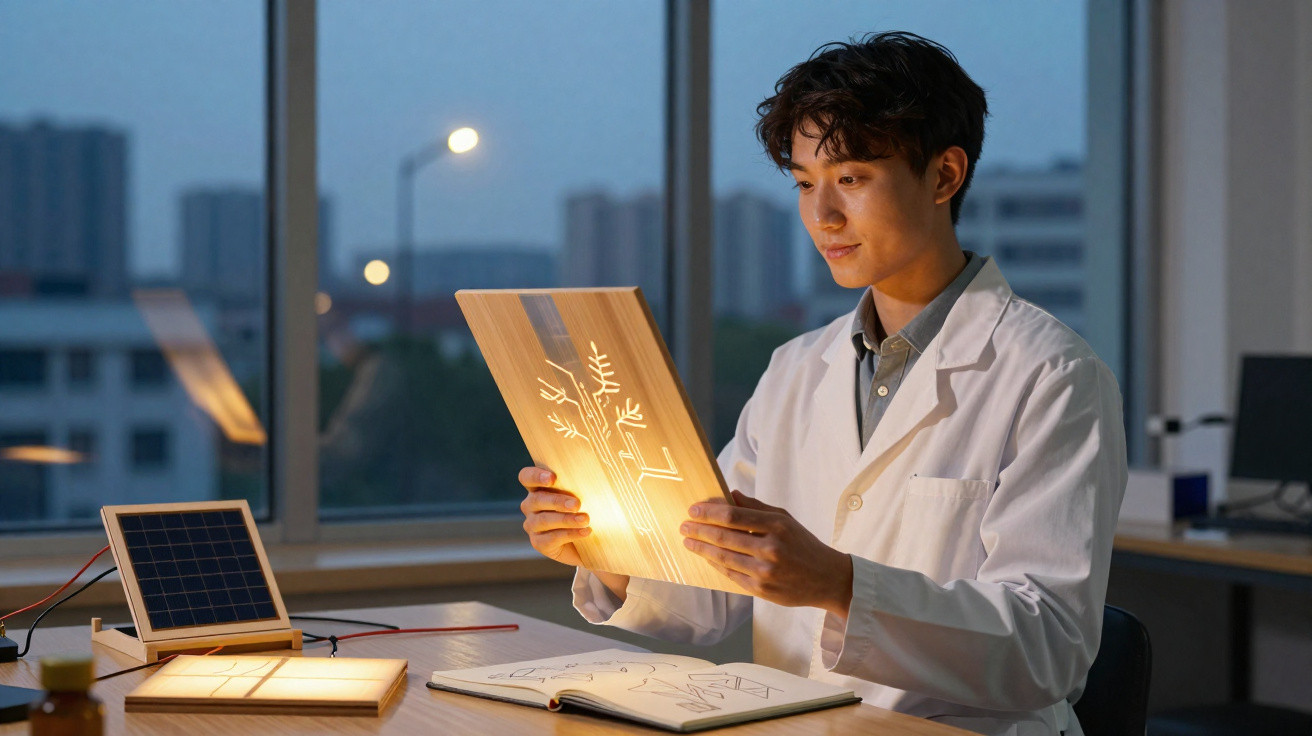
Material can keep generating electricity after sunset
Researchers have created an unusual wood-based material that can absorb sunlight, store energy as heat, and then continue producing electricity even in darkness. The study suggests that ordinary timber can be converted into a compact, environmentally friendly platform for solar-thermal power.
As the base, the team used balsa wood - a lightweight material with a naturally occurring network of microchannels.
How the wood-based solar-thermal platform is made
First, lignin was removed from the wood to increase its porosity. The channel walls were then coated with ultrathin layers of black phosphorene, which absorbs light effectively across a broad range. To prevent this sensitive material from degrading in air, it was encapsulated in a shell made from tannic acid and iron ions.
Added components for stronger light capture and heat storage
Next, silver nanoparticles were introduced to boost light absorption, and the surface was engineered to be highly water-repellent. After that, the channels were filled with stearic acid - a phase-change material that melts when heated and retains heat, then releases it again as it cools. The end result was a stable heat-accumulating material that keeps its performance even after repeated heating and cooling cycles.
According to the researchers, the system converts up to 91.27% of solar energy into useful heat, stores about 175 kJ/kg, and can deliver up to 0.65 V when connected to a thermoelectric generator. After 100 heating-and-cooling cycles, no noticeable drop in efficiency was observed.
The scientists add that this wood platform brings together several practical advantages at once: fire resistance, moisture resistance, antibacterial protection, and resistance to fouling, making it promising for outdoor use. In future, similar materials could be applied not only in solar energy, but also in electronics, construction materials, and autonomous power systems.


Comments
No comments yet. Be the first to comment!
Leave a Comment