
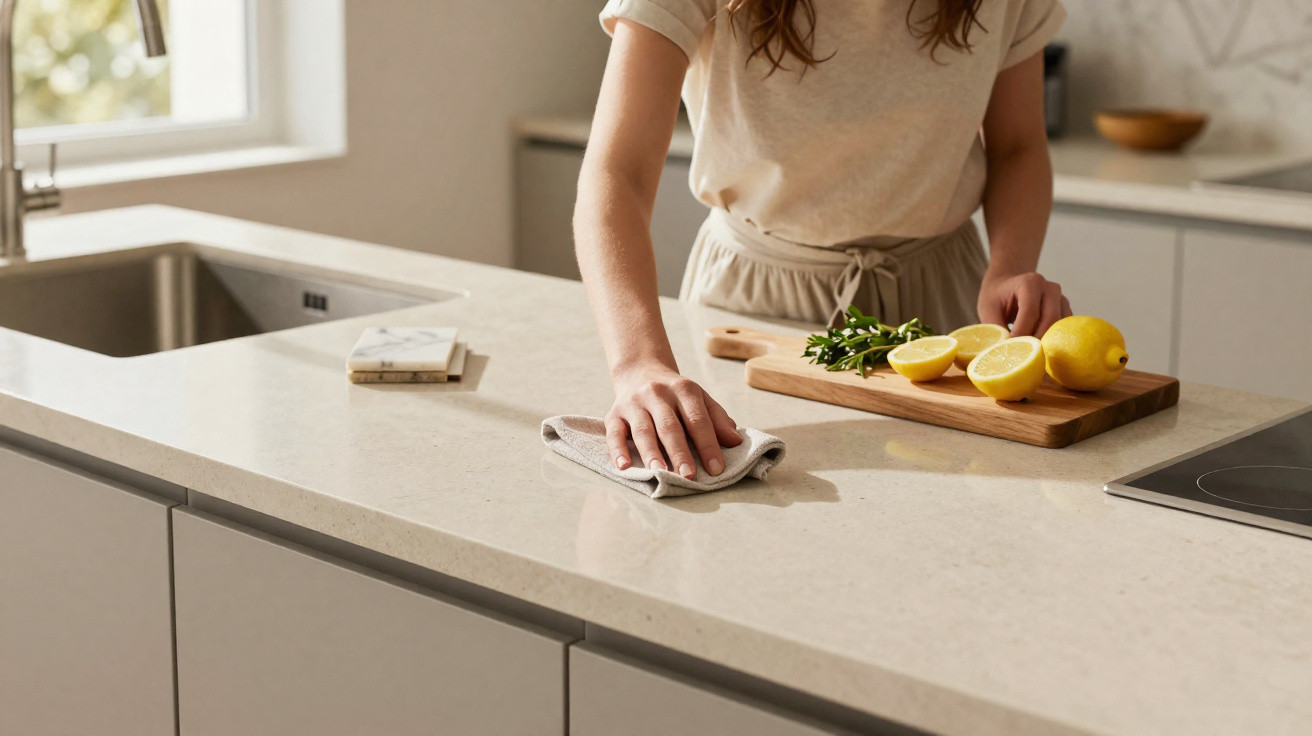
Renovating a kitchen calls for smart choices so you do not end up with ongoing maintenance headaches. The classic marble worktop is increasingly giving way to sintered stone-a modern material that combines outstanding strength with a refined look in the space.
Why is marble losing ground in the kitchen?
Natural marble has long been associated with luxury, but it comes with real drawbacks in today’s cooking routines. Because it is highly porous, it can soak up liquids quickly, leading to permanent stains from everyday culprits such as coffee and oil.
On top of that porosity, marble marks easily and does not cope well with direct heat from boiling-hot pans. These weaknesses can be frustrating for anyone who wants an easy, practical routine, which is why many homeowners now look for more technological surfaces that can handle intensive use every day.
Those limitations in the conventional material highlight why contemporary projects have moved towards newer options that offer:
- Thermal resistance: Handles hot pans placed directly on the surface without damage.
- Zero porosity: Prevents deep staining from wine, coffee, or condiments.
- High durability: Provides strong protection against scratches and everyday knocks.
- Easy hygiene: Removes the need for complicated sealants and makes cleaning simpler.
- Modern design: Delivers sophisticated patterns that convincingly mimic premium marbles.
What are the everyday advantages of sintered stone?
Sintered stone stands out for having near-zero porosity, which effectively stops dirt and liquids from being absorbed. Thanks to this, oils and condiments are far less likely to cause surface damage, making it a strong choice for the modern kitchen.
Another major plus is its superior heat resistance: it can take hot items without spoiling the finish. That exceptional durability makes meal preparation feel far more relaxed, removing the constant worry about stains or unwanted cracking on a new worktop.
Below is a video from the Casa Sul Channel on YouTube that explores the points covered in this topic in more depth:
How does the Neolith manufacturing process work?
Well-known brands such as Neolith, distributed by Alicante, use advanced technology to recreate how natural stone forms. Under extremely high pressure and intense heat, mineral components are fused together, producing ultra-compact slabs with extreme rigidity.
High Technology Alicante
What sets Neolith apart in architecture
The advanced manufacturing method uses high pressure and temperature to create ultra-compact slabs with exceptionally high structural performance.
This process delivers total impermeability and protection against the elements, making it ideal for the most demanding residential projects.
This innovative engineering produces an even surface that can precisely replicate the elegant veining of premium marbles. In practice, homeowners get the sophisticated look they want, paired with the reliable technical performance that matters for daily cleaning.
Industrial advances also introduced key competitive features that support the material’s technical specification:
- Sintering of pure minerals under extreme pressure conditions.
- Advanced thermal fusion that removes any internal porosity.
- High-definition digital printing to reproduce natural-looking veining.
How should you clean this surface properly?
Day-to-day care for sintered stone is notably straightforward and cost-effective for homeowners. Because the material is impermeable, there is no need to apply periodic chemical sealers or special waxes to maintain the original appearance of your kitchen worktop.
A damp cloth and a mild, neutral detergent are enough to lift food residue quickly and easily. This saves valuable time when keeping the home organised, while ensuring a thoroughly hygienic environment free from bacteria that could undermine a modern décor.
Keeping up with routine care is simple when you follow the practices commonly recommended by leading specialists:
- Daily use of a soft sponge with warm water.
- Targeted use of a neutral detergent to break down grease.
- Quick drying with a microfibre cloth to prevent surface marks.
Is sintered stone worth the investment?
Although the upfront cost is higher than some traditional stones, the cost–benefit balance tends to be strongly favourable over time. Avoiding frequent restoration work and premature replacement of damaged surfaces can fully justify every penny invested in a residential project.
Choosing this technology also helps add value to the property and delivers real peace of mind during everyday cooking. It brings together dependable functionality and contemporary beauty, setting a new benchmark for anyone planning a renovation without the usual headache.
Read also: Marble kitchen worktop is being phased out and gains a durable replacement



Comments
No comments yet. Be the first to comment!
Leave a Comment