
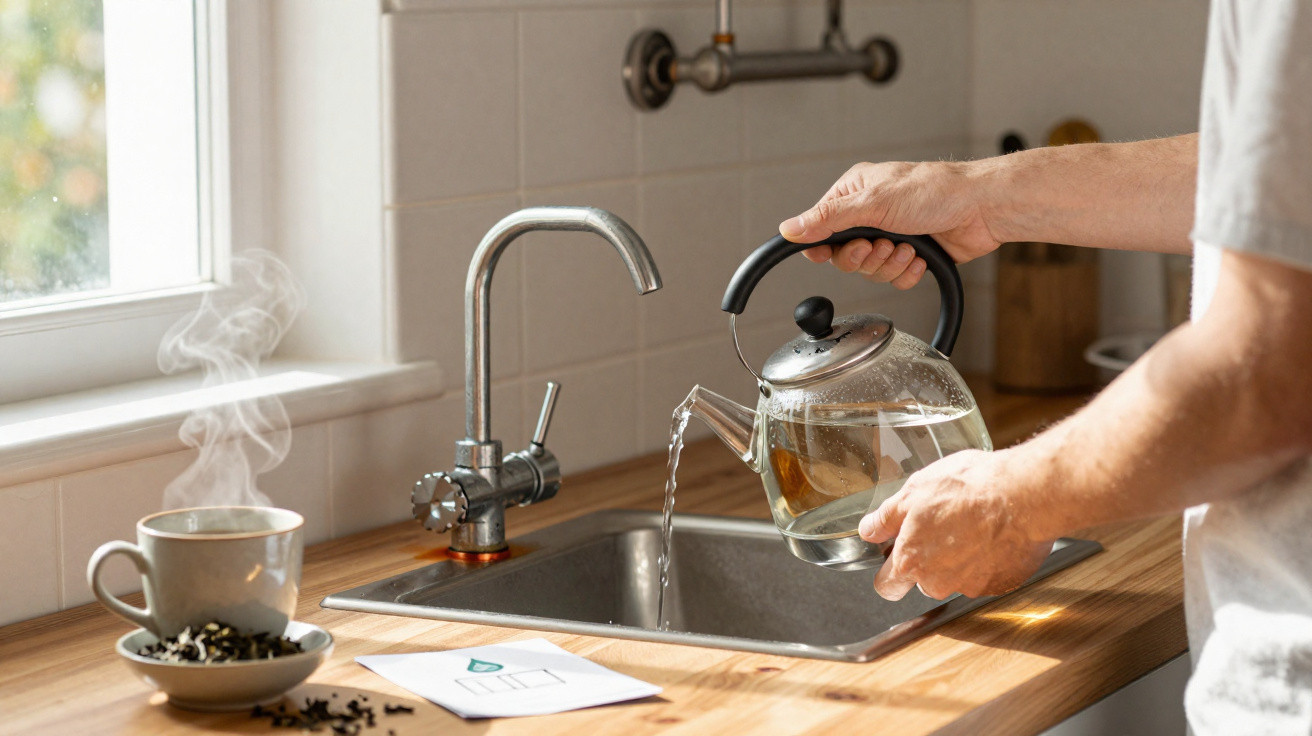
Your first coffee of the day is meant to be quick: switch the machine on, take hot water straight from the tap, done. It sounds convenient, saves time and seems harmless. Health authorities take a far more cautious view and explicitly advise against using hot tap water for coffee, tea or any other drinks.
What authorities object to with hot tap water
Public health ministries and regulators draw a clear line between cold and hot tap water. Only the cold water from the tap is monitored as drinking water and checked regularly. Hot water does not have the same status - even when it comes from the same mixer tap.
The reason is simple: before warm water reaches the tap, it passes through the building’s internal plumbing, then through a boiler or instantaneous water heater. In other words, it has travelled a completely different “route” from cold water that comes straight from the mains.
"The official recommendation is: always use cold tap water for drinks and food, and only then heat it."
In practical terms, the authorities advise:
- Prepare coffee, tea, instant soups and baby food using cold tap water only.
- After longer periods of non-use (overnight, a weekend, a holiday), run the cold tap for 1–2 minutes.
- Use water that has already run for rinsing up for cleaning or watering plants - not for drinking.
Metals from pipes: why heat makes the problem worse
In many older buildings, pipework or house connections still contain lead. Estimates suggest several million homes are affected. In newer installations, you will more commonly find copper, and sometimes nickel or brass alloys.
When water sits in these pipes, tiny amounts of metal can dissolve into it. This is where temperature becomes crucial:
- The longer the water stands, the more metal it can absorb.
- The warmer the water, the faster and stronger this process becomes.
Measurements show that at around 25 °C the lead content can be roughly twice as high as at 15 °C in the same system. At typical hot-water cylinder temperatures, the balance shifts even further against drinking-water quality.
"Boiling makes water lower in germs, but not ‘metal-free’ - on the contrary, dissolved substances remain in the pan or kettle when you bring it to the boil."
When you heat water, only the water itself evaporates. Metals such as lead, copper or nickel remain behind. If liquid evaporates, the concentration can even rise slightly. So anyone assuming they can “just boil” problematic hot water to make it safe is mistaken.
Additional risks in the hot-water cylinder
People often focus solely on the pipes, but the cylinder itself can matter too. In many homes there is a boiler or buffer tank that keeps water warm for hours - ideal for showers and washing up, less ideal for making drinks.
Several factors come together there:
- Long periods of stagnation in the tank.
- Warm temperatures that speed up chemical processes.
- Materials and internal coatings inside the cylinder.
There is also the issue of legionella. These bacteria thrive particularly well in lukewarm to warm water. While a sufficiently high storage temperature is intended to curb growth, authorities still do not view a cylinder as a place where drinking water is prepared for direct consumption. It is designed for the shower, bath and sink - not for the coffee machine.
Who needs to be especially careful
The human body can usually cope with small amounts of metals - but not without limits, and not all groups cope equally well. Some people are significantly more sensitive to exposure from lead or other metals.
Considered particularly at risk are:
- Pregnant women – lead can impair the development of the unborn child.
- Toddlers and infants – their nervous system is still developing, so they react more quickly to harmful substances.
- People with kidney disease – their ability to excrete metals is reduced.
Especially in households with children or during pregnancy, using the cold tap for any kind of drink or baby food should be second nature. For baby bottles, many professional bodies recommend freshly drawn cold tap water, which is then boiled afterwards.
How to make coffee the way the authorities recommend
The good news is that you can noticeably reduce the risk in everyday life with just a few simple steps - no specialist kit and no major expense.
Basic rules for safer coffee from the tap
- Always use cold tap water: only fill the jug, machine or kettle with cold water.
- Let it run first: if the tap hasn’t been used for several hours, run it briefly until the water feels distinctly colder and flows evenly.
- Avoid mixed temperatures: the “lukewarm” setting on a mixer blends cold water with water from the cylinder - not a good option for drinks.
- Kitchen rather than bathroom: where possible, take water for drinks from the kitchen tap, which is often closer to the main supply.
Beyond the health aspect, many coffee lovers also report better taste when they use fresh, cold tap water. Stagnation, ageing processes and material leaching can affect not only safety, but also subtle notes in the aroma.
How to spot potentially problematic installations
Many tenants do not know exactly how the pipework runs through a building. Even so, there are clues that it may be worth taking a closer look:
| Year built / renovation | Possible situation |
|---|---|
| Before 1973, no known renovation | Higher risk of lead pipework or old joints |
| 1970s–1990s, partially modernised | A mix of older and newer materials likely |
| From 2000 or fully renovated | Usually copper, plastic or stainless steel - lead risk much lower |
If you live in a very old building and are unsure, ask your landlord or managing agent whether there is information about the drinking-water installation. Some local authorities also offer tap-water testing.
What kettles, filters and similar devices actually do
Many households now use water filters, jug filters with cartridges, or premium machines with built-in systems. However, these technologies have limitations that are easy to overlook.
- Kettle: reduces germs, does not change metals.
- Jug filter: can reduce certain metals, but only works properly with regular cartridge changes and hygienic handling.
- Permanently installed filtration systems: must be properly designed, installed and maintained by professionals. Otherwise, they can create a germ problem.
None of these options turns problematic hot water into a good base for coffee. The simplest and most reliable approach remains: use only cold tap water that is monitored as drinking water, then heat it yourself.
Why the small extra step is genuinely worth it
Turning the hot tap seems to save a few seconds. In return, the likelihood increases that lead, copper or other metal components end up in your cup. Specialist authorities have been pointing this out for years, yet many people are still barely aware of the warning.
In day-to-day life it helps to build a consistent routine: run the cold tap first, fill the kettle or jug, then make the coffee. If you care about taste and health, that small step already goes a long way - for your own mug and for everyone else in the household who drinks along with you.

Comments
No comments yet. Be the first to comment!
Leave a Comment