
You heave the garage door open and a chill, slightly sour smell meets you. On the workbench, your old hammer is speckled with tiny orange dots. Drill bits that used to shine now look dulled and brown. Even the saw you hardly touched last summer appears as though it has spent a decade in sea air.
Up on the shelf, moisture beads across the toolbox lid. The concrete floor seems to sweat. When you pick up a spanner it feels clammy, as if it has been left outdoors overnight. Most of the tools still do the job, but they look worn out - forgotten. Eventually you’ll snatch one in a hurry and it will snap, slip, or bite into your hand.
You shut the door and catch yourself wondering: how quickly is all of this happening, really?
Why tools rust so fast in a damp garage
Rust rarely arrives with any drama.
At first it’s only a pale orange tint on the edge of a chisel, or a dark mark on a screwdriver shaft. In a dry workshop, you might not notice it for months. In a damp British garage in November, it can show up over a weekend. Put your socket set away clean on Sunday, then by the following Saturday it can feel rough - almost furry under your fingers.
A garage can act like a slow cooker for moisture: bare concrete, uninsulated walls, cold metal, a mild day followed by a cold night. The air repeatedly hits its dew point, and your tools are the convenient surfaces where water settles. The more metal you keep in there, the more chilled surfaces the damp can cling to.
One home insurer once estimated that up to 40% of garages in the UK sit at or near “high corrosion risk” humidity for much of winter.
That sounds like a distant statistic until you picture ordinary people and ordinary Saturdays.
Take Mark, an electrician in Leeds who stored all his kit in a single garage behind the house. He’d get in, drop the toolbox, lock up, and not think about it again. After one especially wet winter, he went to swap out a fuse board and discovered his insulated screwdrivers were peppered with pits. His tape measure no longer retracted smoothly. Half his drill bits had formed a rust ring at the tip.
He figures that winter alone set him back a couple of hundred quid in replacements. Not a disaster - just a slow, pointless drip from his bank balance. Stretch that across years and across thousands of garages and it turns into a quiet national habit: buying the same tools twice.
DIYers see the same thing. So do gardeners, and cyclists with damp chains hanging in the shadows next to the mower.
Rust is simply chemistry doing what chemistry does best.
Steel plus oxygen plus water equals iron oxide. A damp garage conveniently supplies all three, then hits “start” every night. When warm, moisture-laden air meets cold metal, condensation forms. Those tiny droplets are enough to kick off the reaction. Keep repeating the cycle and the outer layer of metal, bit by bit, turns into dust.
Salt in the air accelerates it. So do grime, old sweat, and residues from cutting fluids. That’s why a clean, lightly oiled plane can sit happily for years, while the greasy adjustable spanner you chuck on the floor can rust within a fortnight. The garage isn’t out to get you - it just happens to be a near-perfect corrosion lab.
Practical moves that actually keep tools from rusting
The best anti-rust tactic is not exciting: reduce the moisture.
Deal with the space before you fuss over individual tools. If your garage walls dampen when it rains, sort the leaks and clear the gutters. Next, stop storing metal on the slab. Move tools off bare concrete and onto shelving, pegboards, or into cabinets where air can circulate. After that, consider the conditions: a small plug-in dehumidifier run for a few hours a day through winter can make a huge difference.
If that’s not affordable, the inexpensive refillable moisture traps with crystal refills genuinely help in smaller areas. Put one in the cupboard where you store tools, and another in the toolbox you open least. They won’t dry out an entire double garage, but they can create small pockets of safer air around your kit.
The next step is to put a thin, sacrificial barrier on the metal.
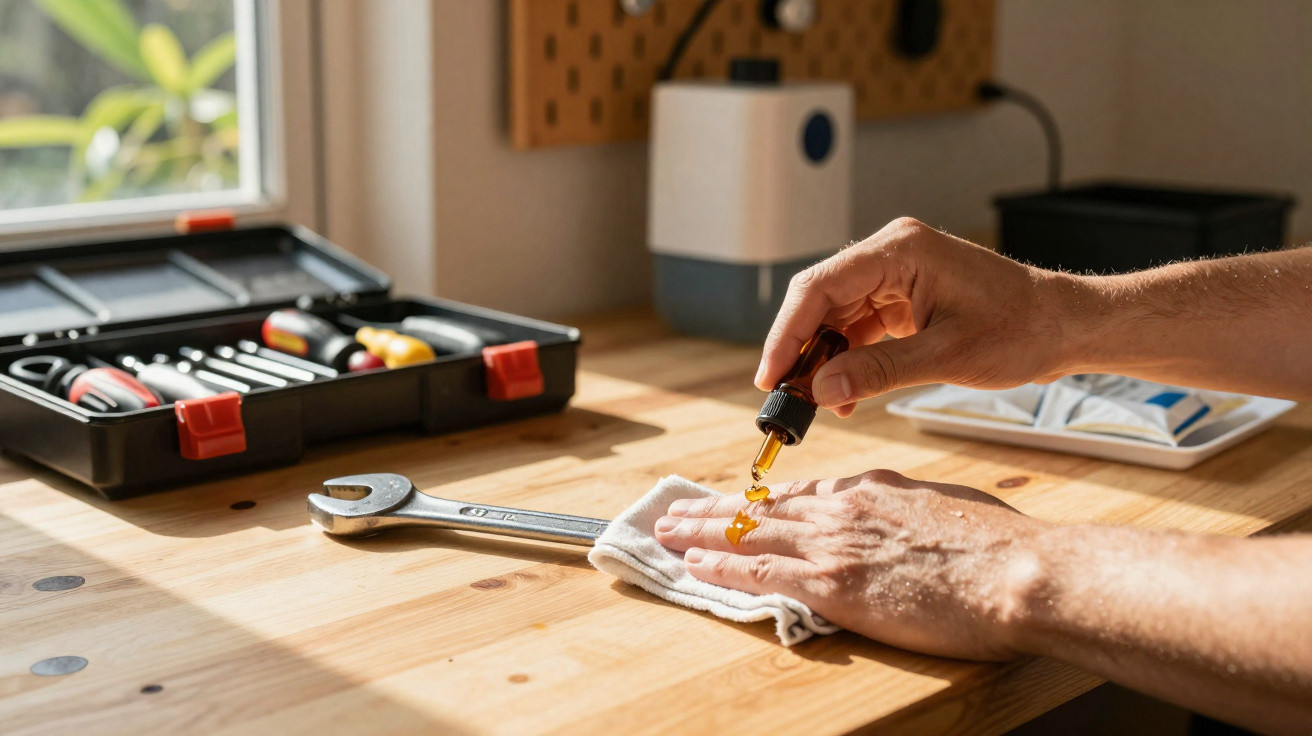
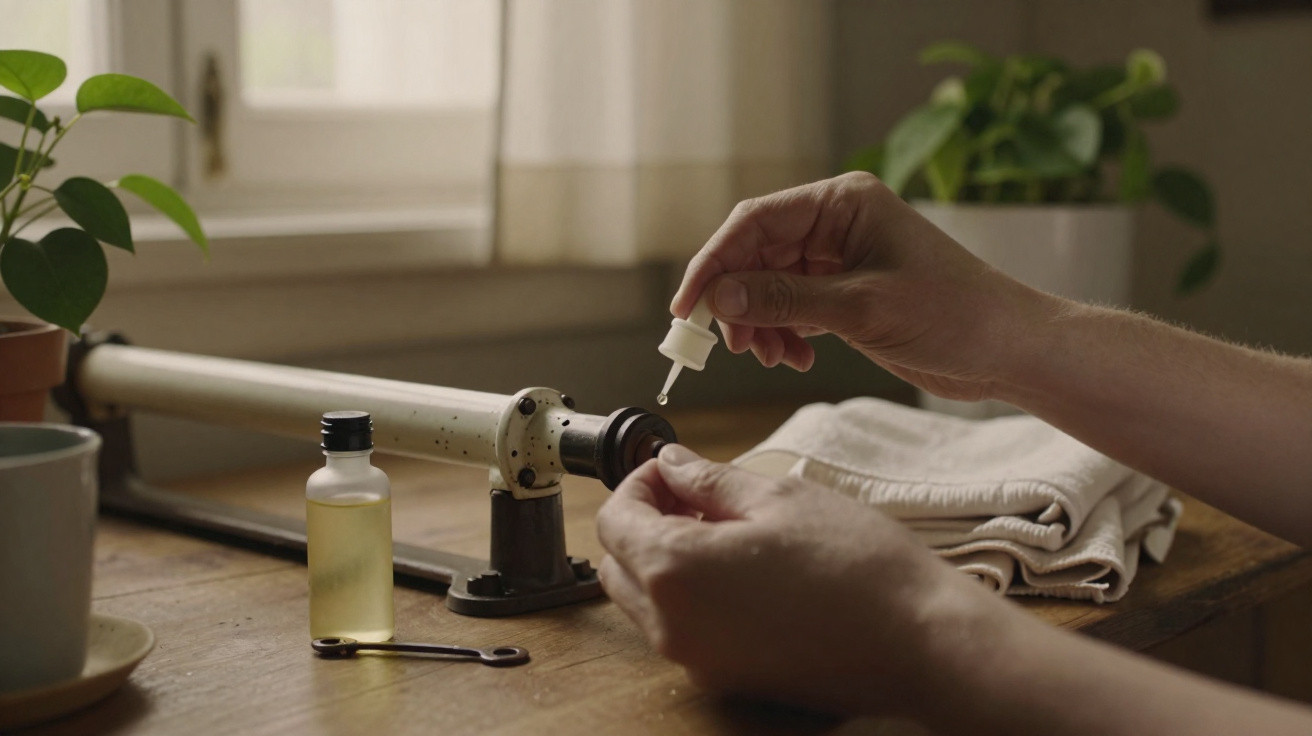
You don’t need specialist gun oil. Light machine oil, 3‑in‑One, or even the sort of spray you’d use on a bike chain can work. Wipe down metal with a cloth that’s only lightly moistened - never wet enough to drip. Aim for a “film”, not a thick layer. For tools that rarely come out - hand planes, chisels, or that precision screwdriver set you touch once a year - it can help to wrap them in an oily rag or slide them into a waxed tool roll.
On a rainy Sunday you can protect a surprising amount of steel in half an hour with one rag. It becomes a calm, oddly satisfying habit once you start. Let’s be honest: nobody really does it every day. But once a month during the damp season is realistic - and it stops rust before it becomes a problem.
Where many people lose the fight is storage, often without realising.
Stuffing everything into a tightly sealed metal toolbox feels sensible, but in a damp garage it can backfire. You trap humid air inside, then on each cold night that moisture condenses on the coldest surfaces - your tools. It’s usually better to let things breathe. Vented cabinets, pegboards, open shelves with plastic tubs - anything that allows the air to dry out between wet spells.
A simple old trick still earns its keep: drop a few silica gel packs into each drawer or box. Those little “do not eat” sachets that come with electronics are worth saving. They quietly pull moisture out of the air exactly where your tools live. It’s not a miracle cure - it just blunts the humidity spikes that feed rust.
“Rust is a symptom,” says one veteran joiner from Birmingham. “What you really have is a damp problem and a habits problem. Sort those two out and your tools will outlive you.”
You can turn that into a short checklist you remember without thinking:
- Keep tools off the floor and away from bare concrete.
- Wipe metal with a light oil film before the wet season.
- Use dehumidifiers, moisture traps or silica gel in closed spaces.
- Hang the tools you use often where air can circulate.
- Dry tools fully after use, especially after outdoor jobs.
None of this requires a full workshop refit. They’re small, repeatable actions that become part of putting things away - not a separate “project” you’ll never get round to. Once they’re built into your routine, rust has far fewer opportunities.
Living with a damp garage without losing your tools
At some stage you accept that the UK is never going to deliver Arizona-level dryness.
Your garage will still have cold evenings, wet cars rolling in, and foggy mornings creeping under the door. The aim is to set up the space so it works with that reality. Put the tools you value most on the driest wall - often the one furthest from a leaky gutter and not right next to the house boiler area. Keep lawn equipment that drags in grass and mud in a different corner from fine hand tools.
You might also find that laying a cheap insulated mat on the floor under your main bench changes the feel of the place: less cold slab, less condensation. Fitting a draught excluder along the bottom of the door can also stop misty air flowing straight onto neatly lined-up spanners in the first place.
At a deeper level, rust in the garage is about protecting your own time and effort.
Every orange spot on a spanner stands for work you already did: earning the money, choosing the tool, learning how to use it. Letting it decay in the dark is a quiet kind of waste. When you step into a space where the metal is clean, the handles are dry, and nothing binds as you lift it, you feel it in your shoulders. The job in front of you seems smaller. You trust your kit, and you trust yourself a little more.
That’s the real payoff of taking rust seriously: not only saving a few quid, but making a corner of your home that helps rather than hinders. Next time you lift the garage door and breathe in, the air outside may still smell damp. Inside, it will feel like your space - on your terms.
| Key point | Detail | Why it matters to the reader |
|---|---|---|
| Control humidity | Dehumidifier, moisture traps, ventilation, and keeping tools off the ground | Reduces the conditions that trigger day-to-day rust |
| Protect metal surfaces | Light oil film, wrapped storage, silica gel sachets | Creates a simple, low-cost barrier against corrosion |
| Adjust storage | Wall boards, ventilated shelving, separating tools from wet kit | Extends tool life and improves day-to-day usability |
FAQ:
- Can I stop tools rusting without buying a dehumidifier? Yes. Store tools off the floor, use moisture traps or silica gel in boxes, and wipe metal with a light oil film before the damp season.
- Is WD‑40 enough to prevent rust in a garage? It can help as a water displacer, but it isn’t a long-term protective oil. Use it first, then add a slightly heavier oil for stronger protection.
- What’s the best way to store hand tools in a damp space? Hang them on a wall or keep them in ventilated cabinets, and avoid tightly sealed metal boxes filled with moist air.
- How do I deal with tools that are already rusty? For light rust, scrub with fine steel wool or a brass brush, wipe clean, then oil. If tools are heavily pitted, you may need sanding or replacement.
- Will painting my garage floor help with rust? Yes. A sealed or painted floor holds less moisture than raw concrete, which can cut condensation around nearby tools.





Comments
No comments yet. Be the first to comment!
Leave a Comment