
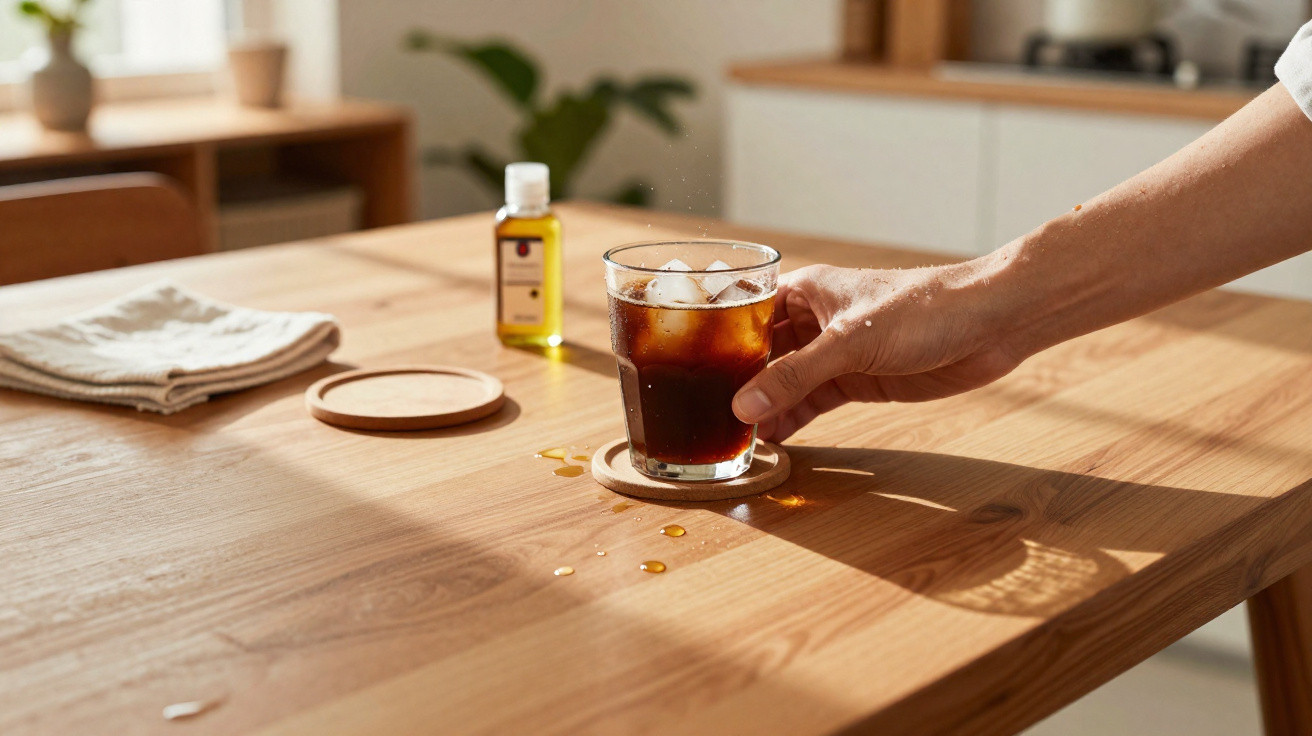
A slow Sunday afternoon: a series murmuring in the background, and someone sets their drink down “just for a second”. Then someone else does the same. A hot mug follows, then a bottle pulled straight from the fridge, still damp with condensation. At first glance, the wood seems to take it in its stride - no cracking, no obvious catastrophe.
A few weeks later, the light catches the surface at a new angle and the problem suddenly reveals itself. There’s a pale halo, a milky patch that sits awkwardly against the grain. You rub a bit harder, swap cleaning products, maybe even pin it on the children. It doesn’t budge. The harm has already settled in, quietly.
The unsettling part is that the routine that caused it feels completely innocent.
This tiny daily habit that ruins solid wood
Very few people wreck wooden furniture in one dramatic mishap. More often, it’s repetition that does the damage: a hot mug placed on the dining table while replying to emails; a damp glass left on the bedside table each night; a quick splash while watering a plant on the console with the thought, “I’ll wipe it later.”
Wood rarely gives you an immediate warning. It takes things in. It swells slightly, then shrinks as it dries; the finish softens just enough for moisture to creep through. From across the room, everything looks fine. Up close, the surface turns cloudy, varnish starts to blister, and edges can begin to lift.
This kind of gradual wear is driven less by the occasional major spill than by everyday heat and condensation sitting directly on the surface. That’s the habit that quietly chews away at your furniture.
In photos, the signs can look trivial: a white ring here, a faint grey bloom there. Yet for many owners, that small mark becomes impossible to unsee every time they enter the room. A British insurance survey once placed “ruined wooden table” among the most common household regrets, just behind scratched parquet.
Consider Emma, who inherited her grandmother’s walnut table. For years, she treated it like any other worktop: coffee cups without coasters, laptops running hot, scented candles left burning for hours. One winter, she shifted the table nearer the radiator to free up space. By spring, the side facing the window had faded, the side nearest the heater had cracked, and the centre was speckled with white rings - like the ghosts of old conversations.
Nothing went wrong overnight. It was the accumulation of small, offhand choices that turned a family heirloom into a restoration job.
Wood remains “alive” long after the tree has been cut. It still responds to humidity, temperature and pressure. Heat from a mug or plate can soften many finishes, particularly varnish and lacquer. Once that layer is warm, water vapour from a glass - or even from the air - can slip underneath and become trapped, leaving those milky white or light grey marks.
Condensation from a cold drink, or a small puddle beneath a leaking plant pot, acts like a slow invasion. The fibres swell unevenly, the surface can warp, and tiny cracks open up for dirt - and more moisture - to enter. Over time, the protective layer loses adhesion, and the wood starts absorbing whatever lands on it.
That’s why one “harmless” behaviour - placing hot or damp items straight onto bare wood - becomes a long-term assault. Quiet, repetitive, and effective.
Protecting wood without living like in a museum
The simplest way to stop the damage is to add a barrier between the wood and everyday use. Not a plastic cover like the 80s, but small, practical aids you’ll actually reach for: coasters that live on the table; thick placemats where people naturally sit; a basic drinks tray so condensation gathers on something washable, not on oak.
For TV dinners or long laptop sessions, an inexpensive wooden or cork lap tray works as armour for your coffee table. For plants, use a waterproof saucer that properly fits the pot, plus a felt pad underneath to guard against both leaks and scratches. And for extended dinners, a discreet tablecloth does more than look nice - it cushions heat and catches splashes before they reach the fibres.
The aim isn’t to treat furniture like it’s untouchable; it’s to make protection effortless and automatic.
Most people know the principles: mop up quickly, use coasters, keep heat away. Then life gets in the way. You’re tired, the mug lands where it lands, and nobody wants to patrol the living room with a cloth. Let’s be honest: hardly anyone truly does that every day.
So make the right choice the easy choice. Put a stack of coasters exactly where people naturally drop their glasses, not in a pretty box three metres away. Pick placemats attractive enough to leave out all the time. And if the children are hard on surfaces, consider oil-finished tables that tolerate light sanding and re-oiling, rather than delicate high-gloss varnish.
Along the same lines, steer clear of harsh “works on everything” cleaners. Many contain alcohol or solvents that dry out finishes and make them even more vulnerable to heat and moisture. A soft cloth, a little mild soap and steady dusting usually do more for wood than any miracle spray.
“Wood doesn’t like extremes,” explains a Paris-based restorer. “Not extreme heat, not standing water, not brutal cleaners. What kills it is the combination of all three, day after day.”
To keep everyone consistent - especially in a shared home - a short checklist on the fridge or inside a sideboard door can help.
- Never leave a hot mug or plate directly on wood - always place something underneath.
- Lift items rather than dragging them, to prevent micro-scratches that allow moisture in.
- Deal with water rings the same day, even if they look insignificant.
- Keep furniture away from radiators and strong patches of direct sun.
- Choose finishes you can maintain yourself: oil or wax where possible, rather than ultra-gloss.
Seeing your furniture differently
Once you understand how wood behaves, a table stops being “just a surface”. You start noticing the years in it: meals, homework, late-night laptops - and all the cups that left their trace. Dropping a hot mug in the same spot no longer feels trivial; it looks like a slow, steady drip of wear.
There’s no need to panic or wrap everything in plastic. Living with wooden furniture means accepting a few marks - and deciding which ones you’re happy to keep. A scratch from moving house or a pen line from a child learning to write can feel like part of the story. A scatter of white heat rings from the same lazy, coaster-free ritual is harder to romanticise.
Practically speaking, small changes in routine can halt the damage where it stands. You might relocate the coffee habit to a sideboard protected with a thick runner. You might decide the beautiful oak table gets a tablecloth on weeknights and placemats at weekends. Or you might pay for refinishing once, then protect the renewed surface like a fresh tattoo.
Most of us have felt that moment when a guest sets a sweating glass down on the one unprotected patch and you get a tiny surge of panic. That reflex says plenty: we all know, deep down, how fragile a finish can be. And sharing what you’ve learned - the white rings, the heat marks, the near-misses - often makes visitors more careful than any towering pile of coasters.
Over the years, these small decisions add up. A table that’s gently protected ages like leather, developing a soft patina and a few honest scars. The same piece treated as a general dumping ground ends up warped, stained, and disguised with runners to cover the worst areas. The habit that separates the two is small, silent, and sits right under your morning cup.
| Key point | Details | Why it matters to readers |
|---|---|---|
| Hot mugs and plates are finish killers | Heat softens varnish and lacquer, letting moisture sink in and create white rings or cloudy patches on the surface. | Explains why marks appear even when spills are tiny and shows why a simple coaster literally extends the life of a table. |
| Condensation acts like slow water damage | Cold drinks and plant pots create constant damp spots that swell the fibres and open micro-cracks. | Helps readers rethink where they leave glasses and plants, and prevents the classic “mystery stain” on bedside tables and consoles. |
| Gentle cleaning beats multi-surface sprays | Many all-purpose products contain alcohol or solvents that dry and dull wood finishes over time. | Avoids well-meant but harmful routines and saves money by sticking to soft cloths and mild soap instead of harsh chemicals. |
FAQ
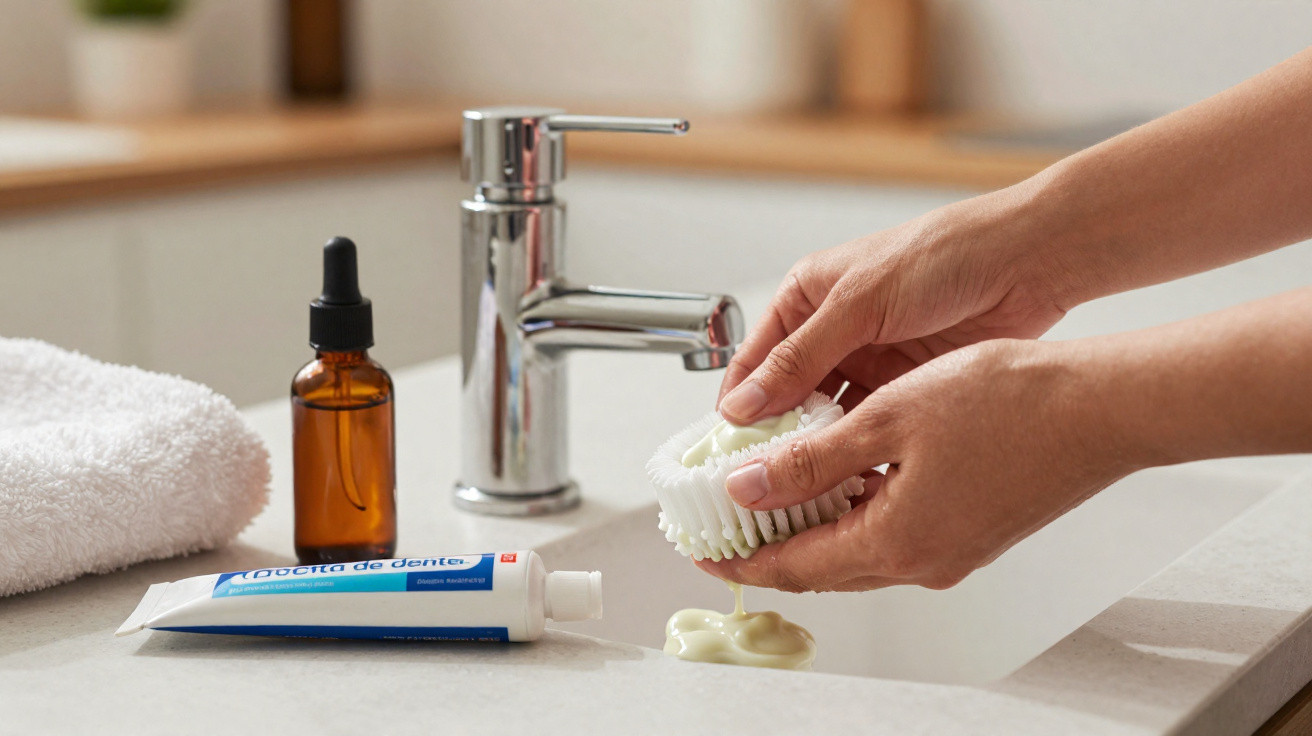
- How do I remove fresh white rings from a wooden table? Start with the gentlest approach: lay a clean cotton cloth over the mark and run an iron on low heat over it for a few seconds, lifting the cloth and checking frequently. If the ring begins to fade, repeat slowly and patiently. If nothing changes, try rubbing a tiny amount of non-gel toothpaste mixed with baking soda in small circles, then wipe clean and dry thoroughly.
- Are oil finishes really more practical than varnish? In day-to-day home use, oil is often more forgiving because you can lightly sand and re-oil a small section without stripping the entire piece. Varnish can be very protective when it’s intact, but once it cracks or blisters, repairs are more specialised and typically call for a professional.
- Can I put a hot pan directly on a “solid” wooden table? Even with thick solid wood, the finish and top fibres can scorch or distort under a hot pan. Always use a trivet or thick mat, especially with cast-iron dishes that retain a great deal of heat.
- Does direct sunlight really damage indoor furniture? Yes. UV light fades many stains and can dry out certain finishes. You may not notice it from one day to the next, but after a few summers one side of a table or cabinet can look washed out compared with the shaded area.
- Is it worth paying for professional refinishing? For family heirlooms or high-value pieces, professional refinishing can deliver another twenty years of use and bring back the grain’s hidden character. For inexpensive furniture that’s already badly damaged, a simpler DIY sanding-and-oil refresh may be sufficient.




Comments
No comments yet. Be the first to comment!
Leave a Comment