
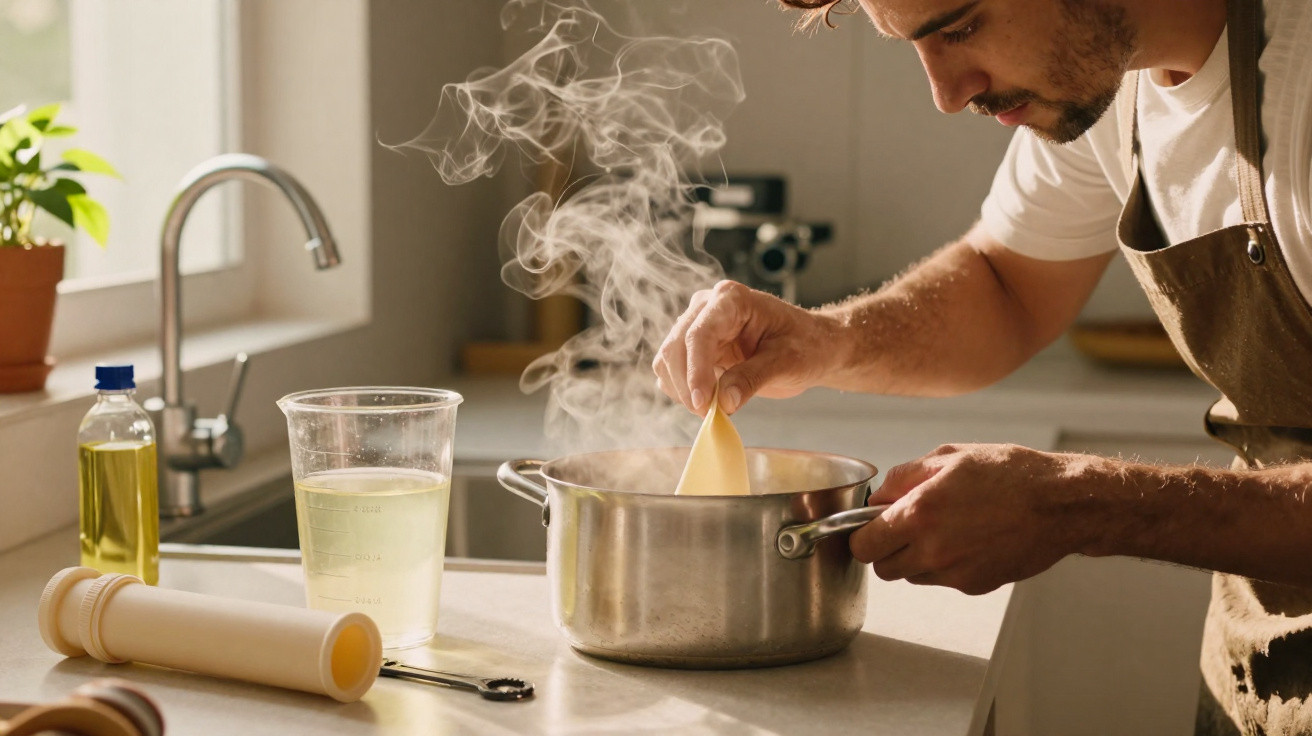
That saucepan of pasta water, still fizzing from the hob, seems completely innocent.
You tip it into the sink, rinse the pan, and move on. But this routine, repeated day after day, can create genuine problems.
In many homes, boiling water goes straight down the kitchen drain without any pause. It feels speedy, tidy and even a bit “sanitary”. Yet plumbers and building surveyors keep running into the same outcomes: pipe damage, persistent blockages and concealed leaks that begin with this very habit.
Why boiling water and your sink don’t mix
At first glance, pouring boiling water into the sink looks like the most practical option. There’s no carrying buckets, no splashing, and no waiting around for it to cool. Some people even treat it as a DIY “drain cleaner”.
In practice, though, you’re putting your plumbing through repeated thermal strain. Household pipework isn’t kept at a stable temperature. It passes through chilly cupboards, uninsulated voids, external walls and basements, where cold air and moisture are common and joints are already under load.
Each time boiling water rushes through, it shocks the system: pipes expand, joints loosen, and microscopic cracks start to appear.
Because nothing fails immediately, it’s easy to assume it’s harmless. The trouble is cumulative, only revealing itself later as a damp mark on a ceiling, a kitchen carcass that starts to warp, or a drain that suddenly won’t run freely.
Hidden damage to pipes and joints
Plastic pipes don’t like extremes
A lot of modern domestic plumbing in the UK and the United States uses plastic pipework under sinks, including PVC and related materials. They’re designed to cope with hot tap water - but boiling water is another level.
- Regular contact with near‑100°C water can soften PVC and other plastics.
- When the pipework cools afterwards, it contracts again, concentrating stress around bends and fittings.
- Over time, this expansion–contraction cycle can lead to distortion, hairline cracking, or outright failure at weak points.
This isn’t confined to cheaper installations. Even better‑grade plastics and fittings can deteriorate more quickly when they’re repeatedly hit by thermal shock. And if a kitchen was installed ten or fifteen years ago, it will already have been through thousands of everyday temperature changes - boiling water simply speeds up the ageing.
The quiet failure of pipe glue and seals
Most domestic drainage systems depend on more than just the pipe itself. They also rely on:
- Solvent cements and glues for PVC connections
- Rubber or silicone seals in push‑fit joints
- Flexible connectors under sinks and behind appliances
These parts generally cope with warm water, not frequent surges of boiling liquid. Heat can make rubber go hard, dry out sealants and reduce the strength of pipe glue. The pipework may still look fine from the outside, while joints slowly lose their integrity.
Many “mystery leaks” under sinks trace back to seals that cooked slowly for years under a stream of boiling water.
So when you finally spot damp skirting, mouldy corners or a cupboard base that’s swelling, the drip often hasn’t just started - it may have been quietly worsening for a long time.
How boiling water helps block your pipes
Grease does not disappear, it just moves
A common myth is that boiling water “dissolves” grease and leaves drains cleaner. It will melt grease - but only for a short distance.
Around the trap and the first section of pipe, hot water can loosen and liquefy fats, oils and residue stuck to the sides. However, as the flow travels further, it cools. In colder stretches of pipework, that grease sets again - except now it’s deeper in your system, or even in the shared soil stack of the building.
Rather than eliminating grease, you may simply be pushing it beyond where simple household fixes can reach.
When fats, food and silt team up
The chance of trouble increases when boiling water meets other material already in the drain. Further along, the combination can develop into tough, layered clogs:
- Fat and oil, briefly melted by boiling water, coat the inside of pipes.
- Food scraps, coffee grounds and eggshell fragments adhere to that coating.
- Limescale and mineral build‑up from hard water create a rougher surface for debris to catch on.
Gradually, the internal diameter of the pipe reduces. Initially, it still drains - just at a slower rate. Then something small changes - extra cooking grease after a gathering, or a rinse of coffee grounds - and the system crosses a tipping point. The sink backs up, and what felt like a quick habit becomes a weekend call‑out for a plumber.
What looked like one big “sudden” blockage usually started with months of boiling water reacting with everyday kitchen waste.
Beyond your kitchen: the environmental angle
What goes down your sink doesn’t disappear; it joins a shared network that’s already under strain from how we use kitchens. Water companies in the UK and the United States frequently report growing issues with “fatbergs” - large masses of solidified fat, wipes and waste that block sewers.
| Action in the kitchen | Effect on drains |
|---|---|
| Pouring oil and fat down the sink | Builds sticky layers inside pipes |
| Flushing with boiling water | Pushes melted fat further into public sewers |
| Combined with wipes and solids | Creates sewer blockages and overflow risks |
At wastewater treatment works, sudden inputs of very hot water can upset the bacterial balance used to break down waste. One pan of boiling water won’t shut anything down, but when millions of households repeat the same behaviour, it adds stress to infrastructure that is already challenged by climate‑driven heavy rainfall.
Short, local heat spikes in narrower sewer sections can also disturb settled material and biofilms, pushing extra solids towards pumping stations and screens - which then require more maintenance and energy to keep operating smoothly.
Safer habits when you deal with hot water
Let the heat drop first
The most straightforward fix is simply to wait. Rather than pouring straight from the hob into the sink, allow the water to cool until it’s safely “very warm” rather than actively boiling.
- Put the pan on a cool ring and leave it for 15–20 minutes after cooking.
- Give it a stir now and then to help steam escape more quickly.
- When it’s no longer steaming aggressively, it’s far less likely to harm pipes.
If you’ve got young children or pets underfoot, letting pans cool with the handle turned inwards also reduces the risk of scalding in the kitchen.
Use cold water as a buffer
If waiting isn’t realistic, run the cold tap hard while you pour. Dilution lowers the temperature that reaches the pipework and fittings.
Cold water doesn’t turn boiling water “safe”, but it softens the thermal shock and gives your plumbing a better chance.
It also helps to pour the hot water against the side of the sink instead of directly into the plughole, so the heat spreads and cools a little before it reaches the trap.
Give hot water a second life
Boiling water doesn’t have to end up in the drain. Once it has cooled to a safe temperature, it can still be useful elsewhere:
- Watering outdoor plants or balcony pots (once fully cooled).
- Soaking greasy oven trays or pans on the worktop.
- Washing chopping boards and cloths before putting them through a normal wash.
- Helping remove labels from jars you want to reuse.
These small changes save a little energy, ease demand on your plumbing, and shift habits away from the idea that hot waste water should automatically go straight down the sink.
Kitchen behaviour that protects your pipes
Think about what goes into the drain
Avoiding boiling water helps most when you also reduce what you’re trying to “flush through” afterwards. Plumbers repeatedly highlight the same culprits:
- Cooking oils and frying fat
- Scraped butter and margarine
- Mayonnaise and creamy sauces
- Meat juices and roasting‑tin drippings
Let these cool in a container and then dispose of them in the bin. Some councils accept solidified fats with general household waste. Keeping them out of the sink also reduces the temptation to chase them with a kettle of boiling water later.
Use mechanical cleaning, not thermal shock
When a sink starts draining slowly, adding more heat is rarely the best answer. Simple physical measures are often more effective:
- A basic plunger to shift a localised blockage.
- A sink strainer to catch food before it reaches the trap.
- Removing and cleaning the U‑bend by hand occasionally, where it’s accessible.
For light build‑up, warm water mixed with mild washing‑up liquid and a small amount of baking soda, followed by a rinse with comfortably hot (not boiling) water, can help keep things moving without punishing the pipework.
Why this small habit now draws more attention
Plumbing requirements have moved on, yet many properties still depend on older systems installed for a different era of household use. We run more appliances, use more hot water and detergents, and cook with more oil‑heavy foods than previous generations. That extra burden leaves less tolerance for harsh treatment like frequent boiling‑water flushes.
Meanwhile, repair bills are rising and skilled trades are stretched, so a tiny crack or slow leak can become an expensive issue quickly - particularly in flats, where water damage can spread between neighbours. Insurers already handle claims linked to long‑term water damage caused by slow, hidden leaks in kitchens and bathrooms.
With that in mind, changing how you empty a pan is a small, low‑effort adjustment. Allowing water to cool - or using it elsewhere - takes pressure off pipework that already works hard every day.


Comments
No comments yet. Be the first to comment!
Leave a Comment