
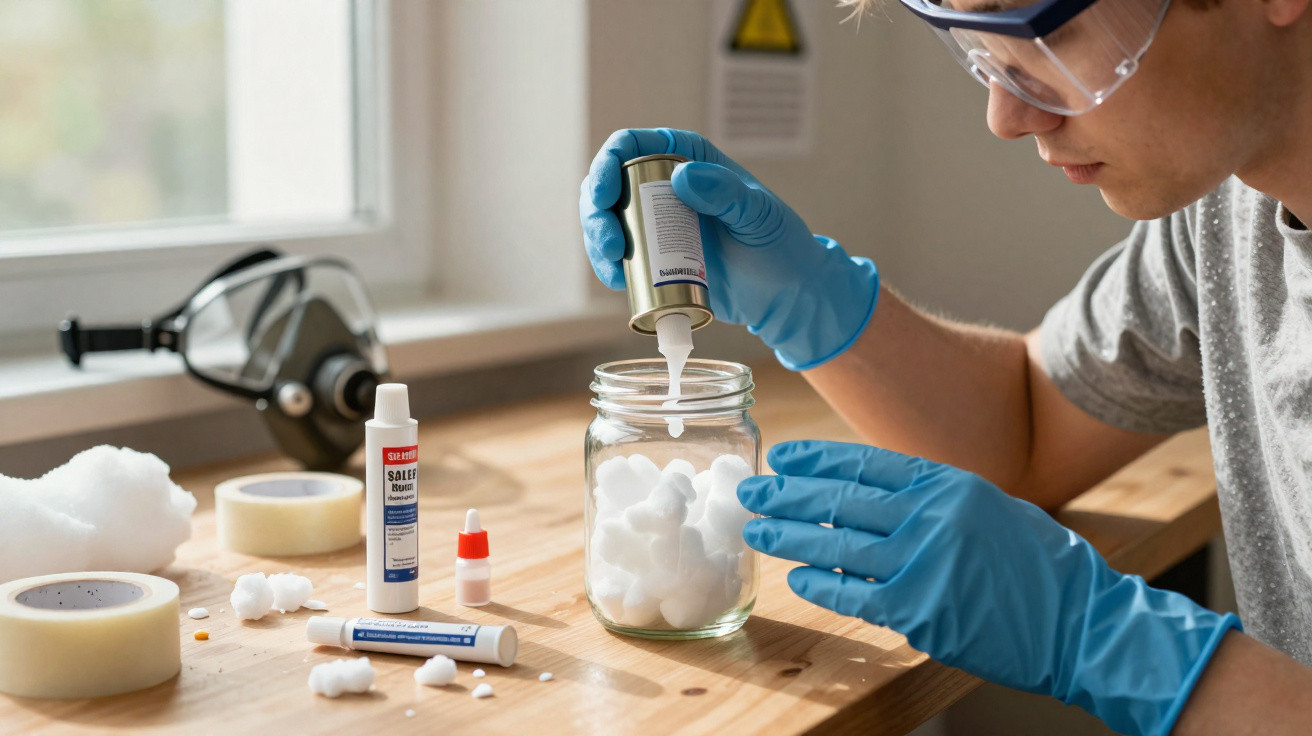
The mixture of polystyrene and solvent has attracted attention as a DIY hack for making a sticky paste used for minor repairs, sealing small cracks and improvised waterproofing. However, because it involves flammable solvents and toxic fumes, it should not be treated as an easy or safe solution for everyone.
What is the mixture of polystyrene and solvent used for?
This mixture is often mentioned in building and DIY tips because the solvent dramatically reduces the volume of expanded polystyrene (polystyrene foam), leaving a dense, tacky, adhesive mass. In popular content, it is linked to sealing small hairline gaps, quick surface fixes and makeshift moisture protection.
The key point is that this does not turn it into a professional product. A structural crack, a slab with recurring water ingress, or a wall with mould needs technical assessment, because an improvised paste may only conceal the issue for a short period.
Why has this hack become so widely discussed?
Much of the appeal comes from the idea of reusing expanded polystyrene packaging waste while spending very little on small fixes. The logic sounds convincing because the material takes up a lot of space, yet breaks down quickly when it comes into contact with certain solvents.
- It claims to repurpose leftover packaging.
- It creates a paste that looks like thick glue.
- It is promoted as a cheap alternative for simple repairs.
- It stands out because it drastically reduces the foam’s volume.
What risks can this combination involve?
The main hazard lies in the solvent, not the polystyrene on its own. Organic solvents can release irritating vapours, cause dizziness, headaches, nausea and effects on the nervous system; many are also volatile, combustible and extremely flammable.
There is also the risk of staining floors, damaging paintwork, warping plastics and leaving a strong lingering odour indoors. In homes with children, pets, people with asthma, or poor ventilation, using solvent in an improvised way increases the likelihood of poisoning and accidents.
When is it better to avoid this type of repair?
This mixture should not be used as an answer to problems involving safety, serious leaks or areas exposed to heat. In these situations, proper sealing and waterproofing products come with instructions, controlled formulations and clear guidance on suitable surfaces.
- Deep cracks in walls, beams or slabs.
- Leaks that return after rainfall.
- Enclosed spaces without cross-ventilation.
- Surfaces near sockets, flames or sparks.
- Areas where children or animals could touch the material.
What can you use instead for a safer fix?
For small gaps, acrylic fillers, silicone sealants, repair mortars and commercial waterproofing products are usually more predictable choices. These are designed to bond to specific surfaces, cure in a controlled way and provide safety and handling advice on the label.
The mixture of polystyrene and solvent demonstrates an interesting physical reaction, but it does not replace diagnosing water ingress or carrying out a proper repair. At home, the safer approach is to identify the source of the crack or damp and then choose a product intended for wood, concrete, ceramic, metal or masonry.



Comments
No comments yet. Be the first to comment!
Leave a Comment