
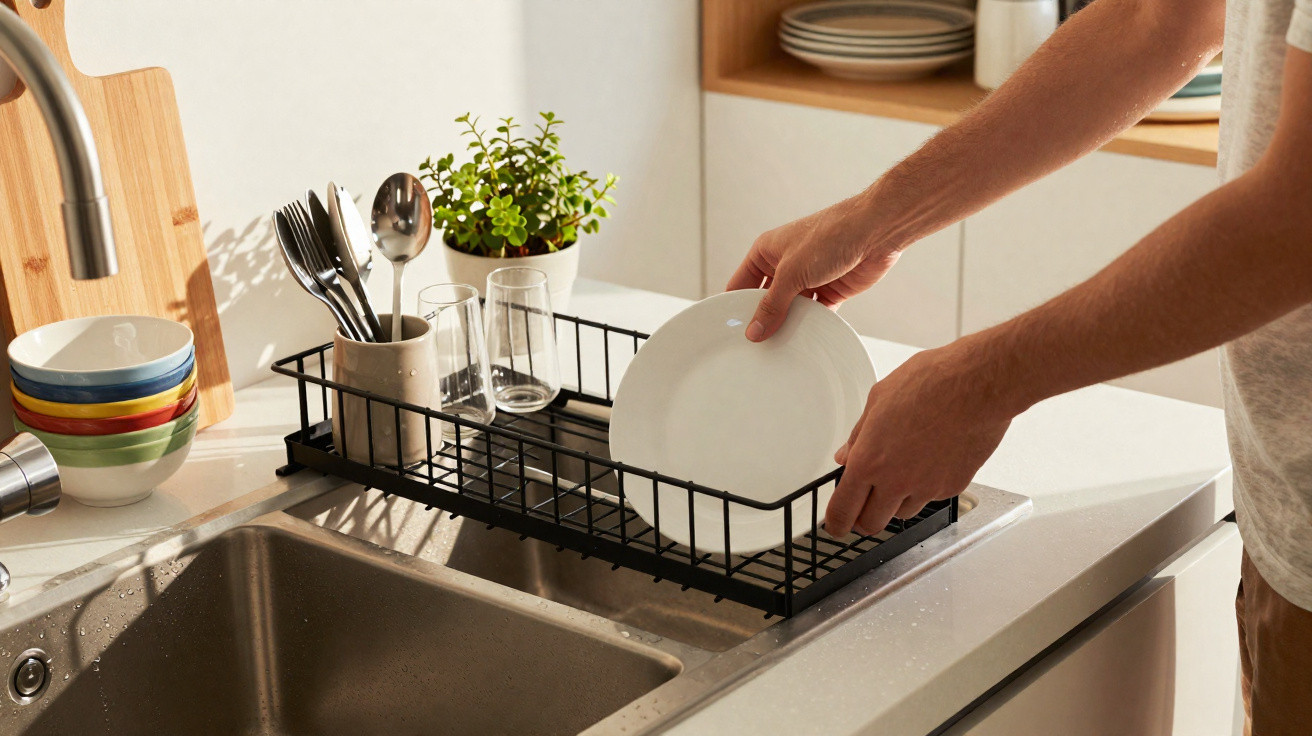
For a long time, the traditional dish drainer stayed permanently next to the sink, taking up part of the worktop and disrupting the overall look of the kitchen. As interest has grown in functional, well-planned spaces, this accessory has started to be questioned-making room for solutions that keep washing-up tidy without visual clutter, while also helping to make the most of small and open-plan kitchens.
Why has the traditional dish drainer lost ground in the modern kitchen?
In contemporary kitchen design, there is a clear move towards keeping anything that does not need to be on show out of sight. Everyday items are shifted to less visible areas or integrated, built-in systems, leaving the room looking cleaner and easier to look after.
Because of this, the standard dish drainer is increasingly being replaced by more discreet alternatives that free up the worktop and simplify cleaning. In compact kitchens-or those connected to the living area-this switch can noticeably improve both day-to-day comfort and the overall appearance.
How does an over-sink dish drainer work?
An over-sink dish drainer, also referred to as an over-sink rack, is positioned directly above the wet area. It uses vertical space and channels dripping water back into the sink, helping to keep the worktop clear and dry.
The frame is usually metal or another moisture-resistant material, with sections for plates, glasses, cutlery and chopping boards. In many designs, components can be moved around or removed, so the rack can also hold freshly washed utensils or even vegetables.
What are the main advantages-and what should you check before choosing an over-sink dish drainer?
The growing popularity of the over-sink dish drainer comes down to a mix of practicality and a neater visual finish. In smaller spaces, every centimetre of worktop matters, and keeping the surface free supports meal preparation and movement around the kitchen-without major refurbishment.
Before deciding on a model, it is worth checking the sink bowl size, the height up to the wall units, and your usual washing-up routine. It also helps to assess the material, stability and ease of cleaning, to reduce the risk of rust, trapped residue or awkward parts that are hard to keep hygienic.
When comparing different options, the following points can help you choose more confidently:
- Measure the sink’s width and depth, as well as the available vertical clearance.
- Consider the capacity for plates, glasses, pans and larger utensils.
- Check the material and how well it resists moisture and corrosion.
- Look at stability, the fixing method and safe handling.
- Confirm whether there are removable parts that make regular cleaning easier.
What alternatives can help keep the kitchen organised day to day?
Alongside an over-sink dish drainer, there are other useful solutions for anyone who wants a functional kitchen with a lighter, less cluttered look. Sinks with a built-in drainer, fold-away drainers, and models that sit inside the sink bowl itself are strong options for those who prefer not to leave anything on display.
When these accessories are paired with utensil rails, pan holders, drawer dividers and internal cupboard organisers, the result is a kitchen that is more practical, easier to clean and adaptable to different routines and family sizes-without too many items piling up in view.





Comments
No comments yet. Be the first to comment!
Leave a Comment