
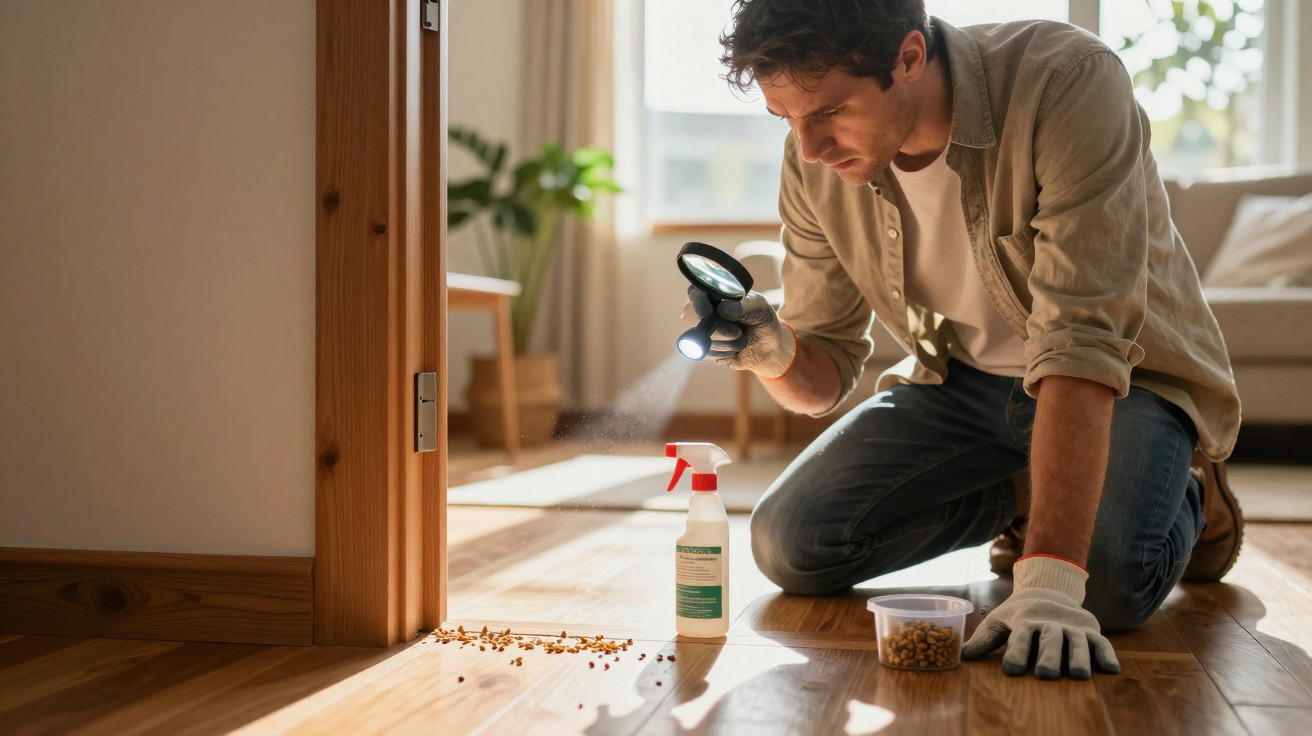
Termites are insects that feed on cellulose-based materials such as wood, cardboard, books, skirting boards, doors, furniture and the internal structure of a home. The difficulty is that they often work quietly inside the timber and only become obvious once you notice powdery debris, tunnels, hollow sections or small wings scattered across the floor.
What are termites and why do they attack wood?
Termites live in organised colonies and search for cellulose to eat. Depending on the species, they may settle in dry furniture, damp areas, the soil, or hidden parts of the building.
They attack because wood provides both food and shelter. As the damage starts from the inside, an item can look perfectly fine externally while already being weakened internally-especially in places with poor ventilation or higher moisture.
What signs indicate a termite infestation?
The most common warning signs show up near furniture, door frames, doors, cupboards and skirting boards. Small piles of dust-like material, hollow-sounding wood and loose wings are key indicators.
- Granular dust: found near furniture and gaps in wooden surfaces.
- Hollow wood: a hollow sound when tapped lightly may suggest internal galleries.
- Discarded wings: often appear after swarms of winged termites.
- Mud tubes: common with subterranean termites, usually close to walls and floors.
- Doors or drawers sticking can also point to internal damage.
How to get rid of termites safely?
If the infestation is small and limited to a single piece of furniture, start by separating the item, clearing away any accumulated debris, and checking where the waste is coming from. This helps you judge whether the issue is confined to that item or has already spread to other areas of the house.
- Isolate the affected furniture: move it away from walls and other wooden items.
- Avoid spreading contaminated items: do not move drawers or boards into other rooms.
- Reduce humidity: repair leaks and improve ventilation.
- Do not use poisons in an improvised way: unsuitable products can be dangerous indoors.
- Call a pest control company if the attack involves walls, ceilings, floors or the structure.
When does the problem require professional help?
Professional support is recommended if termites are present in multiple rooms, there are mud tubes on walls, structural timber is affected, swarming happens frequently, or the issue returns after simple cleaning. In these situations, the priority is not only killing the visible insects, but locating the colony.
It is also important to tell termites apart from wood-boring beetles. Beetles typically leave small holes and fine dust, while termites can create larger galleries, mud tunnels and more extensive damage. Correct identification prevents you wasting time on the wrong solution.
How to prevent termites from coming back?
Prevention starts with regular inspections of furniture, doors, skirting boards, fitted cupboards and damp-prone areas. Avoid storing cardboard, old wood and items pressed directly against damp walls, as these materials can attract pests and conceal early signs of infestation.
Keeping the home well ventilated, fixing leaks, watching for unusual dust near wood, and acting as soon as the first signs appear all make a real difference. The earlier termites are detected, the better the chances of controlling the problem before they compromise furniture and important structural elements.



Comments
No comments yet. Be the first to comment!
Leave a Comment