
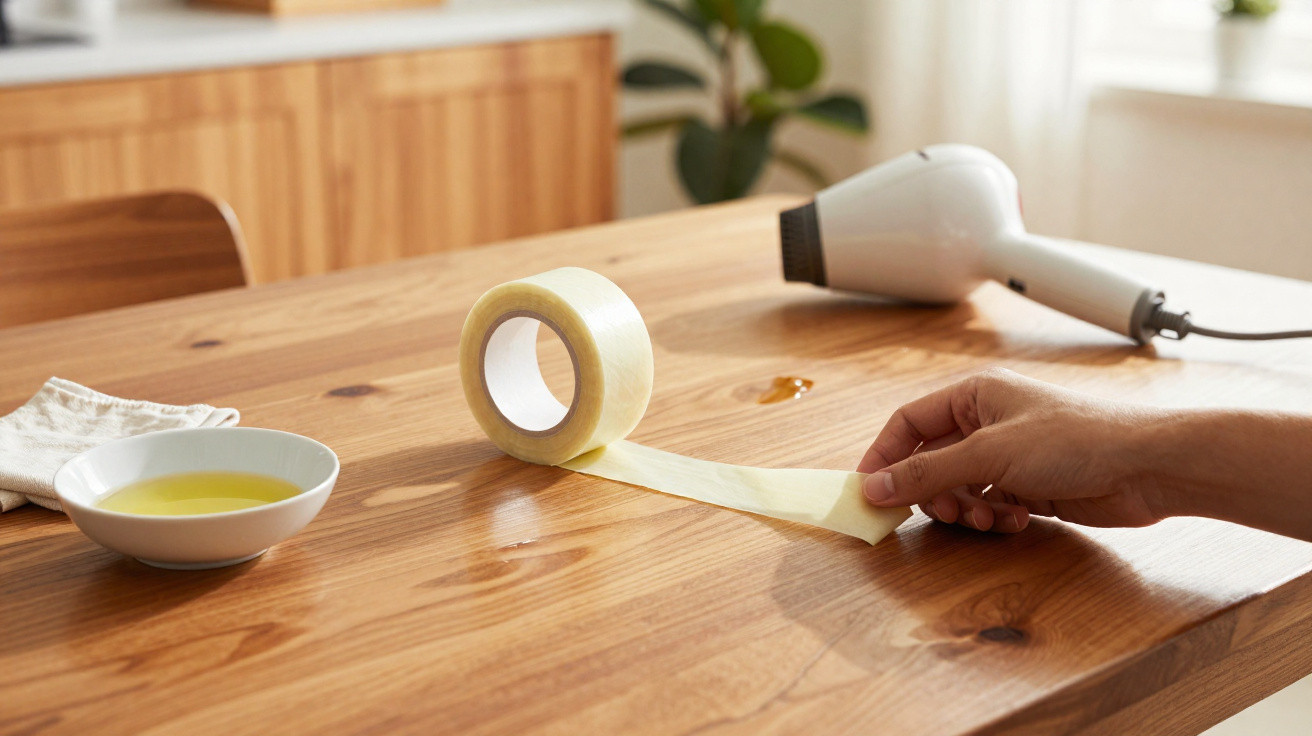
Tape residue clings stubbornly to wood because the adhesive bonds to the varnish, seeps into tiny surface imperfections, and hardens over time. To lift it without scratching or dulling the finish, the safest approach is to start with gentle heat, a small amount of vegetable oil, and a plastic scraper.
Why does tape adhesive stick so firmly to wood?
Tape glue is designed to grip surfaces strongly. When it stays on a piece of furniture for days or weeks, it can soften, oxidise, gather dust, and turn into a tacky layer that won’t shift with just a damp cloth.
Varnished, painted, or lacquered wood needs extra care because harsh solvents may stain, cloud, or strip the finish. For that reason, before applying any product, it’s best to test it on a hidden area of the furniture.
Which household ingredient helps loosen the residue?
Vegetable oil is one of the gentlest options for tape residue on finished wood. It helps soften the adhesive and reduces friction, so the mess comes away without having to scrape the surface aggressively.
Step-by-step method for removing tape residue from wood
This approach works best as follows:
- put a few drops of vegetable oil onto a soft cloth;
- press it onto the residue for 5 to 10 minutes;
- rub using short, light movements;
- use a plastic card or plastic scraper to lift the glue;
- repeat only if a sticky layer still remains.
How to use heat without damaging the varnish
Heat can help soften the adhesive before you apply the oil. Use a hairdryer on a low or medium setting, keep it at a distance from the wood, and move the airflow around for just a few seconds.
Tape residue should feel only warm-never hot enough to be uncomfortable to touch. Too much heat can soften older varnish, mark lacquer, lift wood veneer, or change the sheen of the finish.
What should you avoid using on wooden furniture?
Strong products can remove the glue, but they can also take part of the finish with them. Alcohol, acetone, heavy-duty removers, and abrasive sponges require great caution, especially on painted, waxed, lacquered, or antique wood.
Avoid these common mistakes:
- scraping with a knife, blade, or steel wool;
- soaking the wood with water or vinegar;
- using acetone on varnished or painted furniture;
- applying oil to bare or unsealed wood;
- rubbing hard enough to remove the item’s shine.
How to finish so the wood looks clean
Correct finishing clears away any remaining oil and restores a clean look to the furniture. Once the adhesive has come off, wipe with a cloth lightly dampened with warm water and a drop of mild washing-up liquid, making sure the cloth is well wrung out.
The wood surface should then be dried immediately with a soft cloth. If the furniture is waxed or has a natural finish, a thin layer of wax or a suitable wood-care product can even out the shine after cleaning, without leaving a visible patch where the tape was.

Comments
No comments yet. Be the first to comment!
Leave a Comment