
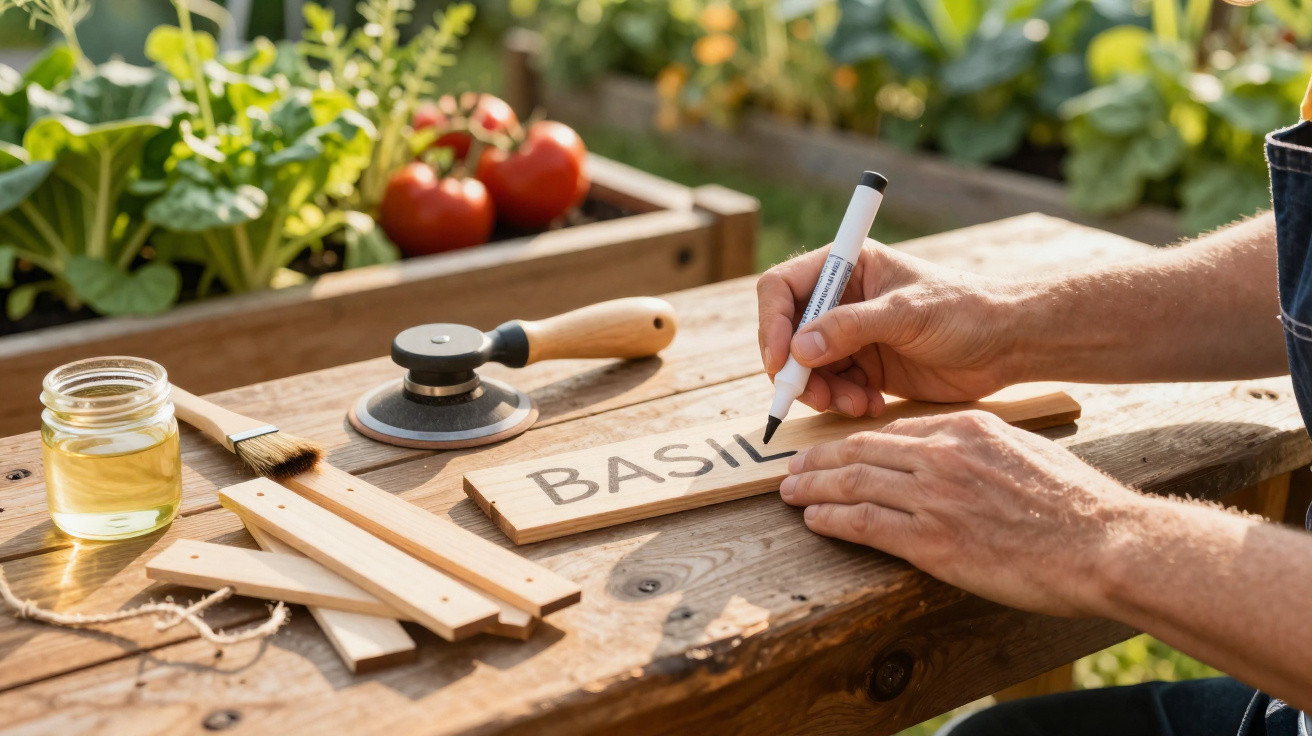
Offcuts of wood left over from other projects can be put to work in the garden in a straightforward way: as plant identification signs. With a few small cuts, a quick clean and a written label, the material helps you tell apart herbs, seedlings and other plants grown in pots or beds.
Why use wood to identify plants?
A sign lets you see the name of each species without relying on memory, which is particularly helpful when several seedlings are still small and look very similar. In a kitchen garden, it can also show the names of herbs and seasonings, or the date a specific seed was sown.
Another benefit is making use of pieces you already have at home. Wood in different shapes can become horizontal signs, small stakes or larger labels, depending on the space you have available.
How to prepare the piece of wood?
Start by selecting a solid piece with no mould, rotten sections or splinters that could cause injury. If needed, lightly sand the edges so they are safer to handle.
Next, add the identification using pencil, a permanent marker or paint suitable for the surface. Before placing the sign in the garden, wait until any product used for painting or finishing has dried completely.
How to turn the wood into a sign for plants?
A narrow piece can be cut into a small stake, with a pointed end to make it easier to push into the soil. On the top section, write the plant’s name clearly.
For pots, a smaller sign can be attached to a stick or simply rested in the container. In larger beds, slightly wider pieces are easier to read from a distance and can include extra details, such as the variety.
What helps the sign last longer?
Wood exposed to sun, rain and damp generally breaks down more quickly. If the piece will stay in the garden for a long time, a suitable exterior finish can improve durability, as long as it fits the intended use of the item.
It’s also worth avoiding situations where the buried portion remains constantly waterlogged. That way, wooden plant identification signs are a simple way to organise the garden, reuse materials and create personalised decoration.





Comments
No comments yet. Be the first to comment!
Leave a Comment