
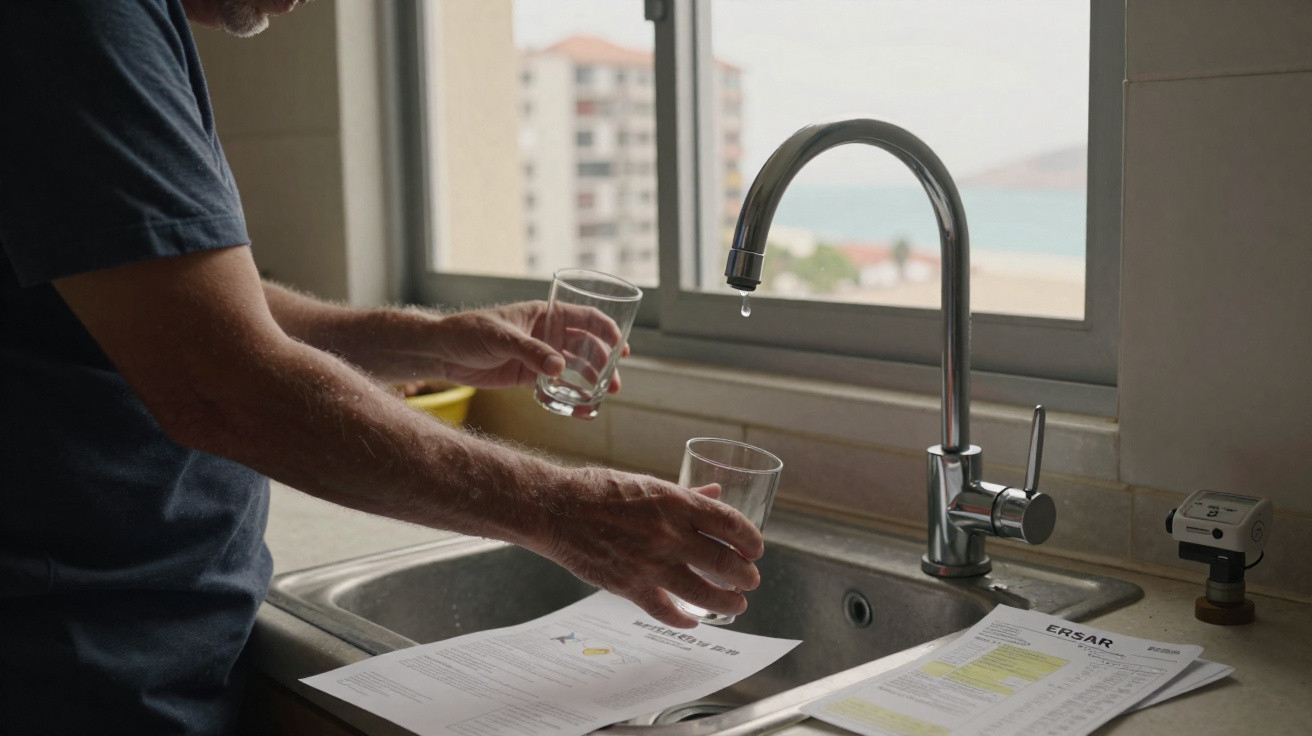
When the taps in Almada stop flowing
Turning on a tap and seeing water gush out has become so routine it can feel almost like magic. By mechanisms the average customer rarely thinks about, water arrives at the aluminium spout with such certainty that, when it suddenly stops, the first reaction is often a shrug-until, as the hours pass, that turns into frantic anxiety. That has been the daily reality for thousands of residents in Almada.
Unannounced water cuts in Costa de Caparica
This is not the first summer of stop-start supply in Costa de Caparica. But-residents and business owners told journalist Rogério Matos-it is the first time the interruptions have arrived without warning, at any time of day and, worse still, with no clear indication of how long they will last. It is easy to blame rising water use and the seasonal increase in residents. Yet isn’t it precisely what coastal areas want: summer bringing tourists and visitors who support the local economy?
Planning, tariffs and public responsibility
Almada Municipal Council can and should call on citizens’ social responsibility so that water is used more sensibly. It can also use water tariffs to drive down demand through price, if residents’ awareness falls short. Still, after Portugal has experienced days of intense heat, a surge in water consumption was predictable. What should not be acceptable in 2026 is the absence of municipal and inter-regional planning capable of preventing taps from running dry.
Essential investment: losses, non-billed water and ERSAR’s role
Before spending on add-ons, local leaders have a duty to fund what is fundamental. And in Almada, the fundamentals include stopping the loss of 284 litres of water per connection per day, and addressing the fact that more than a third of distributed water is not billed-33.4%, above the national average of 26.5%-as described by the Water and Waste Services Regulation Authority (ERSAR) in its latest annual report. ERSAR, too, cannot wash its hands of the matter, having allowed Almada’s service to remain unreliable for years.





Comments
No comments yet. Be the first to comment!
Leave a Comment