
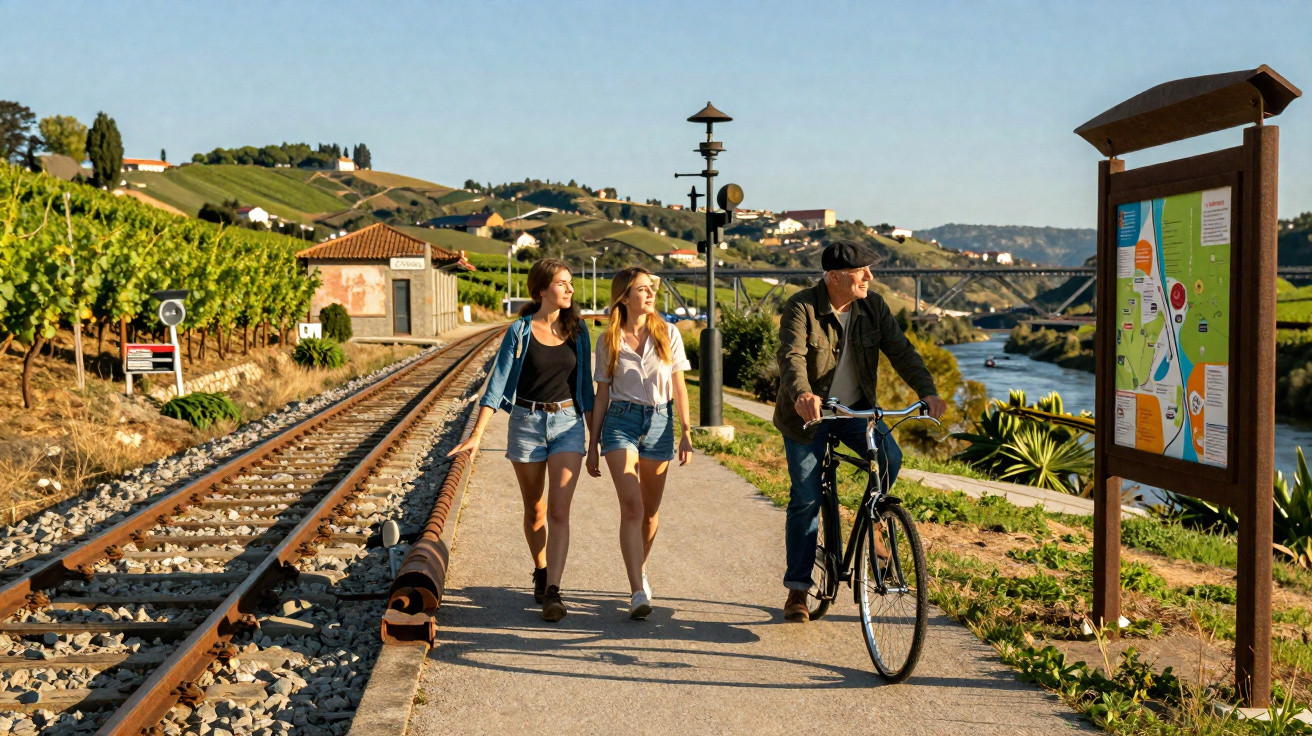
Five municipalities are bringing the former railway corridor between Peso da Régua and Chaves back into use. The northern section is already finished, and the connection down to the Douro region is moving ahead with 1,3 million euros.
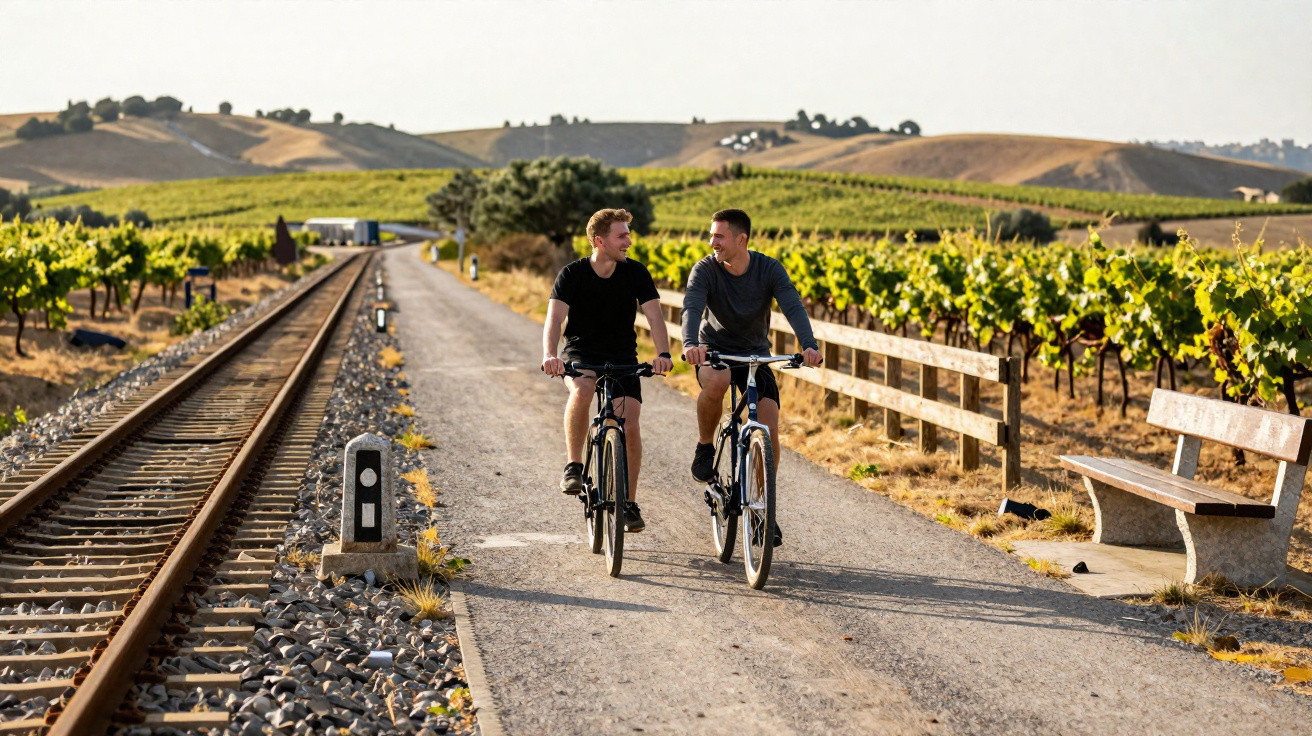
The Linha do Corgo may no longer hear train whistles, but its route has not been lost. Between the Douro World Heritage area in Peso da Régua and Verín in Galicia, the disused trackbed is being repurposed as the Ecovia Internacional do Tâmega e do Corgo. The aim is a continuous route of around 130 kilometres for walking, running and cycling-crossing the landscape without the urgency of the roads.
On the Portuguese side, the trail is complete from the border to the edge of Vila Real municipality, through the areas of Chaves and Vila Pouca de Aguiar. What remains is to finish the southern link, between Vila Real, Santa Marta de Penaguião and Peso da Régua, over roughly 40 kilometres. The overall investment is about 1,3 million euros, split into three lots.
Vila Real accounts for the largest share of the works. Its municipal lot covers 30,35 kilometres, with an investment of around 626 thousand euros. The contract includes road-related infrastructure, ancillary works and electrical installations, as well as levelling the surface, stabilising embankments and restoring viaducts.
The Mayor of Vila Real, Alexandre Favaios, describes the scheme as “a strategic investment for the municipality and for the whole region”, bringing together active travel, tourism and quality of life. He adds that the ecovia “strengthens the connection between territories and creates new opportunities to enjoy natural and scenic heritage”. The council is also preparing the refurbishment of Abambres-Gare Station, where it plans to create a space offering “support for cycling, walking, trail running and hikes”.
Tourism potential
In the north, Chaves has already completed the stretch from the border to Vidago, following the River Tâmega. The Mayor, Nuno Vaz, sees it as a response to visitor demand, “particularly from Northern Europe”, where people “really value nature tourism and ecovias”. The city’s former station now operates as a cultural centre; Vidago station is linked to spa activity and research; and the halts at Vilela do Tâmega and Vila das Paranheiras are set to be restored as accommodation for pilgrims and other visitors.
Vila Pouca de Aguiar has about 20 kilometres of ecopista running through the Vale de Aguiar. The Mayor, Ana Rita Dias, highlights a “wonderful landscape” and notes that the route can be done “not only by bicycle, but also on foot”, and is also used by pilgrims on the Way of St James. The station in the municipal seat hosts the University of the Third Age; Pedras Salgadas has a tourist information point and an exhibition about the old line; Sabroso de Aguiar has gained a hostel; and Tourencinho now has a cycling-related facility. Near Zimão, another former railway building is currently being restored.
In Santa Marta de Penaguião, the lot covers 6,6 kilometres and represents an investment of 288 thousand euros. The Mayor, Sílvia Silva, believes the connection between Verín, Alto Tâmega, Vila Real and the Douro “could become a very interesting tourism product”, but only if it is designed “as an integrated network between municipalities, and not merely as a linear piece of infrastructure”. She wants those passing through the villages to “discover the wines, look for restaurants and use accommodation”.
In Alvações do Corgo, the mayor says the former halt could be enhanced, but only on the condition that farm access and long-established local uses are protected. She stresses that she does not want “a solution that adds value to the territory for people visiting the region, but makes life harder for those who live and work here”.
Gateway to the train
The Régua lot covers 3,1 kilometres and is worth about 393 thousand euros. The Mayor, José Manuel Gonçalves, views the ecovia as “another tourism product for the region” and as a way to ensure “the safeguarding of the rail corridor itself”. The municipality wants to connect the route to Caldas do Moledo, the Monks’ Way and routes such as Lamego and Tarouca, creating reasons to “extend visitors’ stays in the Douro”.
Across the five municipalities, the intention is for the ecovia to be more than a strip people simply pass through. The goal is to create places to rest, get information, access services, find accommodation, and connect with shops, restaurants and heritage sites. In this way, the old line will once again link territories-no longer by rails, but through a corridor for active travel.
The project also carries the memory of the train. The mayors are not ruling out a future reactivation of the Linha do Corgo, but they refuse to leave the corridor to be swallowed by scrub while waiting for a national decision, funding and a timetable. Nuno Vaz says railway and ecovia “are ambitions and purposes that can even be compatible”. The old line may not return, but it is starting again as a route that brings people, movement and economic activity.
Find out more
Line closed
The Linha do Corgo lost its connection between Vila Real and Chaves in 1990, and the section between Vila Real and Peso da Régua in 2009. Bringing the train back continues to be championed by political parties, civic movements and a petition with more than a thousand signatures.
Royal memory
The rail link to Pedras Salgadas was marked by the visit of King Carlos I during the opening of the former line. That moment remains part of the spa town’s identity and of the heritage that recalls the arrival of the train in the Vale de Aguiar.



Comments
No comments yet. Be the first to comment!
Leave a Comment