
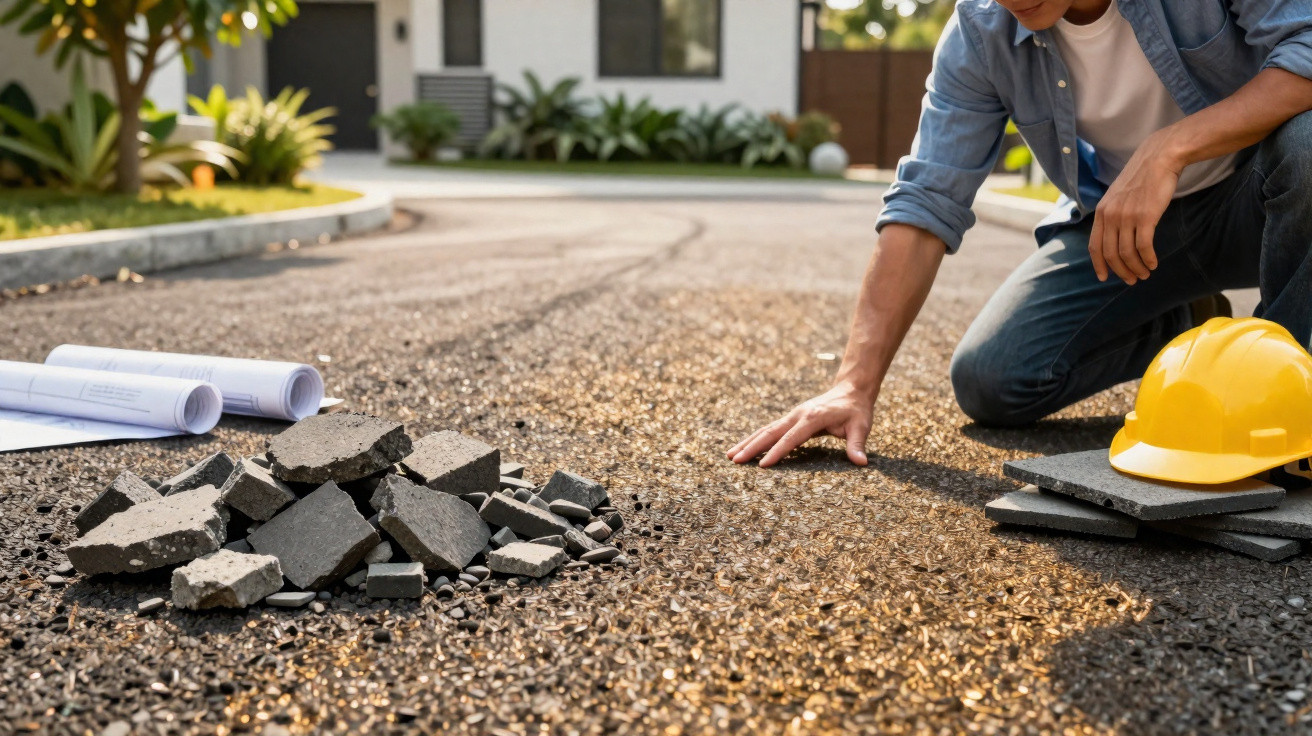
A few years ago, laying a thick slab of concrete in front of the house was seen as a sensible, almost default choice: tough, low-maintenance and reasonably smart. That mood is shifting. The grey giant no longer sits comfortably with tighter climate targets or newer rules aimed at reducing sealed surfaces - and, for many people, it no longer sits comfortably with their conscience either. As a result, a recycled surface made from old roads is drawing fresh attention and could gradually replace the classic concrete slab.
Why concrete driveways are increasingly criticised
Concrete looks fairly harmless at first glance. The real issue sits behind it: cement, an energy-intensive material. To produce it, raw materials are fired at extremely high temperatures, usually using fossil fuels. Worldwide, the cement industry accounts for a noticeable share of greenhouse-gas emissions - creating a climate impact that many homeowners underestimate.
That is why, when people start improving the energy performance of their homes, they often run into an uncomfortable contradiction: heat pump, insulation and solar panels inside; outside, a large, rigid concrete sheet that has already “cost” a lot of CO₂ and sheds every drop of rainwater like glass.
On top of that, there are everyday practical drawbacks:
- Cracking: Concrete is sensitive to frost and movement in the ground. Minor stresses can quickly turn into visible hairline cracks.
- Heat: In summer the surface can get very hot, making it unpleasant to walk on barefoot.
- Puddles and dirt: Because water cannot soak in, it collects in low spots and carries grime right up to the front door.
- Difficult repairs: It is hard to blend patch repairs; fixes often remain visible permanently.
Cost is another factor. A decorative concrete driveway with an attractive finish can easily come in at 70 to 120 euros per square metre. In North America, comparable areas are reported at up to around 18 to 20 euros per square metre. For some alternatives made from recycled asphalt, costs can be roughly a third to a half of that price.
Recycled asphalt: the hidden resource from old roads
The most interesting challenger to concrete comes from a place many people do not associate with domestic projects at all: road building. Enormous volumes of old asphalt layers are produced every year. These are milled off, crushed, and processed into new material.
From this reclaimed material comes what is known as recycled asphalt, often referred to as RAP (Reclaimed Asphalt Pavement). At its core, it is a mix of crushed aggregate and a bitumen-containing binder, reworked into a durable surface.
"Recycled asphalt uses what has already been installed: old road surfaces become a hard-wearing driveway - instead of ending up in landfill."
The benefits are straightforward:
- Less virgin material: a large share of the aggregate comes from previous layers, reducing the need for newly quarried material.
- Lower energy demand: processing typically uses less energy than manufacturing a conventional new asphalt mix from scratch.
- Shorter transport distances: materials often come from the local area, cutting haulage and associated emissions.
- Reduced landfill: the material stays in circulation instead of being discarded.
North American experience suggests a driveway made from processed asphalt can last 15 to 30 years. Concrete can, in ideal conditions, last a little longer - but it is more expensive and harder to repair. Recycled asphalt, by contrast, is much easier to refresh in sections or replace in specific areas.
Permeable mixes and plant-oil binders: one step greener
Alongside climate pressure, another issue is coming to the fore: sealing the ground with impermeable surfaces. Many towns and local authorities are trying to avoid new fully closed surfaces. The aim is for rainwater to soak into the ground again, rather than rushing into drains or increasing flood risk.
This is where so-called permeable asphalt mixes come in. They use a specific aggregate structure with voids, allowing water to drain downwards rather than sitting on the surface. For driveways - which are not under constant heavy loading like a trunk road - this can be an appealing option.
Manufacturers are also working with binders based on plant oils or other bio-based components, replacing part of the petroleum-based bitumen. Recycled aggregate combined with renewable binders creates a surface that performs noticeably better overall than conventional full-asphalt construction.
These more specialised mixes typically cost 15 to 25 percent more than standard surfaces, but they bring several advantages at once: less sealing, reduced dependence on oil, and a more comfortable microclimate because water stays in the ground.
How homeowners can plan a project using recycled surfacing
Anyone replacing an old concrete driveway - or choosing not to pour one at all on a new build - should plan carefully. The key decision is selecting the right contractor. Not every provider has strong experience with recycled mixes or permeable systems.
It pays to compare quotes critically. These points should be covered in every discussion:
- Confirm the recycled content: Ask what percentage of the aggregate genuinely comes from processed material.
- Layer thickness: Get a clear explanation of the thickness planned for the base and the wearing course - crucial where cars will be using the driveway.
- Drainage performance: Should the surface be permeable, or only in parts? Recommendations vary with the plot, slope and soil type.
- Resistance to frost and heat: The contractor should be able to explain how the mix is suited to local weather conditions.
- Future maintenance: Ask how the surface can be renewed in sections after years of use, or repaired if damage occurs.
It is a good sign if the contractor proactively talks about sub-base preparation, drainage and edge restraint. Many driveway failures are caused less by the surface material itself and more by a poorly designed foundation.
What homeowners can realistically expect
Recycled asphalt and permeable surfaces can look understated at first glance - often darker, slightly rougher, and more functional than glamorous. Anyone expecting a premium natural-stone look will not automatically be satisfied. Their strengths lie elsewhere.
| Criterion | Concrete slab | Recycled asphalt / permeable |
|---|---|---|
| CO₂ balance | noticeably higher due to cement production | lower, as material stays in circulation |
| Repairs | time-consuming and often visually obvious | section-by-section repairs are usually feasible |
| Water management | strongly sealing, little infiltration | depending on the system, significantly better infiltration |
| Surface temperature | heats up strongly in summer | somewhat better, especially with lighter mixes |
| Cost | high to very high | often noticeably cheaper per square metre |
Typical mistakes that are easy to avoid
If you switch from concrete to recycled surfacing, the price per square metre should not be your only metric. These factors matter just as much:
- Ignoring drainage: Without a slight fall or a permeable structure, puddles can still form on the new surface.
- Cutting corners on the sub-base: Too thin a base layer or poorly compacted ground can later cause settlement and ruts.
- Using it for the wrong purpose: A surface designed for cars can be damaged by regular lorry traffic.
- Underestimating upkeep: Recycled asphalt is not completely maintenance-free; loose material at edges or small breakouts should be repaired early.
How eco-friendly is it really?
Recycled asphalt is not impact-free. The binder is still usually oil-based, machinery consumes fuel, and production requires energy. Compared with a completely new concrete construction or fresh full-asphalt surfacing, however, the footprint is noticeably smaller - especially where high recycled content is used.
If you want to go further, you can discuss hybrid approaches with your contractor: for example, recycled asphalt for the wheel tracks, with gravel-bound surfaces or grass-jointed blocks around the edges. That keeps the driveway load-bearing, while the garden benefits visually and ecologically.
For many homeowners, this creates a new basic question: does it really have to be a single, large, grey, continuous slab? Or is a stable but more flexible recycled surface enough - one that fits far better with climate and infiltration goals, while also protecting the budget?


Comments
No comments yet. Be the first to comment!
Leave a Comment