
No strong odour, no visible smoke, no obvious moment where you think, this is dangerous. Instead, there’s a slight weight to the air that’s easy to dismiss as “end-of-day tiredness”. You light a candle, spritz some air freshener, maybe open a window for five minutes, then carry on. And then, one morning, you spot something odd on the walls or around the windows - a tiny detail you’ve likely passed a hundred times.
That “small thing” is often the clearest message your home can send. It’s a quiet, persistent clue that indoor air isn’t being renewed properly. Once you notice it, it’s hard to ignore.
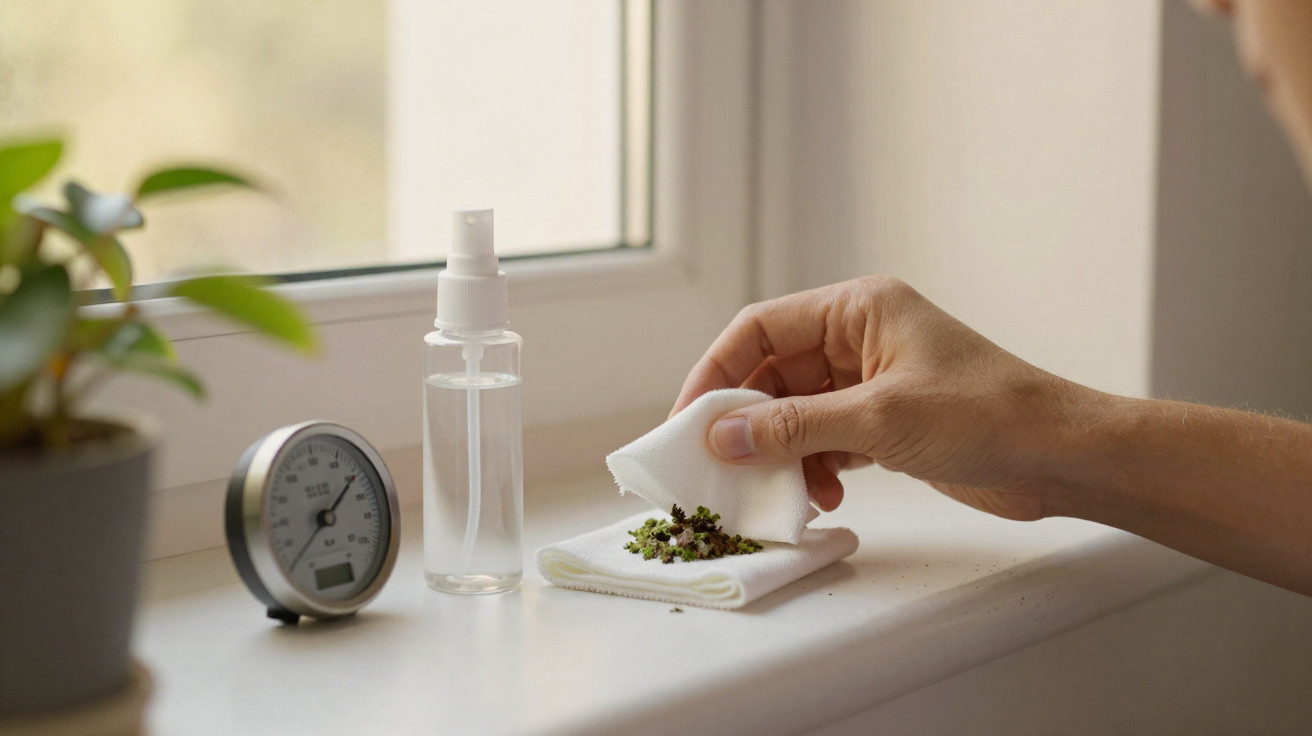
It isn’t the lingering smell of last night’s dinner, or the way your bedroom feels stuffy when you wake up - those signs are loud. The more telling sign that your home lacks fresh air circulation is subtler, almost embarrassingly discreet. Look carefully around your windows and the colder corners of your walls: faint grey or black smudges, tiny fuzzy dots, slightly damp-looking darker patches creeping along silicone seals or wallpaper.
What you’re seeing is often early-stage condensation mould. Not the dramatic, spreading black patches after a leak, but those timid specks that gather along the bottom of a window frame or behind a wardrobe. They appear where warm, humid air lingers instead of being replaced. You wipe them away with a sponge and forget them - then they reappear anyway.
Many people assume mould only happens in old, poorly insulated properties. In practice, it’s often the other way round. As modern windows become more airtight and we try not to “waste” heat by opening them, homes struggle to breathe. Moisture from showers, cooking, laundry and even our breathing has fewer ways to escape. It then condenses on the coldest surfaces, giving dormant spores exactly what they need: water and time.
In that sense, every tiny dot is effectively saying: air isn’t moving here. You may not see steamed-up panes or notice a “bad smell”, yet the air indoors can still be heavy with excess humidity and stale particles. Rooms where the door stays shut, corners blocked by furniture, window frames in rarely used bedrooms - these become quiet laboratories where poor ventilation slowly leaves its signature.
This small stain tells a bigger story about your air
On a cold morning, stand by a window and run a finger along the lower edge of the frame. If it feels a bit wet or tacky, or you can see a fine dark line along the silicone, that’s not simply “a bit of grime”. It’s condensation collecting in the same place again and again. The moisture evaporates, minerals are left behind, and that little microclimate becomes somewhere mould spores can settle. They grow cautiously at first, then more readily as the room’s humidity keeps climbing.
It’s seldom dramatic in the early days. A couple of dots under a window, a pale shadow in the top corner of a bathroom wall, a slightly musty patch behind a curtain you never fully draw back. People paint over it, hide it with a plant, or shift the furniture. The mark disappears from sight, but not from the building - and the story your air is telling continues.
Public health bodies quietly repeat similar figures year after year: we spend roughly 90% of our time indoors, and indoor air can be several times more polluted than outdoor air. One study from a British housing charity reported that in homes with visible condensation and mould, residents were more than twice as likely to report an ongoing cough or breathing difficulties. That doesn’t mean every dark speck is a medical crisis. It does mean your lungs are sharing space with damp, stale air that isn’t being carried away.
Treat that mould line like a highlighted route on a map: it points to where air stalls. Kitchens where the extractor fan isn’t used, bathrooms where the door stays closed after a hot shower, bedrooms where clothes dry on a radiator. Even a baby’s room kept “cosy” with the window shut can quietly store humidity that later shows up on the walls. The stain is what you can see; the unseen part is the daily build-up of water vapour in the air you breathe.
The physics is straightforward. Warm air holds more moisture than cold air. When that warm, damp air hits a colder surface - a poorly insulated wall, a single-glazed window, even a chilly ceiling corner - water condenses. With good ventilation, drier fresh air dilutes that moisture and carries it out. When fresh air barely circulates, the moisture remains day after day. The surface never properly dries, and over time it becomes an ideal home for mould.
That’s why the marks tend to appear in predictable places: above the shower, behind a wardrobe pressed against an external wall, around the edges of a window frame. Your home is, in effect, sketching a diagram of where air isn’t moving. Those dots are less about “dirt” and more about a pattern - the pattern of air entering, flowing through, and leaving your rooms… or failing to.
How to quietly reset the air in your home
The first step is almost laughably simple: open windows on opposite sides of the home at the same time, twice a day, for ten minutes. Create a cross-breeze so air actually travels through the space, rather than just drifting near one window. Short, sharp bursts of ventilation refresh the air without chilling the whole house. It feels too simple to work, but it does. Bedrooms, in particular, benefit from this daily reset - even in winter.
Next, pay attention to how your home “breathes” whenever you create moisture. Switch on the extractor fan before you get into the shower, and keep it running for at least 15 minutes afterwards. Put lids on pans, and let steam escape through a vent or a slightly opened window rather than into the rest of the home. If you dry clothes indoors, leave the door ajar and crack a window so you’re not trapping all that water vapour in one sealed box of air.
In day-to-day terms, it’s easier to keep the “ten minutes twice a day” habit if you anchor it to something you already do - after breakfast and before bed, for instance. Let’s be honest: hardly anyone does this every single day “just because you should air the house out”. We do it when it fits around real life. So make it fit. Treat it like brushing your teeth: quick, basic, and not up for debate. Your walls will quietly benefit.
Many people feel a rush of guilt when they notice condensation or mould. They read frightening headlines, think about children with asthma, and feel as though they’ve failed some invisible homeowner’s test. The reality is more complicated. Homes have changed faster than our routines. Windows are tighter, insulation is thicker, and energy prices encourage us to seal everything and keep every degree indoors. Fresh air starts to feel like something we “can’t afford”, when in reality it’s stale, humid air that quietly costs us.
On a difficult day, you might shut the bathroom door and pretend the damp tiles aren’t your problem. That doesn’t make you negligent - it makes you human. The goal isn’t perfection; it’s small, repeatable habits that steadily tip the balance. Crack the window slightly while showering, leave the door open afterwards so warm air can escape, and pull that heavy wardrobe five centimetres away from the wall to let air move behind it. Tiny changes, noticeable results over months.
“Mould on the wall is rarely the starting point,” notes a building inspector I spoke to. “It’s the last chapter of a long, silent story about humidity and air that never really leaves.”
Once you’ve clocked those early stains, you can respond without panic and start changing the pattern. Clean the area with a diluted vinegar solution or a suitable mould cleaner, let it dry completely, then see how quickly - or slowly - it returns. That return rate is useful information about how your home is ventilating. If it’s back within weeks, you’re not only removing mould; you’re negotiating with the way air flows (or doesn’t) in your rooms.
- Open windows facing each other for 5–10 minutes, morning and evening.
- Always ventilate bathrooms and kitchens during and after use.
- Leave furniture a few centimetres away from external walls.
- Use a dehumidifier in very damp rooms as a support, not a magic fix.
- Check window corners and behind curtains once a month for early stains.
Let the stains start a conversation, not a panic
When you start seeing that thin dark line beneath the window as a ventilation problem rather than “just dirt”, your relationship with your home shifts slightly. You begin to notice where the air feels heavy, which rooms smell subtly different, and where condensation appears first on winter mornings. Those details stop fading into the background and become signals - practical hints about living with your space rather than battling it.
Socially, stale indoor air is one of those invisible issues we rarely discuss. We compliment someone’s décor, their new sofa, their huge TV - but not how a room feels to breathe in. Yet everyone recognises that quiet relief when you step into a place that smells of… nothing. Just clean, neutral, slightly crisp air. You can have that in a tiny flat or a large house; it’s less about square metres and more about clear air paths.
Most of us have had the moment when guests are on their way and we start spraying fragrance instead of simply opening the windows. Air fresheners, candles and diffusers cover up the story; they don’t change it. The unnoticed sign on your windows and walls is a reminder that real freshness is largely invisible - almost boring when it’s working properly. But as you watch for these signs and adjust your routines, something shifts in everyday life. You breathe a little easier, sleep a little more deeply, and notice fewer “mystery headaches”. And you may even end up passing on a tip to a friend who can’t work out why their windows keep misting up.
| Key point | Detail | Why it matters to you |
|---|---|---|
| Early mould as a warning | Small stains around windows and cold corners reveal trapped humidity and poor air circulation. | Helps you spot ventilation issues before they become bigger health or building problems. |
| Short, regular airing | Two 5–10 minute cross-breezes a day can drastically refresh indoor air without major heat loss. | Offers a simple, realistic habit that fits daily life and reduces condensation. |
| Micro-adjustments at home | Using fans, moving furniture slightly, managing steam and laundry all shift how air moves. | Gives practical actions that can turn a “damp” home into a healthier, calmer space over time. |
FAQ:
- How do I know if it’s just dirt or real mould around my windows? If the mark looks fuzzy, spreads in irregular shapes, returns quickly after wiping, or feels slightly slimy when damp, it’s probably mould, not just dust. Dirt tends to stay flat and doesn’t reappear as fast in the same pattern.
- Can I fix poor air circulation without expensive renovation? Often yes. Regular cross-ventilation, using extractor fans properly, opening internal doors more, and shifting furniture away from cold walls already change a lot. Serious structural issues are the exception, not the rule.
- Is a dehumidifier enough to solve my condensation problem? It helps, especially in very damp rooms, but it doesn’t replace fresh air. Think of it as a support tool to reduce moisture, while ventilation renews and dilutes the air you actually breathe.
- Does opening windows in winter waste too much heating? Short, intense airing cools the air but not the walls and furniture, which store most of the heat. Ten focused minutes of breeze are far more efficient than leaving a window on tilt all day.
- When should I worry about mould for health reasons? If patches are large, keep growing fast, or you notice coughs, wheezing or irritation that ease when you’re away from home, talk to a doctor and a building professional. Even then, improving fresh air circulation is almost always part of the solution.






Comments
No comments yet. Be the first to comment!
Leave a Comment