
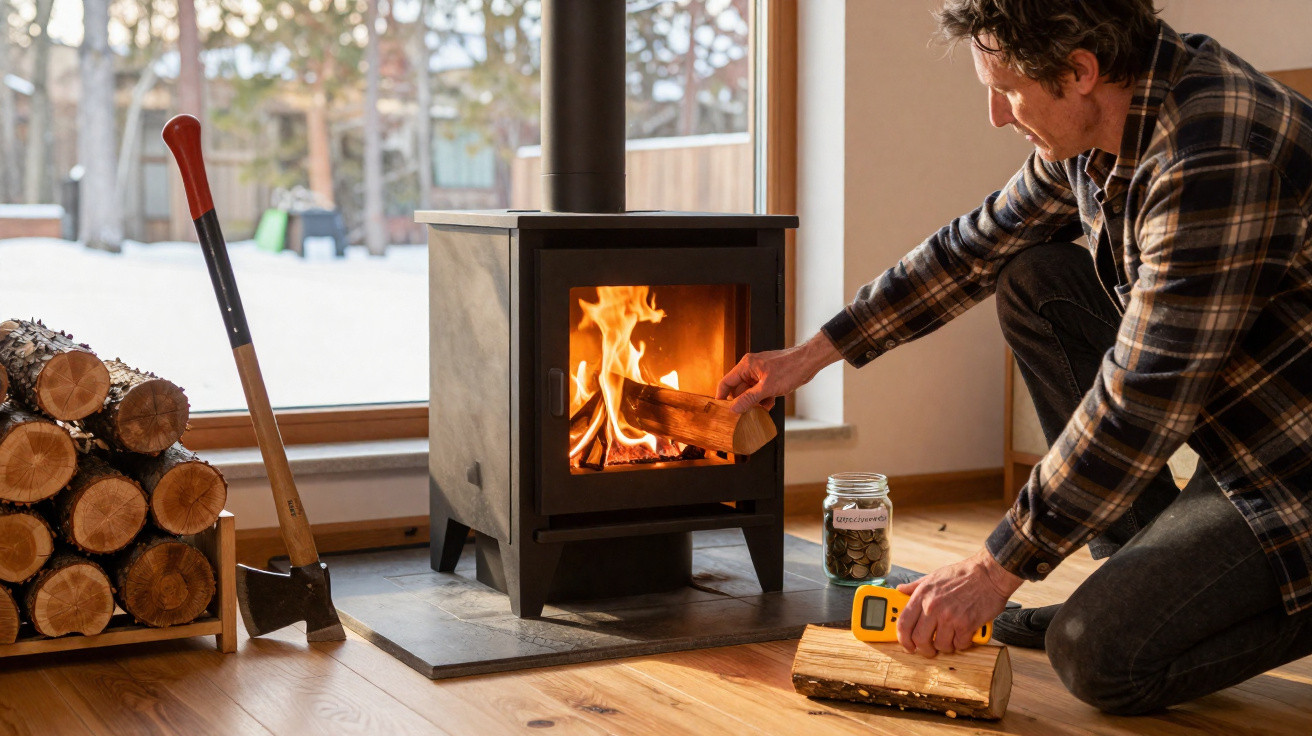
They are not relying on high-tech stoves or expensive pellets. Instead, they use a straightforward way of handling firewood that alters how each log burns, how much usable heat it produces, and how quickly the stack in the shed is used up.
How a ‘dry wood mindset’ turns logs into a real heat source
A lot of people assess firewood by sight: if the surface looks brown and split, it’s assumed to be “dry enough”. In reality, that rule of thumb often proves costly. Newly felled timber can contain 40 to 60% water by weight. Even logs that have spent a summer under a cover can still sit comfortably above the 20% level that modern stoves typically need to burn efficiently.
Unevenly dried logs quietly eat into the heating budget: much of their energy boils off water instead of warming the room.
Put damp logs on the fire and a chunk of the heat is immediately diverted into converting water into steam. The flames seem sluggish. The stove glass soots up fast. The room warms more slowly, so you compensate by adding more fuel. You might be paying per cubic metre, but you’re only getting a portion of the heat you thought you’d bought.
The contrast with properly prepared wood is hard to miss. When logs are genuinely seasoned and you pair them with the right lighting approach and good airflow, the burn is hotter and more even. One well-dried log can keep glowing long enough to compete with two that were dried badly. That’s the reality behind the “little‑known trick” that many experienced wood burners now recommend.
The real ‘trick’: measure moisture, don’t guess
At the centre of the approach is something almost too obvious: stop relying on appearances and start checking moisture with a meter. A handheld moisture meter often costs less than a bag of premium logs, yet it can explain why some homes still feel chilly even with a roaring fire.
Using a moisture meter the right way
- Split a log so you can see the freshly exposed centre, which is the last part to dry.
- Push the meter pins into that new surface rather than the weathered grey outside.
- Check multiple logs taken from different areas of the stack.
- Only burn when readings are consistently below 20%.
In many wood stores, moisture results swing dramatically: one log might read 15% while another from the same pile shows 30%. The dry pieces burn with strong flames and keep the glass clearer. The wet ones tend to smoulder and send extra soot into the flue. Simply separating your wood by measured moisture content can make supplies go further, because you stop throwing heat away on the dampest culprits.
Households that consistently burn wood under 20% moisture often report using one to three fewer loads of logs over a typical winter.
This is not a laboratory-only benefit. If wood is your primary heating fuel, the difference can add up to hundreds of pounds across the season, as well as fewer last-minute deliveries when prices are at their highest.
Stacking like a pro: where log life really doubles
A moisture meter highlights what’s wrong, but the lasting improvement comes from how you process and store your firewood. The small practical details matter more than most people expect.
Splitting, sizing and airflow
Log lengths around 30 to 50 cm are often ideal: easy to handle, suitable for most stoves, and with enough exposed surface for moisture to escape. Large, unsplit rounds dry exceptionally slowly, especially through the centre. They can look aged on the outside while still testing above 30% internally.
| Storage choice | Effect on drying |
|---|---|
| On bare soil, stacked against a wall | Draws ground moisture, encourages mould, very slow seasoning |
| Wrapped tight under a plastic sheet | Traps humidity, surface dries, core stays wet |
| Raised on pallets, roofed, sides open | Strong airflow, rain protected, steady drying to below 20% |
Keeping logs off the ground and giving them free airflow along the sides is often the single biggest upgrade. In a temperate climate, many species need roughly 18 to 24 months to season outdoors. Softwoods such as pine tend to dry sooner, while dense hardwoods like oak or beech generally take longer.
Well‑seasoned wood does not just burn faster and hotter. It changes the pace of the fire, so each log can hold a bed of embers far longer than a damp equivalent.
That’s why the “trick” can feel almost unreal on a bitter evening: you load the stove less often, yet the fire keeps its glow and the room stays at a comfortable, steady temperature.
Rotation: treating firewood like a savings account
To get the full benefit of dry wood, it helps to run a simple rotation rather than treating firewood as a random outdoor heap. Manage it like a pantry with a clear order, not an untidy pile.
A practical two‑ or three‑year cycle
A straightforward system works like this:
- Year 1: buy or cut more wood than you’ll burn, then split and stack it in a well-ventilated, covered area.
- Year 2: continue adding new wood at one end of the store, while burning the oldest and driest stacks from the opposite end.
- Year 3 and beyond: keep the pattern going so each log seasons for at least two summers before it’s used.
This kind of rotation protects you from unstable pricing and poor “need it now” deliveries. It also means most of your fuel will already meet the key moisture target without you having to check every single piece. Planning ahead can feel like effort, but over a few winters it becomes a quiet, low-cost form of heating security.
Top‑down lighting: the second half of the secret
Even perfectly dry logs won’t automatically burn for longer if the fire is lit inefficiently. How you start the fire affects how the wood’s gases ignite and how much heat is released before those gases disappear up the flue. A technique called “top‑down lighting” has become common across northern Europe and is now spreading through British and American homes.
How top‑down lighting works
Rather than building a traditional teepee of kindling underneath larger logs, the order is flipped:
- Lay the biggest, driest logs flat at the base.
- Place a layer of medium-sized splits on top.
- Add a generous amount of fine, very dry kindling above that.
- Put one or two approved firelighters at the very top.
You ignite the firelighters first, which sets the kindling alight. The flame then works its way downwards, warming the larger logs underneath and burning more of the released gases cleanly. The first burst of smoke is reduced, the glass stays clearer, and the room reaches a comfortable temperature more quickly.
Many users find that top‑down lighting cuts the frantic “log feeding” phase in half, because the fire hits cruising speed more smoothly.
In day-to-day use, that can mean the same amount of wood lasts further into the evening, with fewer chilly dips and fewer trips to refill the log basket.
Fine‑tuning air controls to keep logs glowing longer
Many stove owners leave the air controls in the same position for months, yet they benefit from a little adjustment. When you’re lighting the fire, opening the air fully helps the fuel burn brightly and reduces smoke. Once the stove body is properly hot and a solid bed of embers has formed, gradually easing back the airflow helps shift the fire from loud flames to a stable, long-lasting glow.
Close the air down too sharply and the fire becomes sluggish, soot accumulates, and the chimney is more likely to build up creosote. Leave the air wide open throughout and the logs burn away quickly, pushing more heat straight outside than necessary. The best setting is usually visible: an active, dancing flame that isn’t roaring and isn’t whipping aggressively towards the flue outlet.
When you combine genuinely dry wood with top‑down lighting and well-judged airflow, the whole character of the fire changes. Instead of sharp bursts followed by rapid drop-offs, you get a broad, steady band of warmth. That is why people sincerely feel that logs “last twice as long”, even though each piece still holds the same amount of stored energy.
Money, emissions and safety: what this means in real life
Financially, the improvement is easy to notice. A household that previously burned six cubic metres of average-quality wood over winter may drop to four or five once the fuel is consistently dry and burning properly, with fewer half-charred leftovers and much less visible smoke. Over time, those savings can more than cover the cost of a sturdy log store, a reliable moisture meter, and yearly chimney sweeping.
The change also shows up in the air outside. Cleaner burning with dry wood reduces fine particle emissions and sticky creosote, both of which influence local air quality. Flues remain cleaner for longer, lowering the likelihood of chimney fires. That safety benefit matters more as people increasingly use wood as a back-up during power cuts or when gas prices surge.
For anyone thinking about switching to wood, or replacing an old open fireplace, energy advisers now often stress that outcomes depend on behaviour as much as equipment. A modern stove used with poorly managed wood rarely achieves the efficiency promised on paper. Meanwhile, an older but well-maintained appliance, paired with careful seasoning, sensible stacking and top‑down lighting, can perform far better than many expect.
In the near future, some areas are already introducing rules around moisture levels in commercially sold firewood and promoting better user guidance. For an individual household, this winter could be a good time for a simple trial: buy or prepare a batch of confirmed dry logs, change how you light the fire, and then see how often you still need to reach for the log basket. The result-fewer loads carried and lower costs-usually says more than any technical leaflet.




Comments
No comments yet. Be the first to comment!
Leave a Comment