
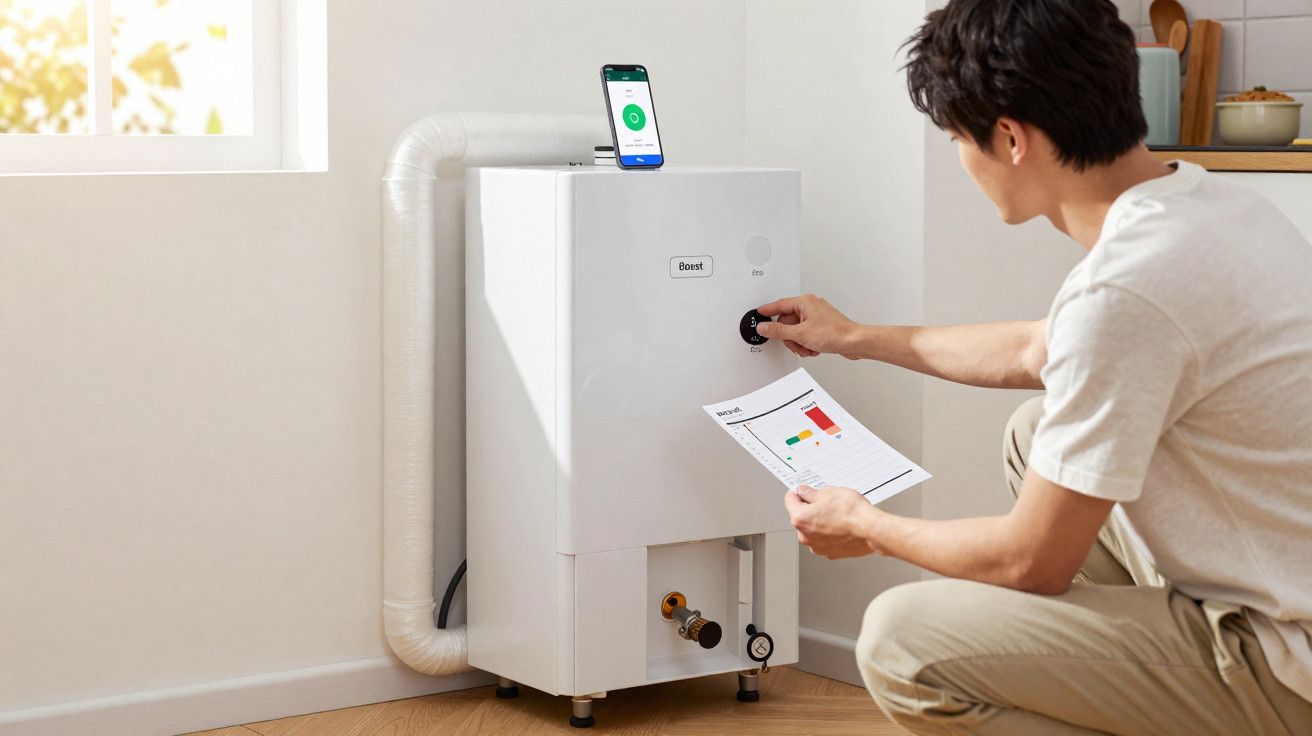
The traditional electric boiler has long had a reputation as an electricity guzzler. Newer heat pump water heaters-often referred to as a “thermodynamic water heater”-are designed to tackle exactly that. They draw in heat from the surrounding air and use it to warm water far more efficiently. But if the system is poorly specified, installed in the wrong place or set up badly, it can still use more electricity than most people would like. That is where eight common electricity cost traps tend to catch households out.
Why hot water can account for up to a fifth of your electricity bill
When people think about their electricity bill, they usually focus on heating, the fridge or lighting first. Hot water is easy to overlook. Yet in many homes, producing domestic hot water represents around 15 to 20 percent of total electricity use.
If a heat pump water heater is the right size and properly configured, it can cut that share dramatically. Compared with a conventional electric boiler, it typically needs only around a third of the energy. Here is an example from measurements using a 200-litre cylinder:
- Electric boiler: around 3,500 kWh per year (about 700 euros at 20 cents/kWh)
- Heat pump water heater: 800 to 1,300 kWh per year (about 160 to 260 euros)
That can mean savings of up to 500 euros per year-as long as the unit is running under good conditions. In reality, that is often where things go wrong.
“A heat pump water heater only saves serious money when the location, size, temperature and operating mode are properly matched to the household and the building.”
Electricity cost trap 1: Choosing the wrong cylinder size
The first mistake is often made before the unit is even installed: the cylinder capacity does not suit the household. Either direction can be expensive-too small is just as problematic as too large.
Cylinder too small: costly backup heating
If the cylinder is undersized, it is frequently depleted before everyone has finished showering. The electric immersion/backup heater then kicks in. That element is almost as inefficient as an old electric boiler and can consume a lot of electricity.
- Family of 4 with frequent showers: 200 litres is often the minimum
- Regular baths, large bath: plan more like 250 to 300 litres
- Single person or couple with typical shower use: 150 to 200 litres is often sufficient
Manufacturers publish guideline figures that work as a starting point. If the system keeps dropping into “backup operation”, it is worth having the sizing checked.
Cylinder too large: quiet standby losses
An oversized cylinder has to keep a large volume of water warm even when it is not being used every day. The result is unnecessary standing losses. Heat gradually leaks through the insulation, and the unit repeatedly reheats to compensate.
Rule of thumb: it is usually better to be slightly tight on capacity than significantly oversized-provided the household is willing to adjust shower habits a little.
Electricity cost trap 2: The wrong room - location makes a real difference
Heat pump water heaters take energy from the surrounding air. The warmer that air is, the higher the efficiency. Many installations fall down at this point.
Cold corner instead of a tempered space
Placing the unit in an unheated, cold room or a draughty cellar wastes potential. The heat pump then has to work much harder to deliver the same amount of hot water.
A more favourable location is typically:
- a utility room
- a garage that stays above freezing
- a heated basement room or a side room near the boiler/plant area
The space must be frost-free. In very cold basements, part of the advantage of the system can disappear.
Too little air: the unit “chokes”
The built-in heat pump needs enough air volume to operate properly. Installing it in a tiny, airtight cupboard is asking for trouble.
“If the heat pump water heater is in a very small, poorly ventilated room, efficiency drops-and in extreme cases, operating faults can occur.”
Key points to check:
- do not box the unit into a fully sealed cupboard
- use grilles or ventilation openings in doors and walls
- ensure there is sufficient room volume-when in doubt, ask the installer
Electricity cost trap 3: Poor insulation on the cylinder and pipework
Any heat that disappears without being used is money wasted. That applies to the cylinder and to the hot water pipes.
- If the outside of the cylinder feels noticeably warm, an additional insulating jacket is often worthwhile.
- Uninsulated hot water pipes running through cold basements or service voids can lose a great deal of energy.
Simple pipe insulation from a DIY shop can cut hot water costs by up to ten percent, with very modest spend.
Electricity cost trap 4: Setting the hot water temperature too high
Many people raise the set temperature because they are worried about running out of hot water-then end up paying extra every month.
Most manufacturers recommend 50 to 55°C. That range is usually sufficient for comfort and hygiene. Each additional degree above that can increase electricity costs for hot water by roughly seven percent.
“If you set 60 degrees permanently instead of 50 degrees, in extreme cases you can increase your hot water costs by almost a third.”
For hygiene reasons, it is not advisable to run permanently below 50°C. For Legionella prevention, many units allow scheduled “hygiene cycles” that briefly heat the water to a higher temperature.
Electricity cost trap 5: The wrong mode - leaving Boost on instead of Eco
Almost every heat pump water heater offers multiple operating modes, and they have a direct impact on consumption.
- Eco or heat pump mode: the standard setting, relying mainly on ambient heat; this is where the biggest savings are found.
- Boost or rapid mode: heats quickly using the electric backup heater; useful after many showers, but very energy-intensive.
- Holiday/absence mode: lowers the temperature during holidays or longer periods away.
A major mistake is keeping Boost enabled all the time. In that case, the unit behaves much like a standard electric boiler-so the extra investment in the heat pump barely pays back.
Electricity cost trap 6: Time schedules that do not fit reality
Timers and schedules are meant to save electricity, but poorly chosen settings can do the opposite.
Many tariffs include cheaper night rates or discounted time windows, and heat pump water heaters are then set to run primarily in those periods. However, at night the air temperature in the installation room is often lower, which reduces the heat pump’s efficiency.
“The ideal approach is a mix of cheaper electricity times and the warmest possible ambient air, for example in the late afternoon or early evening in a lightly heated room.”
A workable setup can look like this:
- Schedule most of the reheating for the cheapest tariff windows.
- Shift a smaller share into periods when the room is warmest.
- Align shower routines with heating times so hot water is available when it is actually needed.
Electricity cost trap 7: Skipping maintenance
Heat pump water heaters generally require less maintenance than traditional boilers, but they are not maintenance-free. One commonly underestimated item is the air filter.
If the intake filter is clogged, the heat pump has to work harder. Electricity use rises and the unit’s service life may reduce. A quick clean every few months is often enough:
- Switch the unit off and isolate it from the power supply.
- Remove the filter at the top section of the heat pump module.
- Wash with lukewarm water and a small amount of mild washing-up liquid.
- Let it dry, then refit.
In hard-water areas, it is also sensible to check for limescale build-up in the cylinder and to have the safety valve group inspected. Limescale acts as insulation on heat transfer surfaces, increasing energy demand.
Electricity cost trap 8: Everyday habits that undermine the technology
Even the most efficient heat pump water heater has limits if hot water is simply being sent down the drain. This is often where the biggest savings-at zero cost-are found.
- Take shorter showers instead of regular baths
- Fit low-flow shower heads and tap aerators
- Fix small leaks and dripping taps promptly
- Roughly coordinate shower times with the cylinder’s heating schedule
“Every litre of hot water you save reduces electricity consumption directly-without sacrificing comfort when the technology is used intelligently.”
How the different factors amplify one another
It gets particularly interesting when several changes are combined. For instance, lowering the set temperature from 60 to 52 degrees, insulating pipework, keeping Eco mode enabled and switching to shorter showers tackles four levers at once.
The impact then stacks up: fewer losses from the cylinder, a smaller temperature lift for the heat pump, fewer reheating cycles thanks to consistent Eco operation, and simply less hot water demand day to day. On an electricity bill, these improvements can add up to a very noticeable amount.
Key terms explained briefly
Heat pump water heater / thermodynamic water heater: A unit that, like a heat pump, uses energy from the air to warm water. Inside is a small refrigeration circuit-similar to a fridge, but operating in reverse.
Coefficient of performance (COP): A measure of how efficiently the heat pump runs. A COP of 3 means one unit of electricity produces three units of heat. The value depends heavily on ambient temperature and the chosen settings.
If you understand your unit, choose the installation spot carefully, review the settings and make small changes to habits, you can get much more from the technology-and reduce electricity costs noticeably without giving up hot water.




Comments
No comments yet. Be the first to comment!
Leave a Comment