
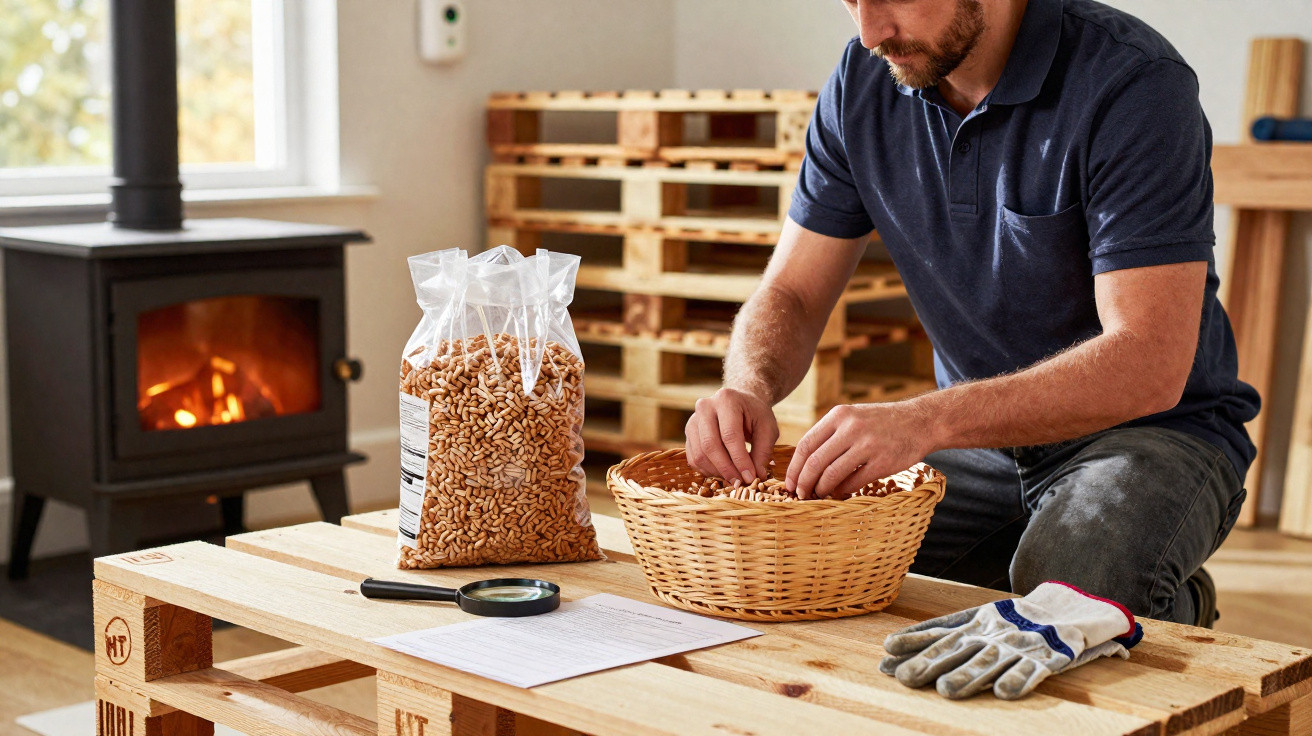
With heating costs refusing to come down and pellet prices swinging, a growing number of households are looking at something more often seen behind supermarkets or left on building sites: wooden pallets. They can seem like free firewood. Sometimes they are - but only when they’re treated as a fuel with clear rules, not as random scrap timber.
From premium pellets to cast-off pallets
Over the past decade, pellet stoves surged in use because they offered tidy storage, relatively clean burning and consistent results. After that came price shocks, pressure on raw materials and supply disruptions. In a number of European countries, pellet prices at times doubled, prompting low- and middle-income households to hunt for cheaper ways to keep warm.
Heating with discarded pallets is becoming a budget strategy for some families, but it sits on a fine line between smart recycling and toxic fire.
Pallets are easy to spot: piled behind shops, dumped near warehouses, or sitting at the edge of industrial estates. For anyone watching every pound or euro on the energy bill, they can look like an obvious fix - collect, cut, burn. The problem is that pallet wood has often been through multiple stages before it ends up in a stove or fireplace: transport, long storage, pest-control treatment, and sometimes contact with industrial spills. If you ignore that backstory, a comforting blaze can quickly become a smoky health risk.
How to read a pallet like a safety label
To most people, a pallet is just rough-sawn timber. To people who work with them, it’s a bundle of markings, colours and standards. Those identifiers are what tell you whether a pallet is suitable for a domestic fire or should go straight to recycling.
Safe, risky and forbidden pallets
In international freight and logistics, many wooden pallets have stamps on the side runners or blocks. These marks explain what was done to the wood to control insects and mould in transit. That treatment is what determines whether burning is sensible - or dangerous.
- “DB” (debarked): timber with the bark removed, without chemical treatment.
- “HT” (heat treated): kiln-heated to kill pests, rather than fumigated with gas.
- “MB” (methyl bromide): treated with a toxic pesticide; now banned in many places, but still found on older pallets.
- No mark: often a local or one-off pallet; it may be untreated, or its history may be impossible to verify.
For household heating, only untreated or heat-treated pallets - usually marked “DB” or “HT” and free of paint or stains - should go near a fire.
Strong colours should immediately raise suspicion. Blue, green or orange pallets are often part of rental pools or industrial tracking schemes that rely on specific paints and identifiers. Those coatings can include heavy metals, solvents or resins that can release harmful fumes when heated. Spills create another hard-to-see problem: a pallet that once supported drums of solvent, pesticides or engine oil can retain residues in its grain and crevices.
EPAL and EUR pallets: the “less bad” option
Pallets stamped EPAL or EUR, widely used across Europe, are typically made to tighter standards. They are more commonly heat treated rather than chemically fumigated. That makes them a safer bet than unmarked or brightly painted pallets, even though they still won’t perform like dense hardwood logs such as oak or hornbeam.
They also provide less energy per volume, and the nails or metal staples can blunt cutting tools and may cause issues for some modern stoves. Many stove makers caution that using construction off-cuts or pallet wood can invalidate warranties. As a result, households that go down this route often treat pallets as a reserve: they heat mainly with standard logs or pellets, then burn clean pallet wood when money is tight or supplies are limited.
Where people actually find pallets - and what the law says
In real life, most pallet collecting doesn’t begin with a standards guide - it begins with a walk around the local area.
Common hunting grounds for free firewood
- Construction sites: off-cuts, short-term pallets and damaged units.
- Supermarkets and retail parks: piles near loading bays, often linked to pallet-pool contracts.
- DIY stores and garden centres: pallets used for compost, paving and other bagged goods.
- Warehouses and logistics hubs: large quantities, but usually tightly managed.
Removing pallets without permission can quickly shift from “salvaging” to theft. Many blue or otherwise brightly coloured pallets are owned by rental systems, and businesses can be charged when they go missing. Some councils also restrict open fires and the burning of waste wood, particularly during periods of poor air quality.
Before loading the car with “free” pallets, a walk to the town hall or a check of local bylaws often saves both fines and neighbour complaints.
Rules differ sharply from place to place. Some cities prohibit burning treated or manufactured wood in domestic appliances altogether. Others demand certified stoves and set caps on particulate emissions. In rural areas the rules can be more relaxed, but even there, persistent smoke or odour complaints may trigger an inspection.
Money saved, emissions shared
For households under pressure from energy costs, the financial case can be compelling. A simple comparison shows the attraction.
| Fuel type | Typical cost per kWh (approx.) | Key characteristics |
|---|---|---|
| Wood pellets | Medium to high, fluctuating | Standardised, clean, easy to store |
| Seasoned hardwood logs | Medium | High energy density, stable performance |
| Recovered pallet wood | Very low or free | Highly variable quality, labour-intensive |
If pallets cost nothing, the main price is time and effort: sourcing them, checking them, sawing them down and storing them properly. Where a household has the tools, time, space and a suitable stove, that swap can be worthwhile. In dense urban areas - where storage is limited and air-quality rules are stricter - the balance often looks very different.
There is also a wider cost borne by everyone nearby. Poorly managed pallet fires can produce fine particulates, nitrogen oxides and volatile organic compounds. Many cities already exceed winter air-quality limits. Adding smoky garden fires to existing pollution from traffic and industry increases respiratory risks, especially for children, older adults and people with asthma.
Turning waste into a cleaner flame
Practical rules for safer pallet burning
Households that still choose to burn pallet wood often do so with a firm checklist. Chimney sweeps and other specialists generally offer similar guidance:
- Use only pallets stamped “HT” or “DB”, and never “MB”.
- Steer clear of paint, staining, oil traces and anything with a strong odour.
- When cutting, remove nails and metal pieces as far as you can.
- Keep the wood in small sections and dry it under cover for at least six months.
- For cleaner burning, mix pallet wood with standard logs rather than using it on its own.
- Arrange chimney sweeping more often to deal with extra soot and deposits.
The cleaner the wood, the hotter and more complete the combustion, which means less smoke, less smell and less creosote inside the flue.
Enclosed stoves with secondary air systems and certified efficiency tend to cope better with mixed fuels than open fireplaces. Open hearths release a large proportion of fumes and particles straight into the surrounding air - even when the wood itself is “clean”. That distinction is one reason several countries limit new open-fire installations while promoting sealed appliances.
Beyond pallets: the wider shift in household heating
The move towards pallets reflects a bigger reality. Across the world, households are trying to balance cost, climate expectations and health. Some switch to heat pumps and solar panels when they can afford the upfront spend. Others piece together lower-cost, improvised approaches: mixed fuels, reclaimed timber and shared log deliveries.
Energy advisers often point to one practical lever that sits between high-tech upgrades and DIY workarounds: insulation. A well-insulated small home needs fewer logs, fewer pellets, or a smaller heat pump, cutting both spending and emissions regardless of the fuel used. Even relatively modest measures - draught-proofing windows, fitting heavy curtains, and insulating loft spaces - reduce how many fires are needed each winter.
If pallet wood is tempting, it helps to be realistic about its role. Use it as a seasonal extra rather than the foundation of a heating plan. Keep dependable fuels as the mainstay, and turn to clean pallets when supplies tighten or prices jump. Pair that with routine checks of stove seals and flues, plus working carbon-monoxide alarms. The aim remains unchanged: stay warm, keep costs under control, and keep the air indoors and out safe to breathe.




Comments
No comments yet. Be the first to comment!
Leave a Comment