
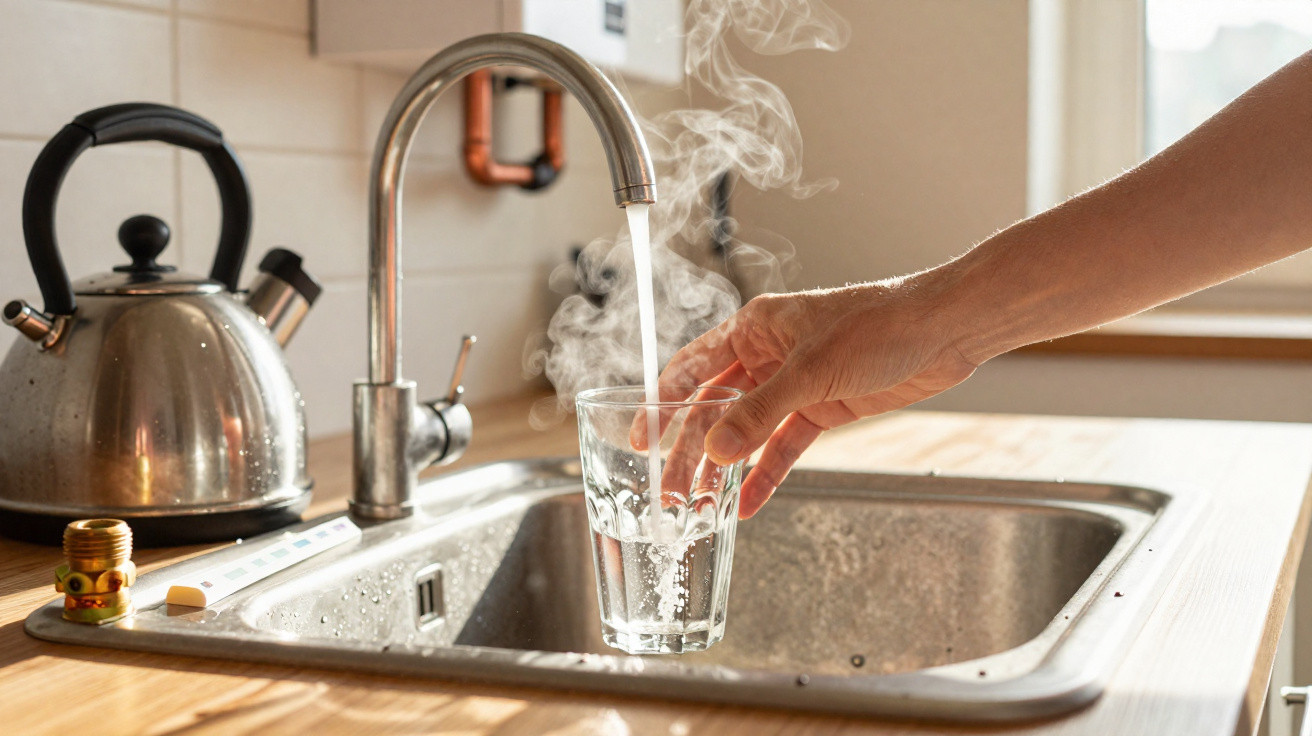
That plume of steam from the kitchen tap can seem like a tidy little win: fast, effortless and apparently risk-free.
In plenty of homes, it even ends up taking the place of the kettle.
On busy mornings, many of us simply turn on the hot tap, top up a saucepan or mug and carry on, without giving much thought to what has travelled through the plumbing. But public health bodies and water engineers keep issuing the same message: using the hot tap is not a safe way to get drinking water.
Hot water is not just cold water made warmer
Cold water from the tap is typically delivered directly from the mains or a cooled storage tank and is monitored under strict quality standards. Hot tap water, by contrast, takes a separate route: it sits in a boiler or hot water cylinder and then moves through pipework that, in many properties, has been in place for decades.
During that time, heat and storage can alter both the chemistry and the microbial make-up of the water. Rather than something freshly treated, it is water that has spent time in contact with metal surfaces, rubber seals, limescale and-depending on the layout-sections where the flow is minimal and the water can stagnate.
"Hot tap water is classed as non‑potable in many countries: it should be used for washing, not for drinking or cooking."
The problem is that taps rarely advertise this difference. Your mixer does not come with a warning symbol, so the hazard is easy to miss-and that invisibility is exactly why hot water is often used to shave a couple of minutes off the routine.
What happens to water inside your boiler and pipes
Stagnation: when water sits, problems grow
Water stored in a cylinder-or trapped in a long run of pipe-does not refresh continually. Overnight, or while you are away, it can remain motionless. When that happens, fine particles can settle and biofilms can develop on the inside surfaces of tanks and pipes.
Those biofilms are slippery layers of bacteria and organic material that effectively provide a sheltered habitat for microbes. Once they form, they can withstand heat surprisingly well and may repopulate the water whenever the tap is opened.
Heat accelerates corrosion and metal leaching
Warm water is more reactive than cold. Higher temperatures speed up the chemical processes that occur when water meets metal, including in copper pipework, brass fittings, older lead solder, and nickel-containing parts found in some taps.
"The hotter the water and the longer it stays in contact with pipes and tanks, the more metals like lead, copper and nickel can leach into it."
Exposure to lead is associated with developmental harm in children and with cardiovascular and kidney problems in adults. Too much copper may lead to stomach and intestinal upset. Nickel can cause skin reactions and, at higher intakes, wider effects on the body. A single mug made with hot tap water might still contain only small amounts, but repeating that habit for years can increase overall exposure.
Loss of disinfectant protection
Water companies commonly dose the supply with low levels of chlorine or chloramine to keep cold water protected right up to the kitchen tap. Inside a hot water tank, however, that protection does not persist. Heat and stillness reduce those disinfectants, meaning the water reaching the hot tap often has far less of that chemical defence.
With the barrier weakened, bacteria from existing biofilms-or from tiny points where contaminants can enter-have a better chance of persisting. Levels are not always hazardous, but the water is no longer held in check in the same way as cold water.
Why hot tap water can pose health risks
The perfect temperature range for Legionella
Legionella, the bacteria responsible for Legionnaires’ disease, multiply best at roughly 25 °C to 45 °C. Unfortunately, parts of many domestic systems pass through that range-particularly where pipes are poorly insulated or cylinders are set to middling temperatures to cut energy use.
"Public health guidance typically recommends storing hot water at about 60 °C to limit Legionella, yet water cools as it travels, creating warm “pockets” where the bacteria can survive."
If contaminated droplets are released into the air-from showers, spa baths, or even certain taps-some people may breathe them in. For older adults, smokers, and those with weakened immune systems, this can lead to severe pneumonia.
Chemicals and metals do not boil away
A common assumption is that boiling hot tap water-say, in a kettle-will make it safe. Boiling can reduce bacterial risks and deal with some parasites, but it will not remove metals such as lead or copper. In some cases, boiling off water can slightly increase concentrations by reducing the volume.
For most healthy adults, doing this now and then is unlikely to create an immediate problem. The concern is greater for babies, pregnant women, and anyone with long-term kidney or neurological conditions. Because they process toxins differently, paediatric guidance generally advises using cold tap water for formula or cooking and heating it separately.
Who faces the greatest risk?
- Babies and young children, because their organs and nervous systems are still developing
- Pregnant people, because of potential effects on the foetus
- Older adults, particularly those with existing lung or kidney conditions
- People with weakened immune systems or undergoing chemotherapy
- People living in older buildings with legacy pipework or lead parts
In older urban housing, several of these risks often overlap: ageing plumbing, gravity-fed hot water arrangements, and little clarity about what is actually installed behind the walls.
Why softeners and additives can make things worse
Some households install water softeners or add chemical treatments to reduce limescale and hard-water marks. When it comes to hot water, that approach can be counterproductive. By changing the mineral balance, softened water can sometimes become more corrosive to metal.
"A system that looks spotless on the outside can, in reality, leach more metals inside the pipes because the treated water attacks them more aggressively."
This matters most at higher temperatures, such as inside boilers and hot cylinders. Heat combined with softened water can increase metal release, which is another reason to avoid drinking hot tap water-even in homes that have invested in filtration.
Practical habits to limit your exposure
Simple rules for everyday kitchen use
Guidance from health authorities and plumbing professionals is usually consistent on a handful of everyday habits. They are low-effort, do not require special equipment, and add very little time.
| Situation | Recommended water source |
|---|---|
| Making baby formula | Cold tap water, then boiled in a kettle or pan |
| Cooking pasta, rice or soup | Cold tap water heated on the hob |
| Making tea or coffee | Cold tap water in a kettle |
| Taking medication with water | Cold tap water only |
| Washing dishes or hands | Hot tap water is fine |
Before you fill a glass or saucepan, many experts also advise running the cold tap briefly-particularly if the water has been sitting in the pipes overnight. This helps clear out stagnant water and draws a fresher supply from the mains.
Maintenance that actually helps
Rather than trying to make hot water “drinkable”, proper upkeep is about keeping the system safe for what it is meant for: washing and cleaning.
- Arrange regular servicing for your boiler or water heater to confirm temperature settings and general condition.
- Maintain storage temperatures high enough to discourage bacterial growth (around 60 °C is a common benchmark).
- Insulate hot water pipes to prevent cooling that creates warm stretches suitable for Legionella.
- Run infrequently used taps and showers every few days so water does not sit for weeks.
Filters fitted to cold taps can improve taste and reduce some contaminants, particularly where the local infrastructure is ageing. They do not automatically make hot tap water safe, and many filters are not designed to operate at high temperatures.
Why the “shortcut” often feels tempting
The main reason people choose hot tap water is efficiency: it seems to save both time and energy. Heating water that already feels warm appears quicker than starting from cold. In reality, the saving is often small. Modern electric kettles and induction hobs heat cold water rapidly, and the energy difference for a few cups a day is usually minor compared with other household consumption.
There is also a perception issue. Steam and warmth can signal “clean”, and a recently rinsed sink or tap can reinforce that impression. Those visible cues can distract from the unseen chemical and biological changes. Behavioural researchers often point out that hazards we cannot see, smell or taste tend not to prompt strong caution-even when professional guidance is unambiguous.
Thinking ahead: what your building’s age and design tell you
How old your property is, and what materials were used, can indicate how careful you should be. Older homes may still contain lead supply pipes or solder that includes lead. Even when upgrades have been carried out, small sections of older pipe can remain hidden, especially on hot-water lines that attract less attention because they are not intended for drinking.
Newer buildings are more likely to use copper, plastic or multilayer pipework that meets tighter standards. Even so, hot water still spends time in tanks and can pass through low-flow points. The underlying advice does not change: use the hot tap for washing, not as a source of drinking water.
Where there are babies, elderly family members or anyone managing long-term health conditions, it may be worth speaking briefly to a plumber or the local water supplier to understand the set-up and decide whether additional action is appropriate. In some situations, replacing old pipework or installing a dedicated drinking-water line to the kitchen cold tap can provide reassurance that a seemingly convenient habit will not quietly add risk over the years.

Comments
No comments yet. Be the first to comment!
Leave a Comment