
Wood is often seen in the kitchen as natural, hard-wearing and hygienic. Even so, plenty of people still clean chopping boards, wooden spoons and salad servers the way they were taught by parents or grandparents-without checking whether those habits actually make sense. A TV expert has now challenged one of the most common cleaning rituals and explains what really gets wood clean without ruining it.
Why wood is so popular in the kitchen
Whether it’s a chopping board, a wooden spoon or salad servers, wooden kitchen tools are firmly back in fashion. In many kitchens they are gradually replacing plastic spoons and spatulas.
- Wood feels comfortable to hold and gives a warm, natural look.
- It is gentler on non-stick pans and saucepans.
- It is renewable and often easier to recycle than plastic.
- With the right care, it lasts for years.
At the same time, plastic utensils are facing increasing criticism. Doctors warn about plasticisers and other chemicals that can leach into food when plastic is heated or scratched. A well-known TV doctor recently summed it up bluntly: in his view, kitchen plastics should disappear completely in the long term. Wood seems like the obvious alternative-provided it’s cleaned properly.
The supposed miracle trick: boiling wooden utensils in a pan
A tip has been doing the rounds on social media for a while: put wooden spoons, small boards and similar items into boiling water to “deep clean” and disinfect them. Many users film the water turning dark-presented as proof that old residue, grease and bacteria are being pulled out of the wood.
"What looks so impressive in the pan is, according to experts, actually a classic flop."
An expert guest on a major TV breakfast programme strongly disagreed with this approach. Boiling wood, he said, isn’t a clever hygiene hack-it gradually destroys the utensil.
What really happens when you boil wood
When you cook wood, something happens that many people don’t realise: high heat and prolonged soaking release natural substances from the wood-especially tannins. These turn the water brown. It may look dramatic, but it says very little about how clean the utensil has become.
At the same time, the material takes a hit:
- Wood swells significantly and can warp.
- Fine cracks can form, giving germs even more places to lodge.
- Surfaces become rough, start to fray, and can feel “spongy” or slippery.
- Each boiling session reduces stability, so the utensil breaks sooner.
The TV expert’s message was clear: if you boil wooden spoons regularly, you are not extending their lifespan-you are shortening it.
The method that actually keeps wood clean and long-lasting
Instead of trying to “sterilise” wood in boiling water, the expert recommends a two-part routine: gentle day-to-day cleaning plus occasional deep care. It’s straightforward and can be done in any kitchen.
Step 1: Daily cleaning with mild products
After each use, a thorough wash with hot water and a little washing-up liquid is usually enough. For heavier soiling, consider:
- mild soap (a plain household soap bar or another grease-cutting soap)
- optionally, a splash of white vinegar in the washing-up water to tackle odours
- for stubborn smells, a little coarse salt as a gentle abrasive
Key point: never leave wood soaking in water. After washing, dry it straight away and then stand it upright (or on its edge) to finish drying. That allows air to circulate, moisture to escape and germs to stand less chance.
Step 2: A “wellness treatment” with fine sandpaper
For worn utensils or wooden tools that feel slightly slimy, the expert suggests a simple but highly effective fix: fine sandpaper. A grit of around 180 works particularly well.
- Let the wood dry completely.
- Sand the surface along the grain using fine sandpaper.
- Wipe off the dust thoroughly with a cloth.
Sanding removes rough patches, old discolouration and some surface-level contamination. The wood feels smooth and pleasant again. Many people report that it feels almost like new afterwards.
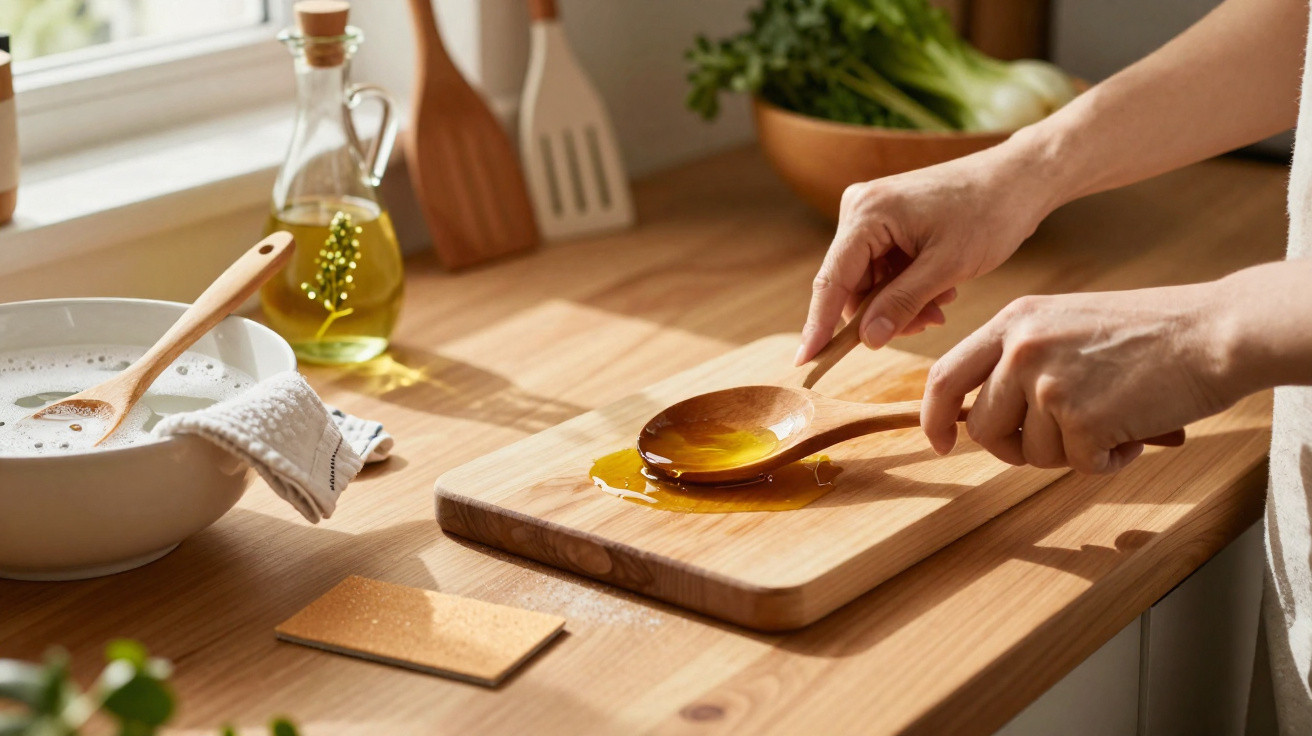
Step 3: Add a protective layer with vegetable oil
To finish, apply a thin protective coating using a suitable oil. The TV expert recommends a neutral, food-safe vegetable oil. Common choices include:
- refined sunflower oil
- grapeseed oil
- a dedicated food-safe wood-care oil for kitchen utensils (solvent-free)
How to do it:
- Put a few drops of oil onto a clean cloth.
- Rub it evenly into the dry wood, including edges and grooves.
- After a few minutes, wipe away any excess with a second cloth.
- Leave it to dry overnight before using the utensil again.
"Oiling protects against moisture, prevents the wood drying out too quickly, and helps wooden utensils last much longer."
Wood instead of plastic: the health angle is becoming more important
Alongside the debate about proper care, criticism of plastic cooking tools is growing. A well-known TV doctor issued a clear warning on-air about plastic spatulas, spoons and coated kitchen helpers. He pointed to a possible link between certain chemicals in plastics and hormonal disruption.
Examples mentioned included:
- increased risk of genital malformations in boys
- earlier puberty in girls
- a rising risk of hormone-related cancers such as breast or prostate cancer
His message was unambiguous: anyone who wants a healthier kitchen in the long run should consistently cut down on plastic products-especially those that come into contact with heat and fat.
Wood offers a double benefit here: it contains no plasticisers and it won’t scratch pans. It also avoids the risk of a melted residue forming under heat, as can happen with some plastic spatulas.
How readers can tell when a wooden utensil needs replacing
Even well-cared-for wooden tools eventually reach the end of their useful life. Leaving it too long can create hygiene issues. Typical warning signs include:
- deep, dark grooves that are hard to remove even with sanding
- cracks that allow liquid to seep in
- a persistent unpleasant smell that remains even after a thorough clean
- badly splintered edges or rough, flaking surfaces
If any of these signs are clearly present, the utensil is better binned. A cheap new wooden spoon is still far less costly than a foodborne infection.
Practical tips for everyday use in the kitchen
If you want to keep wooden utensils hygienic, a few simple rules of thumb help:
- Use separate boards for meat, fish and vegetables.
- Never wash wooden items in the dishwasher-the heat and prolonged soaking are harmful in much the same way as boiling.
- After contact with raw meat, wash especially thoroughly using hot water and soap.
- Regularly wipe boards and spoons with diluted vinegar to neutralise odours.
- Plan a sanding-and-oiling treatment once or twice a year, depending on how often you cook.
This routine is particularly worthwhile in family kitchens where cooking happens daily. The wood stays attractive for longer, and the risk from germs drops noticeably.
Why many kitchen rituals should be questioned
The argument over boiling wooden utensils highlights a wider point: few places are as full of myths as the kitchen. From supposed “gran’s hacks” to viral Instagram trends-not every popular method is sensible or safe.
A sceptical check helps sort the useful from the pointless:
- Who benefits from the tip-real practical value, or just clicks?
- Is there a clear explanation of how and why it works?
- Are expert opinions or studies involved, or only personal anecdotes?
Especially when food safety and hygiene are involved, it pays to verify claims with reliable sources such as consumer advice organisations, hygiene professionals, or reputable doctors.

Comments
No comments yet. Be the first to comment!
Leave a Comment