
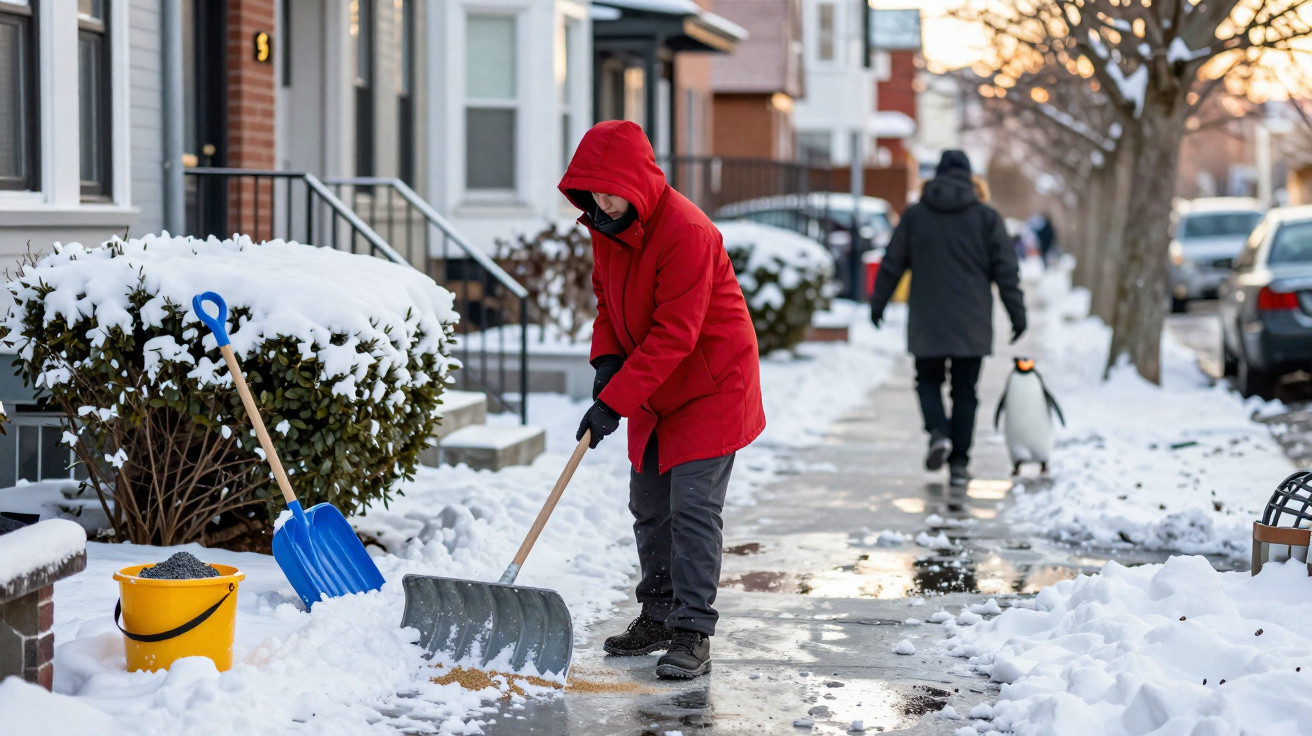
Across plenty of towns, January’s first proper cold snap has already had people hunting out shovels, grit and insulated boots. What really matters, though, is who has to clear which stretch - and by when - because that can be the difference between a safe walk to work and a dispute with insurers or the local authority.
Who is responsible when sidewalks turn icy?
In Germany, as in much of Europe, winter maintenance is not something handled solely by the town hall. Local councils typically deal with public roads, while the pavement outside a property is often the responsibility of the owner - and sometimes the tenant, where the tenancy agreement passes the duty on.
"Property owners can be held liable if someone slips on an uncleared pavement and suffers injury, including medical costs and compensation for pain."
German law contains a broad duty to keep routes safe, but the practical requirements are set out in state and even municipal rules. Because these rules vary so widely, day-to-day expectations can differ noticeably from one street to the next.
Hanover is one example: the obligation to clear snow and spread grit applies on working days from 7 a.m. to 10 p.m., and on Sundays and public holidays from 8 a.m. to 10 p.m. If snow falls overnight, the first round generally has to happen early in the morning. If snowfall continues, or meltwater refreezes, the work has to be repeated during the day.
Why timing matters for liability
German courts often assess what a “reasonable” person could have done in the circumstances. If freezing rain begins at 3 a.m., a householder is not expected to be outside in the dark sweeping. By 8 or 9 a.m. on a weekday, however, judges typically assume pavements should be made safe for commuters and schoolchildren.
Municipal by-laws can be more specific still. Some set out the exact width that must be cleared so pedestrians and pushchairs can pass. Others insist the route is cleared right up to the kerb, allowing passengers to step safely in and out of buses or cars.
"Failing to clear does not only risk civil claims from injured pedestrians; many municipalities can also impose fines for ignoring winter service rules."
How to clear correctly: more than just grabbing a shovel
Clearing a pavement can sound simple, yet how it is done often determines whether it remains safe - or becomes a slick hazard a few hours later.
Common rules for a safe winter path
- Remove snow as soon as reasonably possible after it stops falling, particularly during the busy morning period.
- Shift snow to the edge of the pavement, ensuring you do not block driveways, cycle lanes or drains.
- Scatter sand, grit or crushed stone over any remaining ice to improve grip.
- Re-check the route when temperatures drop again in late afternoon or evening.
- Put a backup arrangement in place if you are away, elderly or physically unable to shovel.
On terraced streets and in blocks of flats, neighbours are increasingly organising the rota via group chats to share the workload. One person may do the early-morning clearance before work, while another inspects the pavement again after dusk, when refreezing often begins.
Why many cities discourage road salt
A shovel alone is not always enough once ice becomes compacted. The tempting quick fix is to use salt and let it melt the surface. Even so, many German towns heavily restrict - or outright prohibit - road salt on public pavements.
"Salt clears ice efficiently but harms trees, shrubs, soil life, pets’ paws, vehicles and even shoes; many local regulations treat it as a last resort rather than a standard tool."
When salt melts snow and ice, the salty water soaks into the soil. Over time this puts trees under stress, weakens hedges and can kill sensitive roadside plants. Salt spray also ends up on parked cars and metal railings, speeding up corrosion. For dogs and cats, salty slush can sting and split paw pads. That leaves residents paying veterinary bills rather than buying another bag of grit.
Alternatives to salt for gritting
| Material | Main benefit | Main drawback |
|---|---|---|
| Sand | Creates grip, cheap and widely available | Can clog drains, needs sweeping in spring |
| Grit / crushed stone | Very durable grip, works in deep cold | Uncomfortable for cyclists, can scratch floors if brought indoors |
| Granulated lava rock | Lightweight, reusable, good traction | Costs more than standard sand |
Many councils advise combining fine and coarse materials: finer sand can fill small gaps on an icy surface, while larger grains provide stronger traction. Some DIY shops sell ready-made “winter mix” products labelled as salt-free and compliant with municipal rules.
When a neighbour does not clear the sidewalk
One unmaintained frontage can undermine a safe walking route along an entire street. People often feel awkward about raising the issue - particularly in close-knit areas - yet a brief, calm chat can help prevent injuries.
Legal specialists usually suggest a staged approach: speak to the neighbour first and, if the situation remains hazardous, contact the local public order office or the building’s managing agent. Tenants who pay service charges may also be able to dispute invoices where a promised winter service never materialises.
"Pedestrians should not assume every path is safe; behaviour plays a big part in avoiding winter accidents, even where clearing rules exist."
The “penguin walk” and other safety tricks
German safety campaigns now strongly promote the so-called “penguin walk” for icy conditions - an easy, slightly humorous image that sticks in the mind.
- Take short, controlled steps rather than long strides.
- Put the whole foot down flat instead of striking with the heel.
- Angle feet slightly outward to widen your base.
- Tilt the upper body a little forward so your centre of gravity sits over the leading leg.
- Keep your hands free - avoid heavy bags - so you can steady yourself if you slip.
This style of walking places more weight above the front foot rather than behind it. If you do lose traction, you are more likely to fall forwards and still be able to protect yourself with hands or knees - often resulting in bruises instead of a serious back or head injury.
What tenants and landlords need to check now
Because the rules are so fragmented, renters and owners often face practical uncertainty. In Germany, many tenancy agreements transfer winter duties from the landlord to the tenant, sometimes alongside stairwell cleaning or putting bins out.
Experts recommend three quick checks at the start of winter:
- Review the tenancy agreement: who, precisely, must clear the pavement and spread grit?
- Check with the local council for the exact time windows and any limits on using salt.
- Agree with neighbours who is responsible for which section, particularly on corner plots.
Where landlords commission a contractor, they should keep evidence of the contract and keep an eye on delivery. If the contractor fails to attend and somebody is injured, a court may still find the property owner liable for not properly supervising the arrangement.
Beyond sidewalks: connected risks in winter
Keeping routes safe is closely linked to other winter hazards. Icicles can detach from roofs and fall onto pavements. Meltwater from poorly insulated eaves may drip, refreeze, and leave concealed “black ice” bands across walkways. Gutters clogged with autumn leaves can channel water straight onto the ground in the very places people step.
Owners who combine snow clearance with basic drainage checks can reduce slip hazards and limit property damage. Clearing downpipes, diverting drips, and marking extremely slippery patches with temporary signage can all help reduce injuries and claims.
For families, winter can also be a moment to teach children and teenagers about shared responsibility. Allowing older children to clear a short stretch, using an appropriate shovel and gloves, demonstrates how private routines contribute to public safety. At the same time, adults can model safer walking and sensible footwear rather than risky fashion choices on icy mornings.
Local councils review accident data each year and adjust guidance accordingly. If a particular junction or school route repeatedly produces fall injuries, a municipality may extend its own gritting runs or tighten timing requirements for nearby properties. For residents, keeping up with these changes can mean fewer legal surprises when the next cold front arrives.





Comments
No comments yet. Be the first to comment!
Leave a Comment